|
A register
article counterbalances the hype:
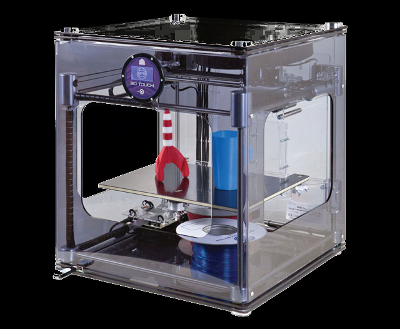
Special report 3D printing, otherwise known as additive manufacturing,
is a subject that pumps out enthusiasts faster than any real-life 3D
printer can churn out products.
(...)
In principle, though not always in practice, 3D wastes less material
than conventional techniques. And while jewellery, toys, footwear,
the cases for mobile phones and other smallish items lend themselves to
3D, researchers at the European aerospace and defence giant EADS have
for two years hoped that they will one day be able to print titanium
components directly on to the structure of an entire wing of an Airbus.
Despite all this, those who blithely proclaim that 3D printing brings
a revolution to manufacturing make a mistake. 3D printing does not
represent a pervasive, durable and penetrating transformation of the
dynamics and status of manufacturing. Nor, as The Economist newspaper
has proposed, is its emergence akin to the birth of the printing press
(1450), the steam engine (1750) or the transistor (1950). There is much
to celebrate about 3D printing, and even its too-fervent advocates at
least represent a reasonable desire to produce new kinds of things in
new kinds of ways. Yet what characterises 3D printing is how, as with
other powerful technologies today, it need only barely arrive on the
world economic stage for zealots to overrate it, and for others to turn
it into an object of fear.
(...)
And those who exaggerate the power of 3D printing to turn everyone into
a budding inventor /entrepreneur/manufacturer follow very much in this
utopian tradition. But there is more to boosters of 3D than mere geekery
or quackery.
|