In defense of Humor
Humor in education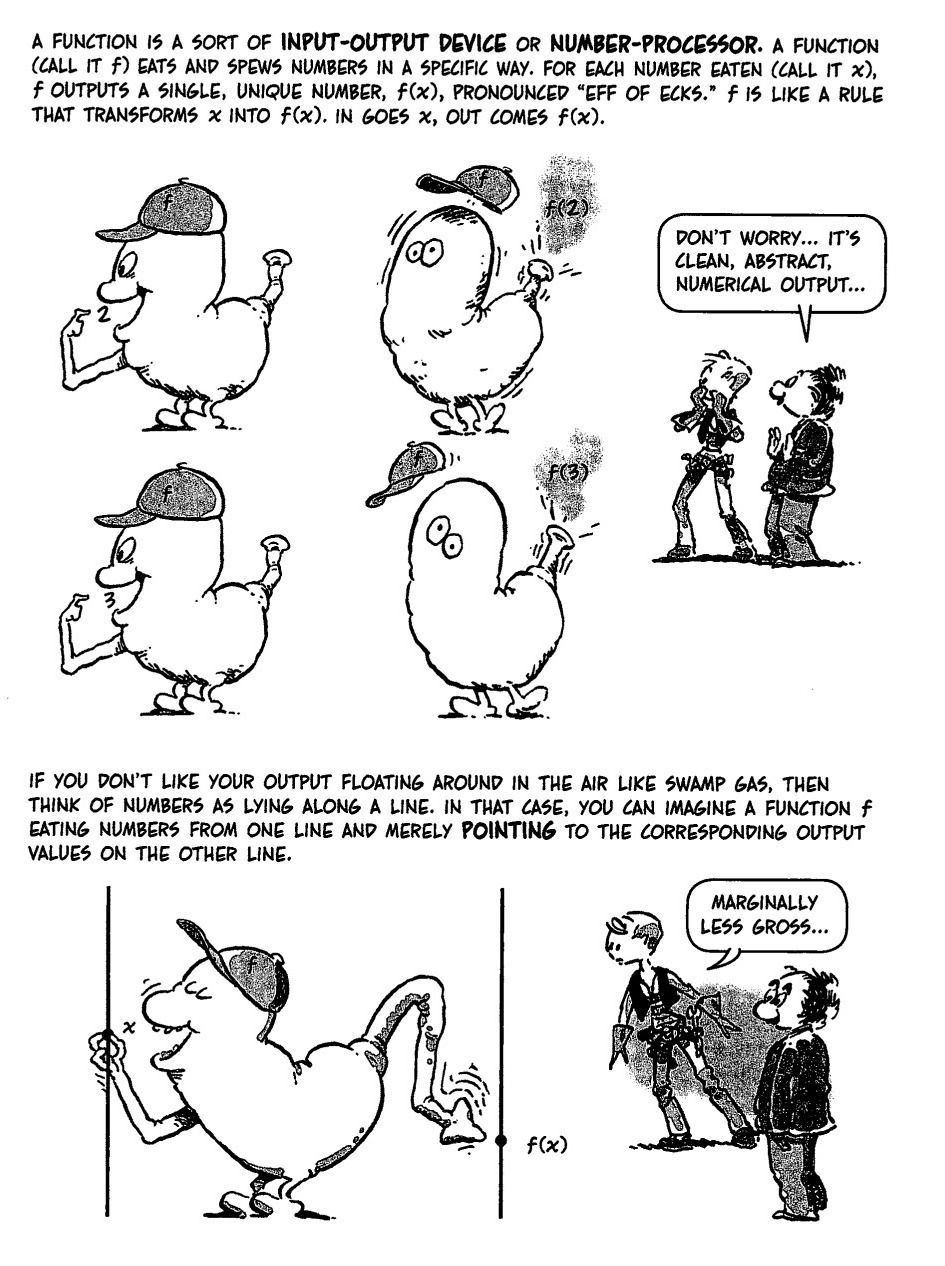 One of my personal heroes is Larry Gonick.
His cartoon guides to various topics are simply fantastic. They are thoughtful and funny, sometimes
a bit risky and not always politically correct. (Click on the picture to the right to see the page
larger. It is from the Book "Cartoon guide to calculus", 2012).
The ones I know (like calculus, stats, economics, physics) are actually
quite decent textbooks, containing more new ideas than your typical textbook.
Indeed, your typical textbook writer is no fun. Gonick studied mathematics at Harvard,
graduating in 1967. A couple of years ago he gave a talk at Harvard which was very
well attended. It was a wonderful talk but it did not start well with the audience
as he mentioned that when he was here, ``Harvard had been toxic" with respect
to humor. I can understand what he meant since during the last decade I have been here, there
has been a decrease in appreciation for humor.
[ Update: One must see however a lot of good things: the science center plazza for example have added
a lot of fun both in winter:
example 1
example 2
or summer
example.
The tide has definitely changed also on the humor side:
September 2019: IG nobel prize
and October 2019: Sesame streets come to Harvard ].
Of course, one must understand why:
the members of an institution (and universities in particular) constantly walk through
a mine field. The emergence of social media in the last 10 years or so increased the risks.
Relatively little things like a wrong joke can force officials
to take drastic steps. We are more sensitive to political correctness and diversity and that is a very good
thing, but it also comes with a price: if you look at commencement speeches from 15 years ago and
commencement speeches from today, then the later are funeral speeches.
In short: making jokes has become more and more difficult.
One of my personal heroes is Larry Gonick.
His cartoon guides to various topics are simply fantastic. They are thoughtful and funny, sometimes
a bit risky and not always politically correct. (Click on the picture to the right to see the page
larger. It is from the Book "Cartoon guide to calculus", 2012).
The ones I know (like calculus, stats, economics, physics) are actually
quite decent textbooks, containing more new ideas than your typical textbook.
Indeed, your typical textbook writer is no fun. Gonick studied mathematics at Harvard,
graduating in 1967. A couple of years ago he gave a talk at Harvard which was very
well attended. It was a wonderful talk but it did not start well with the audience
as he mentioned that when he was here, ``Harvard had been toxic" with respect
to humor. I can understand what he meant since during the last decade I have been here, there
has been a decrease in appreciation for humor.
[ Update: One must see however a lot of good things: the science center plazza for example have added
a lot of fun both in winter:
example 1
example 2
or summer
example.
The tide has definitely changed also on the humor side:
September 2019: IG nobel prize
and October 2019: Sesame streets come to Harvard ].
Of course, one must understand why:
the members of an institution (and universities in particular) constantly walk through
a mine field. The emergence of social media in the last 10 years or so increased the risks.
Relatively little things like a wrong joke can force officials
to take drastic steps. We are more sensitive to political correctness and diversity and that is a very good
thing, but it also comes with a price: if you look at commencement speeches from 15 years ago and
commencement speeches from today, then the later are funeral speeches.
In short: making jokes has become more and more difficult.
The art of humor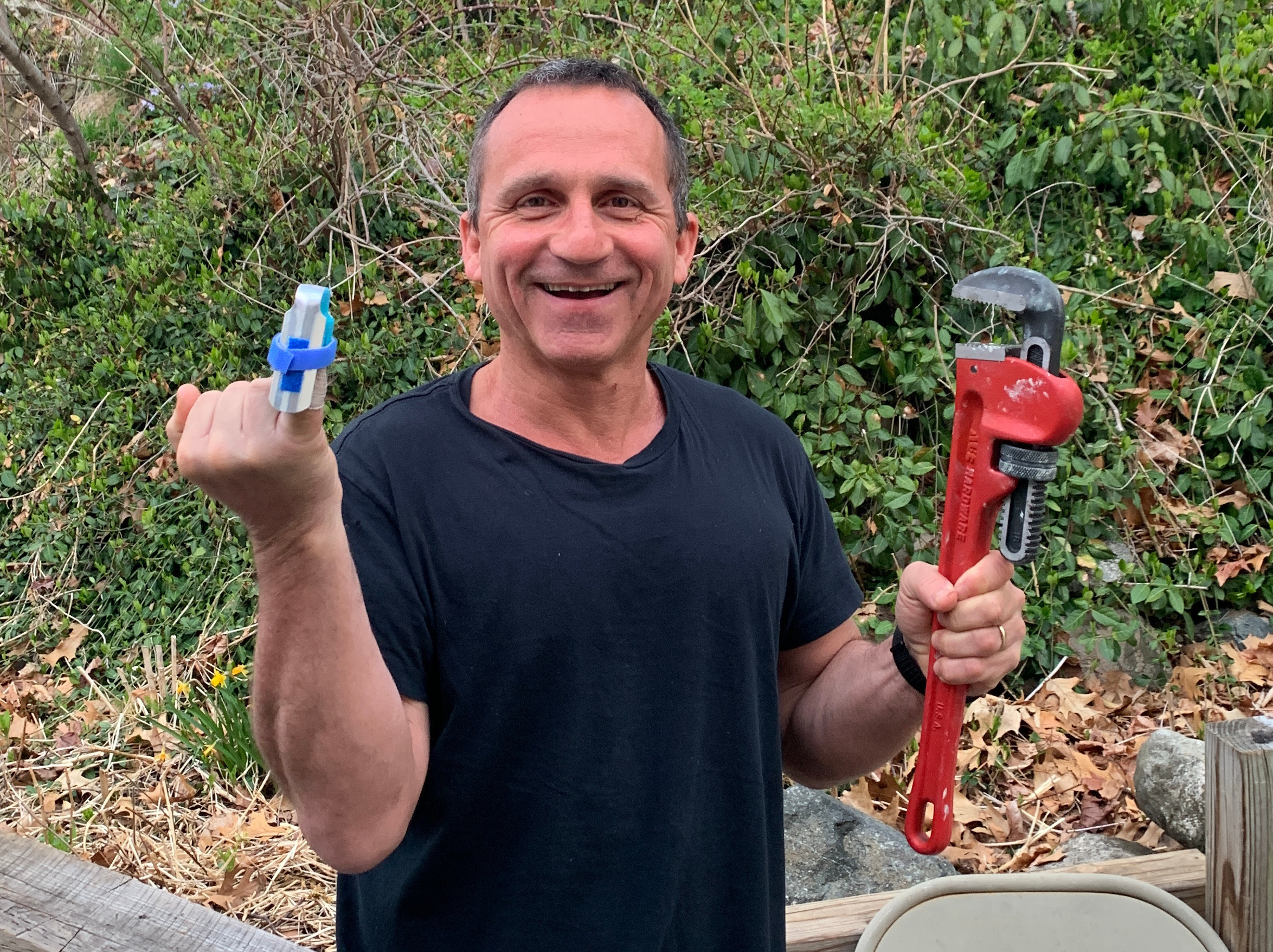 One can also see it everywhere: the art of humor has got more challenges. One has to work harder to
make a good joke. In general, producing jokes is a form of creativity which needs time, ideas and
reflection. In the spring of 2019, I was asked by the Harvard College Stand Up Comic Society
to contribute at their Faculty Lounge show. I said twice `No" at first, not because of fear, but because I knew that this would
require a lot of my time, time I would not have.
I eventually got convinced as the group assured assisting and helping with the preparation. How can I always
tell ``Everybody can learn math", if it is not also possible that ``Everybody can do comedy".
Here is the outcome. One might
not see the work but it really needed a lot of time. Especially difficult is to
navigate the boundary of what is possible and what is not adequate. What really helps is to bounce ideas
with a partner (I used my wife to test jokes out), and then later, when things are written down to present it
to a smaller group and get suggestions and feedback. It is hard work, like producing mathematics, but
it can be fun to conquer the challenge eventually (at least if the expectations are not
too great).
One can also see it everywhere: the art of humor has got more challenges. One has to work harder to
make a good joke. In general, producing jokes is a form of creativity which needs time, ideas and
reflection. In the spring of 2019, I was asked by the Harvard College Stand Up Comic Society
to contribute at their Faculty Lounge show. I said twice `No" at first, not because of fear, but because I knew that this would
require a lot of my time, time I would not have.
I eventually got convinced as the group assured assisting and helping with the preparation. How can I always
tell ``Everybody can learn math", if it is not also possible that ``Everybody can do comedy".
Here is the outcome. One might
not see the work but it really needed a lot of time. Especially difficult is to
navigate the boundary of what is possible and what is not adequate. What really helps is to bounce ideas
with a partner (I used my wife to test jokes out), and then later, when things are written down to present it
to a smaller group and get suggestions and feedback. It is hard work, like producing mathematics, but
it can be fun to conquer the challenge eventually (at least if the expectations are not
too great).
In the classroom In the classroom, things can be even trickier.
Modern students have been exposed to less direct humor due to increased sensitivity but to maybe more
inappropriate humor through texting or websites.
For me, I remember having done some jokes I'm proud of, some maybe less so, but it always
required a lot of work. One rarely sees humor in the classroom.
Just before the Faculty Lounge show, we had a short
get-together of all the people contributing. Somebody voiced surprise that somebody
from the math department would participate. I mentioned casually that I don't believe in
mathematical talent that anybody can do it and that I also agreed to participate
to prove that there is no comic talent but that in principle, anybody can do ``Stand-up"
also a rather plain person like me. I use humor frequently in the classroom (it is more like trying
than succeeding). Not because I'm a funny person, but because I believe it is a tool to free
up anxieties which often come naturally when learning a difficult subject like mathematics.
So, over the years of teaching the subject of math, some reputation has developed.
This gives background to push the envelope a bit further. Humor depends very much on background.
In the classroom, things can be even trickier.
Modern students have been exposed to less direct humor due to increased sensitivity but to maybe more
inappropriate humor through texting or websites.
For me, I remember having done some jokes I'm proud of, some maybe less so, but it always
required a lot of work. One rarely sees humor in the classroom.
Just before the Faculty Lounge show, we had a short
get-together of all the people contributing. Somebody voiced surprise that somebody
from the math department would participate. I mentioned casually that I don't believe in
mathematical talent that anybody can do it and that I also agreed to participate
to prove that there is no comic talent but that in principle, anybody can do ``Stand-up"
also a rather plain person like me. I use humor frequently in the classroom (it is more like trying
than succeeding). Not because I'm a funny person, but because I believe it is a tool to free
up anxieties which often come naturally when learning a difficult subject like mathematics.
So, over the years of teaching the subject of math, some reputation has developed.
This gives background to push the envelope a bit further. Humor depends very much on background.
Taboos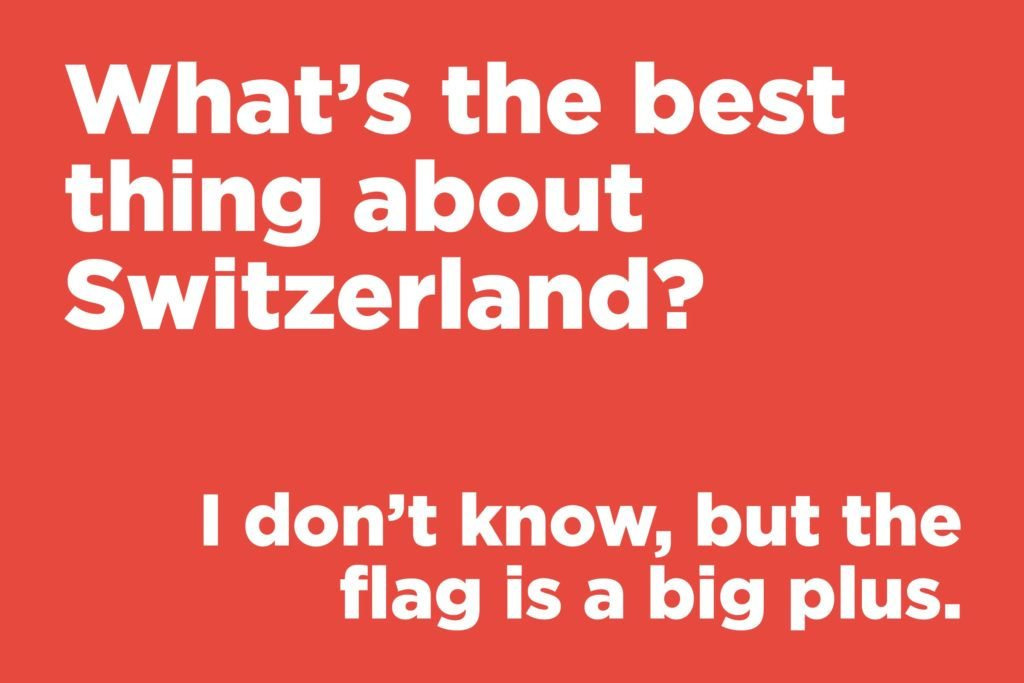 As a member of
certain ethnic group, it is allowed to make jokes about it. Some musicians go pretty
far in that area. As a Swiss, I can make jokes about stereotypes of Switzerland, but
I could not make jokes about countries even very
close like Lichtenstein. There are jokes about Israel, which my wife (who was born there)
could do, but which would be out of line for me. Not being a member of a religious group
(except for Dudeism of course),
I prefer not to make any jokes about religion. It is a tabu for me. When doing jokes about a
person, it very much depends who the person is. A famous actor or famous politician should
be fair game for jokes. Also laughing about myself is ok.
As a member of
certain ethnic group, it is allowed to make jokes about it. Some musicians go pretty
far in that area. As a Swiss, I can make jokes about stereotypes of Switzerland, but
I could not make jokes about countries even very
close like Lichtenstein. There are jokes about Israel, which my wife (who was born there)
could do, but which would be out of line for me. Not being a member of a religious group
(except for Dudeism of course),
I prefer not to make any jokes about religion. It is a tabu for me. When doing jokes about a
person, it very much depends who the person is. A famous actor or famous politician should
be fair game for jokes. Also laughing about myself is ok.
Synchronized mobs Humor has had a tough time recently. This summer,
The
New York Times ended political Cartoons in its international edition.
It was not an actual attack like the Charlie Hebdo massacre
but a move triggered by increased sensitivity. We live in a time, where a risky joke can destroy your life. Social media
especially can flare up as described in the Sync picture of Strogatz. It is unfortunately not the synchronized clapping
as in famous TED talk but the
synchronized ``throwing of stones" as in the Monty Python sketch
which can destroy somebody. They are not literally stones. One calls them shit storms. Much more pleasant than stones ...
A rather innocent joke today can be called blasphemy or hit nerve of some group (on any side of the spectrum)
and can end up with a disaster.
Humor has had a tough time recently. This summer,
The
New York Times ended political Cartoons in its international edition.
It was not an actual attack like the Charlie Hebdo massacre
but a move triggered by increased sensitivity. We live in a time, where a risky joke can destroy your life. Social media
especially can flare up as described in the Sync picture of Strogatz. It is unfortunately not the synchronized clapping
as in famous TED talk but the
synchronized ``throwing of stones" as in the Monty Python sketch
which can destroy somebody. They are not literally stones. One calls them shit storms. Much more pleasant than stones ...
A rather innocent joke today can be called blasphemy or hit nerve of some group (on any side of the spectrum)
and can end up with a disaster.
The difficulties with humor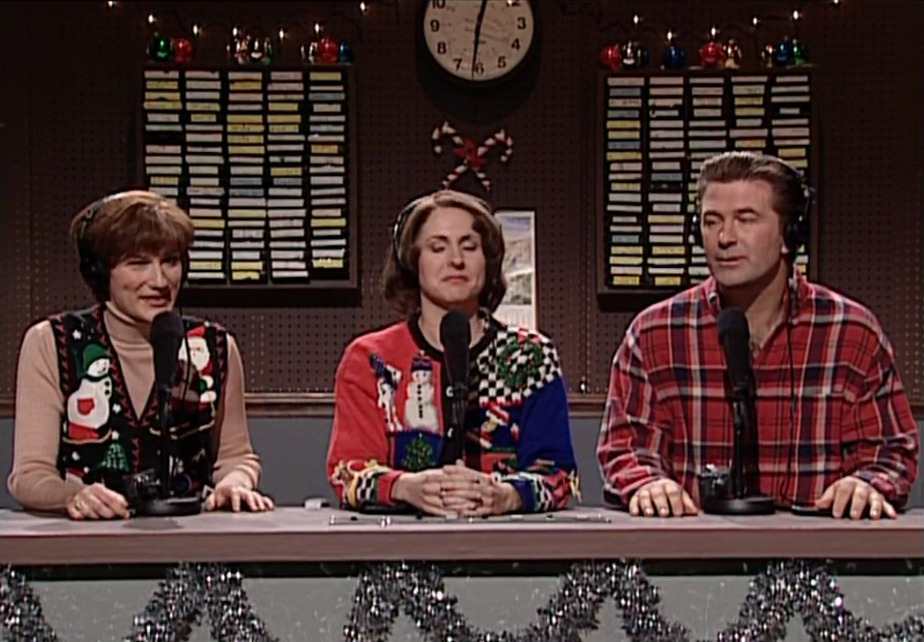 The red line for humor can also be pushed by reputation and precedences.
A commedy group at Saturday night live (SNL) or a late night show comedian can allow themselves
jokes which others can not do, as it would be offensive. The
Schweddy Balls
joke would be out of line in the classroom. For SNL it is ok, as
SNL is known to be comedy. (This sketch is from 1998, I actually believe that it would
no more be approved today).
So, for me, having taught at Harvard for 19 years and my (attempted) humor being exhibited frequently and also
been laughed about, I can permit myself more than somebody who has taught here only for 3 years. Also,
as a member of a non-ladder faculty I can probably permit myself
more than say a Dean at Harvard college, who has some representative role. I'm literally
a `nobody'. Of course, I'm aware of the responsibilities I have to teach, mentor and
guide.
The red line for humor can also be pushed by reputation and precedences.
A commedy group at Saturday night live (SNL) or a late night show comedian can allow themselves
jokes which others can not do, as it would be offensive. The
Schweddy Balls
joke would be out of line in the classroom. For SNL it is ok, as
SNL is known to be comedy. (This sketch is from 1998, I actually believe that it would
no more be approved today).
So, for me, having taught at Harvard for 19 years and my (attempted) humor being exhibited frequently and also
been laughed about, I can permit myself more than somebody who has taught here only for 3 years. Also,
as a member of a non-ladder faculty I can probably permit myself
more than say a Dean at Harvard college, who has some representative role. I'm literally
a `nobody'. Of course, I'm aware of the responsibilities I have to teach, mentor and
guide.
Context Humor is a two sided sword. For some, it can signal that you are "not
serious" or take things "too easy". Most do not know that producing
good humor needs a lot of preparation and work and sensibility.
Humor is context dependent. A rapper like Cardy B can use words which
an average person can not use. A late night host can terminology which is
forbidding in other contexts. Also:
a teacher beginning to teach can allow less than a teacher with a reputation
of being a comic person. I myself have built up during 19 years a bit of reputation which some
students appreciate, others less. I can go a bit further than I could have gone
10 years ago. Also, later in a semester, after getting to know large parts of the students
well, I can allow myself more, than early in the semester. On the other hand, there are
also kind of jokes which work less and less when growing older.
Humor is a two sided sword. For some, it can signal that you are "not
serious" or take things "too easy". Most do not know that producing
good humor needs a lot of preparation and work and sensibility.
Humor is context dependent. A rapper like Cardy B can use words which
an average person can not use. A late night host can terminology which is
forbidding in other contexts. Also:
a teacher beginning to teach can allow less than a teacher with a reputation
of being a comic person. I myself have built up during 19 years a bit of reputation which some
students appreciate, others less. I can go a bit further than I could have gone
10 years ago. Also, later in a semester, after getting to know large parts of the students
well, I can allow myself more, than early in the semester. On the other hand, there are
also kind of jokes which work less and less when growing older.
The audience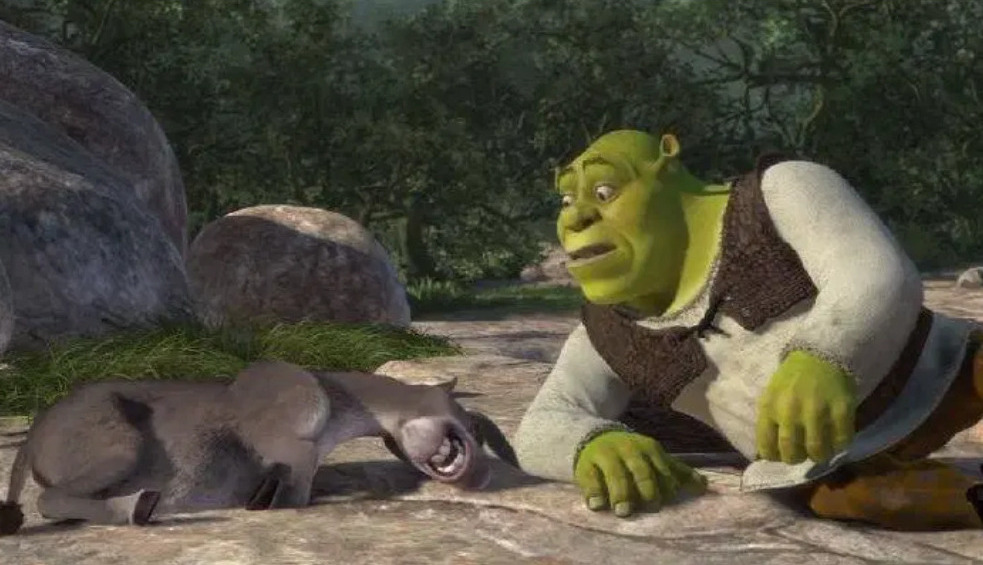 Not all people are the same and classes are like people. In some
cases, with good friends, you can go further than with strangers.
Also with some classes, it is possible to go further and
even use jokes going a bit over the limit. I used once in a Harvard Math
class a lecture note handout on complex numbers (which still can be
found online) where the following joke was included: "What is a complex number? -
If both women and man shout I". It is a good joke because most, who
would object to it are also not clever enough to understand it. (What is hidden
already is that there went quite a bit of reflection which went into using it already.
The original joke was "if the women shouts I", which was already insensitive 15 years
ago (it was ok when my wife told it to me almost 30 years ago because she is a women but
for me, it needed to change. That adaptation to a gender neutral form had been mine.)
The joke sails over the head of the ones who might object to it. Similarly
to the Schrek movies, which are full of risky jokes which still
work, since the audience who should be excluded just do not get it.
Going to the limit can however be dangerous. I had gone over the limit for some in here
here.
Humor can definitely damage careers. On the other hand, a good amount
of humor can ease learning and take pressure off.
Not all people are the same and classes are like people. In some
cases, with good friends, you can go further than with strangers.
Also with some classes, it is possible to go further and
even use jokes going a bit over the limit. I used once in a Harvard Math
class a lecture note handout on complex numbers (which still can be
found online) where the following joke was included: "What is a complex number? -
If both women and man shout I". It is a good joke because most, who
would object to it are also not clever enough to understand it. (What is hidden
already is that there went quite a bit of reflection which went into using it already.
The original joke was "if the women shouts I", which was already insensitive 15 years
ago (it was ok when my wife told it to me almost 30 years ago because she is a women but
for me, it needed to change. That adaptation to a gender neutral form had been mine.)
The joke sails over the head of the ones who might object to it. Similarly
to the Schrek movies, which are full of risky jokes which still
work, since the audience who should be excluded just do not get it.
Going to the limit can however be dangerous. I had gone over the limit for some in here
here.
Humor can definitely damage careers. On the other hand, a good amount
of humor can ease learning and take pressure off.
What should I teach?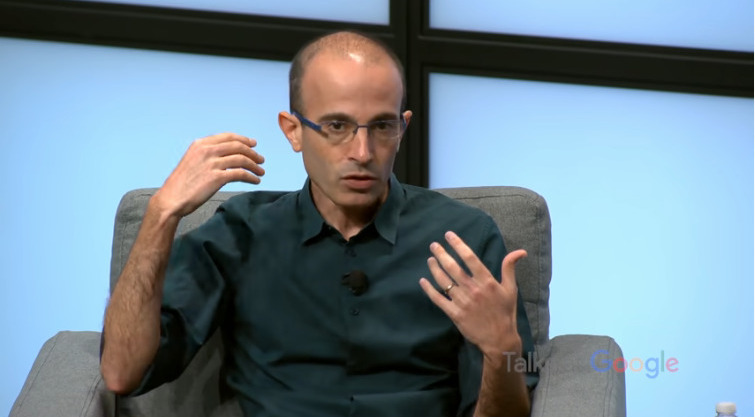 An important treat is "emotional intelligence and mental stability". In short, it is
to have a strong sense of humor. While the humor part is my own addition, the former
term has been voiced in an eloquent way by Yuval Harari
who in a Google talk was asked by the host Wilson White:
An important treat is "emotional intelligence and mental stability". In short, it is
to have a strong sense of humor. While the humor part is my own addition, the former
term has been voiced in an eloquent way by Yuval Harari
who in a Google talk was asked by the host Wilson White:
See it yourself: https://www.youtube.com/embed/Bw9P_ZXWDJU" (start at 2:40) How to face difficulties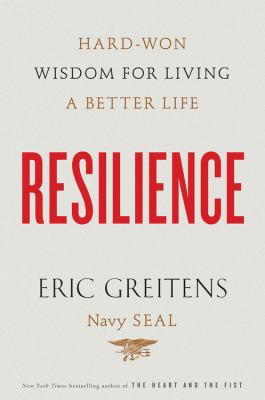 The last point is important. Now, how do you face adversity? How do you practice
resilience? Maybe, you can read books about it, but that does not help much in my
experience. Self-help guides are useless if one does not practice it.
It is like in mathematics, you only learn something by doing it. You
do not learn inventing mathematics by reading books about it, you learn it by doing it.
But like in mathematics or in research or in everything you do in live, there are tools and experience and
tricks to overcome problems. Also psychological problems. One of the strongest tools
in my mind is humor. It deflates a problem. You laugh about it. I was laughing
about my pinky who was severely damaged (and actually is now quite a stiff fellow,
but who needs a pinky? All I need it for is to push the return key on the computer and
that still works). Now, how do you learn to get a sense of humor? By practicing it,
by failing again and again and again.
The simplest kind of jokes are probably the jokes about yourself. They are easy
because they do not offend so easily as the only person, who is the target of the joke
is yourself. It can help to appear to be more accessible.
Your math teacher is less intimidating, if you can laugh about him. But also for
the math teacher who might have some anxiety to teach and talk in front of a larger
audience, a bit of humor can help. For me, it also helps to think and reflect about
it. The spring ``inquisition" of my use of humor for example was upsetting me a lot.
But I deflected it by writing this note and now, I can even laugh about
little minded minds who object to humor.
Now, there is no question that I myself will be forced to handle even tougher things. People
close to me might die, I might get ill myself. Eventually, and with certainty,
I will have to face death. It will need more comic
skills to laugh into the face of death. But I'm determined to learn and do it.
The last point is important. Now, how do you face adversity? How do you practice
resilience? Maybe, you can read books about it, but that does not help much in my
experience. Self-help guides are useless if one does not practice it.
It is like in mathematics, you only learn something by doing it. You
do not learn inventing mathematics by reading books about it, you learn it by doing it.
But like in mathematics or in research or in everything you do in live, there are tools and experience and
tricks to overcome problems. Also psychological problems. One of the strongest tools
in my mind is humor. It deflates a problem. You laugh about it. I was laughing
about my pinky who was severely damaged (and actually is now quite a stiff fellow,
but who needs a pinky? All I need it for is to push the return key on the computer and
that still works). Now, how do you learn to get a sense of humor? By practicing it,
by failing again and again and again.
The simplest kind of jokes are probably the jokes about yourself. They are easy
because they do not offend so easily as the only person, who is the target of the joke
is yourself. It can help to appear to be more accessible.
Your math teacher is less intimidating, if you can laugh about him. But also for
the math teacher who might have some anxiety to teach and talk in front of a larger
audience, a bit of humor can help. For me, it also helps to think and reflect about
it. The spring ``inquisition" of my use of humor for example was upsetting me a lot.
But I deflected it by writing this note and now, I can even laugh about
little minded minds who object to humor.
Now, there is no question that I myself will be forced to handle even tougher things. People
close to me might die, I might get ill myself. Eventually, and with certainty,
I will have to face death. It will need more comic
skills to laugh into the face of death. But I'm determined to learn and do it.
The wiggle theoremSo, what why was I critiqued for? I had been explaining the spectral theorem about symmetric matrices with a perturbation picture and called it the ``wiggle theorem of von Neumann and Wigner": it tells that a symmetric matrix can be perturbed within the class of symmetric matrices so that all eigenvalues are different. It is an important result as it immediately implies the spectral theorem for symmetric matrices. In order to illustrate that theorem, I cut together a few clips from youtube about wiggle and then, to top it off perform myself in it. The video is shown below. Yes, it is a bit over the top. The part featuring me (and laughing at myself) was filmed by my wife, with whom I also discussed whether it is appropriate to show or not. She was not sure and I was myself on the edge, but since I knew the class since one year and they know me, I decided to bring it. I had two versions, one with the clip and one without. If there would have been some unease in the class displayed by only one student, I would have shown the other. Having taught for more than 30 years, I pride myself to read a class pretty well. I know classes can be very different, like people. I know that a few students can make a big difference, I know that the size of the class matters. I can do more in a larger class of 42 students like the class I had in the spring than in a class with 12. In a class with 300-400 students, one can even go further. So, here is the clip I showed this spring (if you are easily offended, maybe do not watch it).Not for your career Well, what would I think about it, if I were a student. Maybe:
"this guy has a midlife crisis" or "his belly is growing".
It is certainly not flattering. Believe me, teaching while pushing the envelope
does not help your career. I'm living proof of it. I had been promised
multiple times a promotion, which it never happened. I also do not have to prove any
thing any more. Having won every teaching prize possible, and still
continue to do some research. A bit of an edgy approach to humor does
not help your reputation. A more humorous approach to things which is often mistaken for ``lack of
reflection" or ``absence of seriousness". (Which of course is nonsense. People are different, but somebody
who can laugh about things displays a mental stability which can be helpful in moments of crisis.
Humor frees up anxieties. I learned in the mountains close to disasters, especially when climbing in
groups, but also when climbing free solo that humor can help to diffuse a crisis, avoid panic and do the
right thing. Shouting "we are going to die" does not help overcoming a serious crisis. )
Well, what would I think about it, if I were a student. Maybe:
"this guy has a midlife crisis" or "his belly is growing".
It is certainly not flattering. Believe me, teaching while pushing the envelope
does not help your career. I'm living proof of it. I had been promised
multiple times a promotion, which it never happened. I also do not have to prove any
thing any more. Having won every teaching prize possible, and still
continue to do some research. A bit of an edgy approach to humor does
not help your reputation. A more humorous approach to things which is often mistaken for ``lack of
reflection" or ``absence of seriousness". (Which of course is nonsense. People are different, but somebody
who can laugh about things displays a mental stability which can be helpful in moments of crisis.
Humor frees up anxieties. I learned in the mountains close to disasters, especially when climbing in
groups, but also when climbing free solo that humor can help to diffuse a crisis, avoid panic and do the
right thing. Shouting "we are going to die" does not help overcoming a serious crisis. )
Why Humor?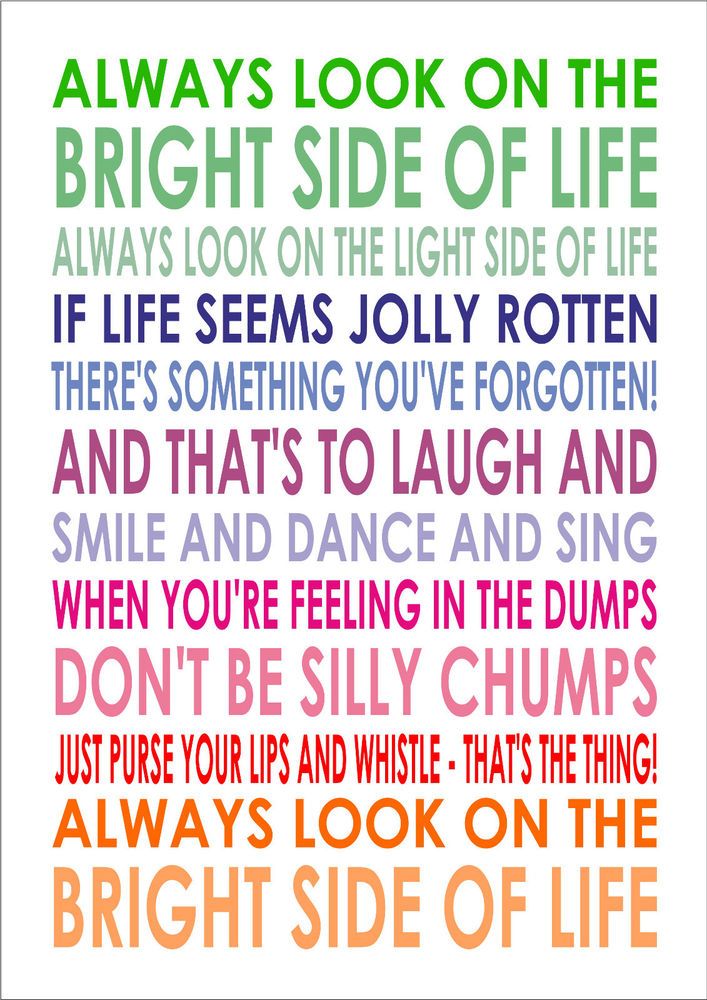 What other reasons are there for humor? Well,
it might be the only thing which soon is left to us. We might be stripped away
all our rights due to complete increasing digital control by governments and corporations,
we might cook our-selves into a climate disaster within the next century, forests might burn away,
waters turn toxic, or we might accidentally slide into a nuclear war, we might lose the fight against diseases,
we definitely will have to deal with challenges of disappearing jobs, shifts in the job market, inequality,
absence of health care for everybody, the dilemma to be able to genetically alter ourselves. Even scientist
jobs might get automatized, and a research mathematician could be replaced by a bot or
``polymath type entities" which compete with finding new theorems. It might be the only way to do research
in the future. In any case, it will be part of reinvention to adapt to
unpleasant situations. And we will need any weapon available to keep our spirits up, and fight.
Humor can help with that.
Always look at the bright side of life!.
What other reasons are there for humor? Well,
it might be the only thing which soon is left to us. We might be stripped away
all our rights due to complete increasing digital control by governments and corporations,
we might cook our-selves into a climate disaster within the next century, forests might burn away,
waters turn toxic, or we might accidentally slide into a nuclear war, we might lose the fight against diseases,
we definitely will have to deal with challenges of disappearing jobs, shifts in the job market, inequality,
absence of health care for everybody, the dilemma to be able to genetically alter ourselves. Even scientist
jobs might get automatized, and a research mathematician could be replaced by a bot or
``polymath type entities" which compete with finding new theorems. It might be the only way to do research
in the future. In any case, it will be part of reinvention to adapt to
unpleasant situations. And we will need any weapon available to keep our spirits up, and fight.
Humor can help with that.
Always look at the bright side of life!.
What does the literature say?I myself am actually quite skeptical in general about theoretical pedagogy. The question whether humor helps can be complex. Also, the surveys are usually self-selective. I have got by mail survey requests on humor, sometimes filled it out, sometimes not, due to lack of time or because the survey was too long or because it required to submit too much personal information. Anyway, here is some literature one can find when searching for humor in academic institutions:
Update September 2019: Patrick Chappatte: a free world needs satire. TED SUmmit 2019 (2022: The youtube video which had been linked here has been pulled).  Update, Mai 20, 2020: The article "In defense of Humor" by the literary scholar and pioneer in
humor studies: Alleen Pace Nielson in the
journal "College English, Vol 56, p 928-933 from 1994 points out an
interesting other aspect of humor: it can deflate tension. This can be especially important
in diplomatic situations. Nilson gives two examples which are best cited verbatim in her own words: Update, Mai 20, 2020: The article "In defense of Humor" by the literary scholar and pioneer in
humor studies: Alleen Pace Nielson in the
journal "College English, Vol 56, p 928-933 from 1994 points out an
interesting other aspect of humor: it can deflate tension. This can be especially important
in diplomatic situations. Nilson gives two examples which are best cited verbatim in her own words: Sensitivity to the feelings of others is fine, but we also need to consider some of the benefits of humor. Remember how former First Lady Barbara Bush used humor to salvage the awful situation in Japan when President Bush grew ill and vomited on Japanese Prime Minister Kiichi Miyazawa? After the President was escorted from the room, Mrs. Bush stood up and bravely placed the blame on the American ambassador. As could be seen from the security camera TV tape, her accusation stiffened the audience and increased the already high tension, but then as she explained with a twinkle in her eye that the Ambassador and the President had been badly beaten that afternoon in tennis by the Emperor Akihito and Crown Prince Naruhito and that "We Bushes aren't used to losing," relief washed over the room. The laughter was all the sweeter because it followed such high tension. Her quick thinking made it possible for the dinner to continue and for the world to relax; compare President Reagan's famous quip made while he was on the operating table after he had been shot-he hoped the doctors treating his wounds were Republicans. The success of both of these jokes illustrates the point that humor is a release from a moderate level of tension. The world relaxed upon hearing Reagan's joke because it let us know that he did not consider himself to be in imminent danger. Similarly, in Japan, members of the audience, although from two very different cultures, instinctively recognized that if Barbara Bush had thought that her husband had been poisoned or suffered a heart attack she would not have made a joke. But on the other hand, neither would she have been inspired to make the joke if there hadn't been discomfort in the situation. The event can be seen here in the ABCnews of January 11, 1992 (or here on Youtube.) The article of Nilson has many more interesting examples like the paradox that not laughing about an ethnic joke was felt offensive by a person of that ethnic group because not laughing about it was felt like considering it true and not a joke. It can be complicated. This reminds me: My wife told me once of an encounter with two friends in college, when one of them made a joke about the other persons fatness. My wife had then interfered with: "That is not a very nice thing to say!" The large person then replied. "Well, I felt very good until you said that!" Indeed, by pointing out that the joke about the fatness was not nice, the quip about it has become no more a laughing matter but has turned into a serious matter. The situation was still defused because the meta joke of the big person laughing about ``considering the matter serious" has rendered the problem again a funny matter and all three could laugh. Update from November 2022: A good article of Nicole Hemmer in CNN about parody: Opinion: The Onion is right about the future of democracy.
|