What is IQ?

Oliver Knill, December 13, 2025

Throughout my own school and teaching career, I have maintained that IQ is teachable. This statement is the point of view that techniques and knowledge matter most, not talent nor born abilities. I'm aware that this is a tricky issue. The question "what is intelligence" is certainly also linked to social issues. But this means one is walking in a minefield. Higher education have diminished their reputation and so brand value in that area. What I write here, are personal experiences. It is neither based on a scientific study nor is it based on data. It is anecdotal experience at best and based on my own experience but also uses experiences observing colleagues, teachers and students. I find the question "how can I think effectively" almost as exciting as to "do the thinking itself". We might never be able to answer the question of intelligence. It is a complex issue, even when evaluating AI. But the emergence of powerful AI systems almost on par already with humans allows to support the thesis that "intelligence can be trained". In generative AI, IQ is essentially the number of weight parameters which are used to train the network, as well as the quality of the training data. The experiences with artificial intelligence strongly supports the picture that intelligence of humans works similarly.

Here are a few personal experiences in the area of the question: ``What is intelligence?"

Focus to the right things

What prompted me to write this entry is the following hilarious youtube post, I ran over today. Folks on the street were asked a simple "Dreisatz" problem. There is very little math in it, it needs just common sense. But most get it wrong. Some of them immediately blank because they are think "Oh my good, that is math!" and "I'm not good at math". But more about bias later.
(By the way, we posted in 2013 the same problem in our mountain hat diary (see page 9 of this document: 1 1/2 cats eat 1 1/2 mice in 1 1/2 hours. How long does it take for 4 cats to eat 4 mice?). )
The problem belongs to a class of problems, we encounter in primary school. In Switzerland, we called it "Dreisatz". Here it is sometimes called a proportion problem. No, it is not stupidity (low IQ) if one can not do that. It is simply lack of having learned to think about this properly. It is a sign of schools failing. When we look at such questions we simply have to ask things like: what happens if the number of machines doubles, what happens if the number of doughnuts doubles? It is then easy to see that these two effects cancel and that the time to complete the task is the same.
The fact that "Dreisatz" is important is usually taught in middle school. My father had taught middle school and told us, how important that principle is. The problem type was for him somehow like a litmus test for the level a student currently is. But it is perfectly teachable. It is linearity that matters. It shows that it is important to teach proportion problems. First teach simple proportion problems: If 3 cats need 3 hours to eat 3 mice how long do 6 cats need to eat 3 mice? (of course half) how long do 3 cats need to eat 6 mice? (again half). We only have to know what gets bigger and what gets smaller. Now if we have the problem to find how long 6 cats need to eat 6 cats, then one gets smaller the other larger so that we have a cancellation and 6 cats need 3 hours to eat 6 mice.

Meta knowledge is important: know problem types.


This is by the way why large language models appear to be so powerful today. They know millions of problem types simply by getting fed in a lot of such problems.

Psychological factors

For humans, unlike for AI, also psychological factors matter. You have to "believe" that you can do it. One has to be realistic, confidence is only part of the story. The Dunning-Kruger effect for example is counter to this. Ignorant folks are often also more self-confident because they do not see yet their limitations. Without hard work, without investing lots of time, even the best motivation can not help.

Here is a good analogy which can be better understood: when rock climbing or solving a boulder problem, your "mind" and "mindset" plays an important role. Fear is good but too much fear can cripple. A personal experience: we (Danny Ulrich and I) once climbed in the beautiful "Donau" valley in the South German part (an other climbing colleague from the IO SAC Randen just spontaneously had borrowed us his 2-cheveaux, to drive there). I was physically fit but not self-confident enough. When climbing the "Hexenschlauch", a nice but difficult Kamin Kletterei" (chimney climbing, which is different from crack climbing, as you are climbing completely inside the rock), it was also wet and I experienced fear. I cured this a couple of days later by climbing solo at night onto the top of the TV tower on the Cholfirst.

Psychological factors like fear or self confidence matter.

Training for tests

If you look at various IQ tests, you start to notice patterns and similarities emerge. Training these patters make you smarter (for these tests). I did such experiments early in high school and could notice remarkable increases of "intelligence". These were quantitative experiments. You take a book and solve hundrets of problems then grade them and measure your score. Then you take an other book and do it again. What you notice (similarly as when doing weight lifting in the gym) is that you get stronger with time. I of course used this also to boost my ego and selfconfidence which is in general a problem during adolescence. I also trained myself later for math competition by solving math olympiad problems but never competed. Instead, I would start working on a research project (self motivated of course, no teacher or parent had encouraged that, I would probably not have done that if my parents would have pushed us). I myself found grinding through IQ problems or Math Olympiad problems less rewarding than doing longer research problems where you think about a single problem for a many months. But the experiments done as a teenager taught me an important principle:

You can train for IQ tests


I would claim that (unless there is some medical or psychological condition preventing this) everybody can be trained to have a 150 IQ similarly than everybody can train muscles to lift his or her own weight.

Media access

What helped was that when we were young kids, there was no TV in the house (this was a decision of our parents). Later as teenager, when we had a TV at home, we were given one hour TV time per week. (We usually watched either "Lassie", "Bonanza" or "Raumschiff Enterprise" (startrek)). We had lots of time for "boredom", which is actually a melting pot for creativity. I would take apart toys for example (often unable to reassemble them!) or built stuff with Lego or Meccano or wood.

It become almost impossible now. I today often feel like crippling myself with too much exposure of media both on the computer or on the phone. Even in the mountains, where I used to be able to decouple from ordinary life (and had some of my best mathematical ideas), this has become difficult because the phone allows constant connection. When I was in Salmenfee during college (like alone for months just with a few books), there were no phones, no internet access, no telephone, no electricity. This has changed now. If something is available, it is difficult not to use it. Some schools have started to ban cell phones in schools. I'm sure this will have a good impact. One of the biggest challenges I have these days is to cut exposure to information. Especially these small chunk information offerings on social media drain time from more creative work.

Limiting media access can be a blessing.


It is in principle not new and I'm not sure whether banning is really effective. When I was in middle school, many of my friends started to read comics, rather than books. It is the analog of social media. I myself loved comics, especially the Asterix, the Lucky Luke or Donald Duck ones but I felt, it is shallow. So, I myself (without any nudge by parents or teachers) tried to limit the amount of exposure but also enjoyed the few hours I allowed myself to read them more. By the way, this was a time of course without internet etc and I would have to go to the public library to borrow books or comics.

Psycho technical issues

When getting into the Swiss army (mandatory in Switzerland), I wanted to get into the artillery and drive tanks. You had to be selected for that after being evaluated physically and psychologically but it was still a bit of luck (my father having been a high rank officer in the army oif course helped a bit). But all candidates for tank driving had to do psychotechnical motoric tests in Winterthur, which were mostly practical tasks, like putting something together, play a game. (And when failing that no "connection" would help of course, these tanks are heavy and we would drive on the usual streets). I still remember that day. I met there Thomas Harder who would also join the artillery, who climbed later the military ladder pretty fast and who was a Lieutnant already when I was a corporal. By the way, I remember the army time fondly, because it gave me balance, perspective appreciation for small things and robustness (you were shouted at pretty heavily, not like in "full metal jacket" but you were called all kind of things if you were not doing right). When calculating some artillery data wrong in a tank this could even bring you to jail. I did not train for the motor technical test, but I had no problem and there were reasons reasons: I always had liked to build things, first with lego, then Maccano or carve wood, fix my bikes alone (to the point of taking apart all bearings). I also liked to play with puzzles, and played piano and worked with electronics like soldering stuff, all good for fine motor training for the hands. These are all tasks which fixes "motor issues". I had not to be taught how to hold a tool for example. It was acquired by playing around and building stuff.

Motoric intelligence can be trained.


Yes, there are folks who claim to "have two left hands" and are more clumsy in doing stuff. I would attribute that also to very early development issues. Were you given as a baby already stuff to play with. I myself had been lucky that we moved into a new house when I was 6. The builders still left a lot of stuff inside. We could use this to build stuff. We would also dig out the basement on our own for months to build a "laboratory" and "shooting range". It later became a wine cellar but about 40 cubic meters of dirt would be dug out by us and the dirt carried up in little buckets. I gained a lot of strength then. This by the way was never initiated by our parents. Completely self initiative, triggered also by boredom.

Bias

There is hardly anything as funny as observing bias or reputation in daily life. You can try this out. Dress nicely and cleverly and you will be treated completely differently than running around in a tshirt or shorts. Once you have a reputation (in academia if you have a title and won prizes), you can do rather idiotic things and it is considered "smart". Here is something about evaluation in the Crimson where I was cited. For me the Dr Fox experiment has been one of the most eye-opening things. I mentioned it also in my Parameters article from 2019. If you have not done so, you need to watch Dr fox lecture The experiment showed that you can feed rather "intelligent folks" (in that case medical doctors) total nonsense. If they were primed by appearance and announcement that the person is an "expert", they believe anything and evaluate the person as a great expert, even so the content was complete gibberish. The critical thinking capacities of most people is a disaster in general. Being able to think independently becomes increasingly important. In this year 2025, already more than 50 percent of content on the web is AI generated and finding out become increasingly impossible. It will be an important battle for the future to make sure that AI stuff is labeled when used. I myself would go so far to consider folks that post AI stuff and do not declare it as "scumbags". It is a crime against humanity. It is well possible that we will lose that battle once AI will start posting AI (they do not mind whether we call them scumbags).


Bias is one of the strongest forces in the universe.


Rosilience

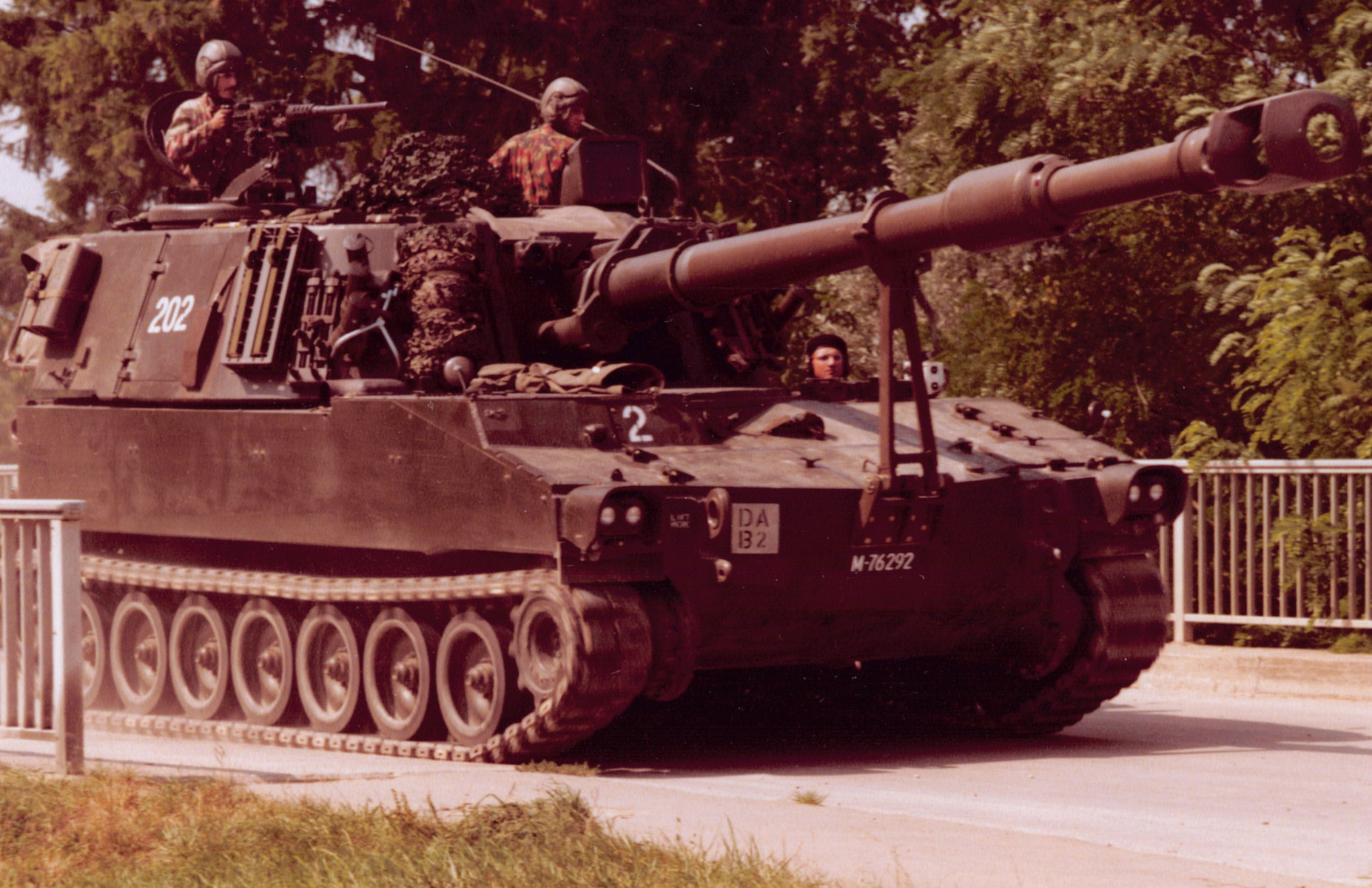
Drill sergeants can treat you harshly. In my own experience adjudants (professional instructors in the military) would call you names I can not repeat, you see bias: when entering military, I was with an other student in the same "zug" (battery) (most of the drivers were not in college). They picked us two out during the first day, separated us from the others during basic training and we had to fold cloths and clean shoes for two days in the Kaserne Frauenfeld. It was clear that they did not want us "arrogant pricks" (a bias for students) to pollute the basic training dynamics for the rest. Later I was always evaluated as "intelligent" or "meticulous", even so I tried my best to blend in. But once we had to count stuff in repair kids for bicycles and I noticed that one of the English Dunlup valve tubes (tiny little rubber pipes) had been punctured. That gave me the reputation of a "careful" person. An other time, an adjudant (sergeants who were professional military, Switzerland has a Milizsystem (everybody has to go)) praised me because I noticed that my driver had been closing the electric systems of the M109 tank in the wrong permutation (one only could see this by watching the various lamps dim from outside). Anyhow, once you have a reputation, you keep it. Whatever nonsense you do afterwards. Similarly, also having been exposed to a decent amount of tougher situations makes you less sensitive to failure.


Resilence can be trained.


Independence

Today, we live in a "helicopter parents time". The days of kids are structured like for a CEO in a company. There is hardly any free time for a typical kid. They are constantly supervised. In town, little kids in kindergarden are roped together as if they climb the Mount Everest. Children are driven to school, taken from school, their homework is supervised etc etc. Here are few examples: most of what I have been grown up to would today be considered child abuse. But this was an other time. Psychologists have analyzed this well. My parents generation still had the war times in their memory. And what I list here was not only common, it was the rule. I for example have never seen a student who would be driven to school. There was an exception in high school, where one girl came from Germany 10 miles away and needed a drive as there was no direct public transport from Gailingen to Schaffhausen. Even the students from Klettgau (Beringen or Loehningen) would drive in themselves with bike or motocycle. I myself would bike every noon home to Uhwiesen (2 miles away). Why is independence important? Because you train your own abilities more effectively.

Independence makes you resilient and more robust.


I still try to maintain this in our times. One of the challenges is to remain independent in thinking. Having worked on AI myself with students 20 years ago and tried out the modern LLMs since the first days it has appeared (no badge of honor of course since millions have mastered it after a few hours). Using AI is trivial if you can talk and write. More challenging is to build and run your own LLM. But for that the obstacle is only money. You can run tiny models on your laptop but for a reasonable model you would need tens of thousands of dollars. But outsourcing thinking make you dependent.

Update January 21, 2026

Something of Slavoj Zizek about intelligence. He mentiones that we are getting more stupid.