|
If you are getting older, you start to contemplate also the odds or expectation on how long you
still have to live. (In average we all live only 4000 weeks and 5000 weeks top!)
Granted, it is a rather morbid task but I also teach probability this semester
where expectation plays an important role. (And then there were unexpected deaths of relatively
young mathematicians
who died recently.) Anyway, it
appears that mathematicians have a rather good track record. Today, I quickly compiled
two lists. A first one of a list of mathematicians over 90 that I'm currently aware of, the second a list
of record ages I could find. My experience by looking this up with search engines is that they
are surprisingly bad to build a decent list, even so they also consult with AI. They really suck!
None of my searches for example came up with Vietoris, who reached 110 years and is a quite prominent
mathematician (Meyer-Vietoris, Vietoris-Ribbs)! I would have thought
that such a basic task is trivial in the AI age. This is just knowledge after all.
It might soon get better, because my search might have triggered now hat some "agents" have immediately started
to search on their own. Anyway, this is what I could find today, on February 1, 2026. Interestingly, if I ask now,
(a bit later) the same question, the search engine already knows Vietoris. It has learned fast. The lists is certainly
largely incomplete, as they are based on my own preferences. The question of course is what is a
"notable mathematician" is. The attribute is a matter of taste, of the subject and fashion. Apropos, when we built a chatbot in 2003-2004, we compiled and wrote our own databases of stuff, of course by looking things up from current collections. Here is a list, I once compiled in 2000 from common websites Mathematicians.txt. The bots were built from already existing bots but we fed in more knowledge using the following data. This had been a lot of work and as we see today, would is a fools-errand today. Knowledge has become cheap. Thinking has become cheap. Programming has become cheap. Teaching has become cheap. Research has become cheap. And current mathematicians, even world leading mathematicians are actively working on destroying their own value. (One can not blame them, it is a very unfortunate Nash equilibrium after all). In the same time, you see that companies like Microsoft use AI to "assist" their work force of course just to siphon off their value. People are not aware that they start to train their own replacements. The evil thing is that in some operating systems you do not have a choice than being watched over the shoulders all the time and have this data analyzed and used to train future workers. Back to the list below: these mathematicians live or have lived in a golden time. In the future, one will have 10 theorems a dime. No, it will be even 10 theories a dime. What has been a life achievement of a mathematician will be solved in a fraction of a second by a bot. Once you can build one world class mathematician, you can build a million. A side remark: we live in a time, where parts of research mathematics are chipped away by machines and where the value of human mathematicians is diminishing on a daily basis. There is no doubt that more of the Erdoes problems will fall soon. These problems will immediately loose any value. If solved by a machine it becomes worthless junk. It used to be that problems grow in value like wine and become more and more valuable. These times are gone. Similarly than solving an integral sin(x)100 x200 is not an interesting task any more since computer algebra systems have arrived. I myself am not interested in looking at the solution of that integral, nor am I interested in mathematics done by machines, even if it is an open problem. The problem will just immediately have lost value. That mathematics will just die because it will lose being interesting. For me, I only pity the person who feels any pride having solved something by the machine. Its like being proud of multiplying two 100 digit numbers with the computer. One can see this from the positive side: generative AI will weed out lots of currently open problems and render them worthless. The "research task": "Please solve me all the Erdoes problems and write me a research article in each case! does not need any skill. A little kid can enter that task and if that kid has a rich uncle or rich aunt to pay for a SuperPro Agent: then the outcome will be more likely to succeed. I myself have zero respect for that. Millions have figured out "how to prompt AI "within a week when Chat GPT came out. The last percentages learn it still these days, but that was like when using the internet to look things up. It is not a skill. It is like taking the elevator to the top of a skyscraper rather than climbing it properly. Granted, the AI bots at the moment still need support to solve an Erdoes problem, but that will change and we do not need world class mathematicians like Terry Tao's to enter the commands. The machines have probably already started the task on their own. The age of human mathematicians might soon be over. Anyway, the following list might be the last cohort of mathematicians we can admire. The future mathematicians will have to be valued on how much cash they were able to spend on AI. [Update added February 3, 2026: there is hope although. You look at stuff produced on youtube, and AI generated slob is hated more and more. It is still frustrating to see that AI generated art and music seem to find an audience. But I hope that more and more will see that AI generated math or music, novels, paintings or movies is just a new form Kitsch. Its value is almost zero. So, how do I cope with this rather depressing picture? I take pleasure in doing things, not letting it done. I like to program for example from a blank slate, not asking a machine to do it for me. I like to think independently and also from a blank slate, and not have a machine chew it for me. I like to "be", not to "have" (to speak with Fromm). If I prove something (even it is a simple thing) or program something (even if it is a tiny thing) I feel happy. Even integrating x^12 e^x by hand is much more rewarding that typing in Integrate[x^12 Exp[x],x]. I like to be remain so independent that if all data centers would go down tomorrow, I could continue to work, as if nothing happened. (I still can). Decay of quality of AI thinking will happen almost certainly. Enshittification is an almost universal law of information technology after all. There almost certainly will come a time, where folks figure out how to manipulate, spit propaganda, and influence and advertise and lie in AI. We are still in the buy-in phase for a powerful drug. And the hangover will come almost certainly. Latest, when we see that many can no more think straight because they have delegated all their thinking to their favorite AI god. ] |
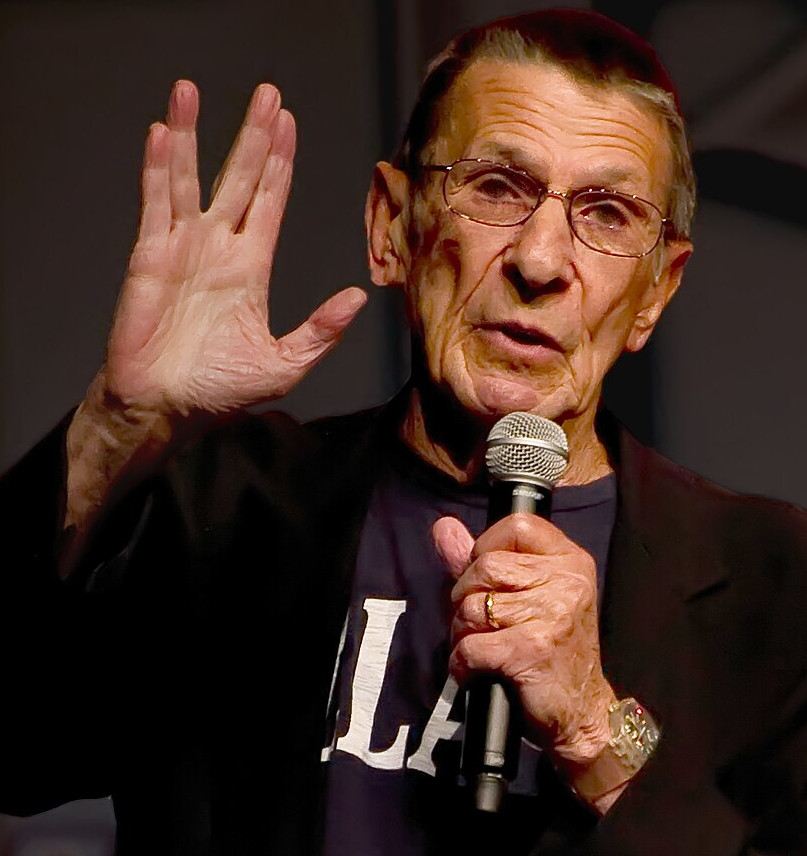 Live Long and Prosper Source |
