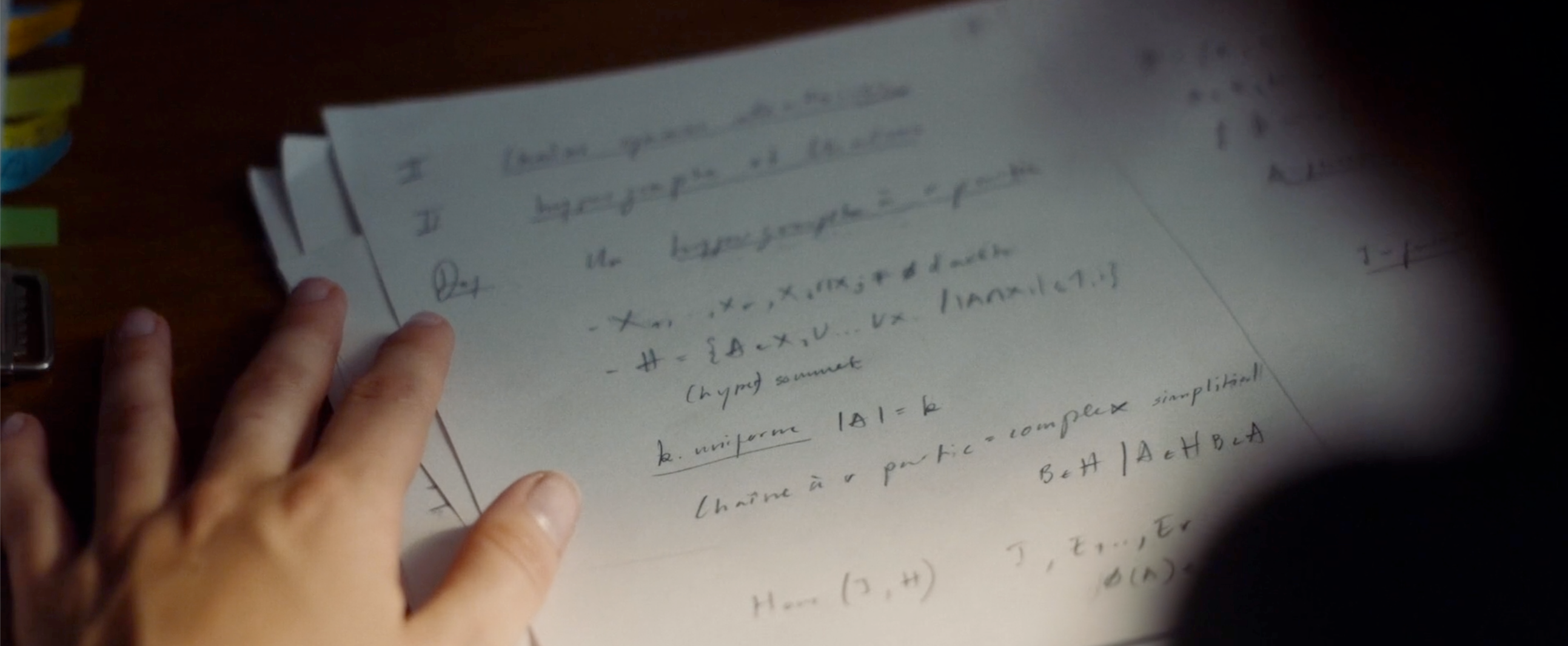
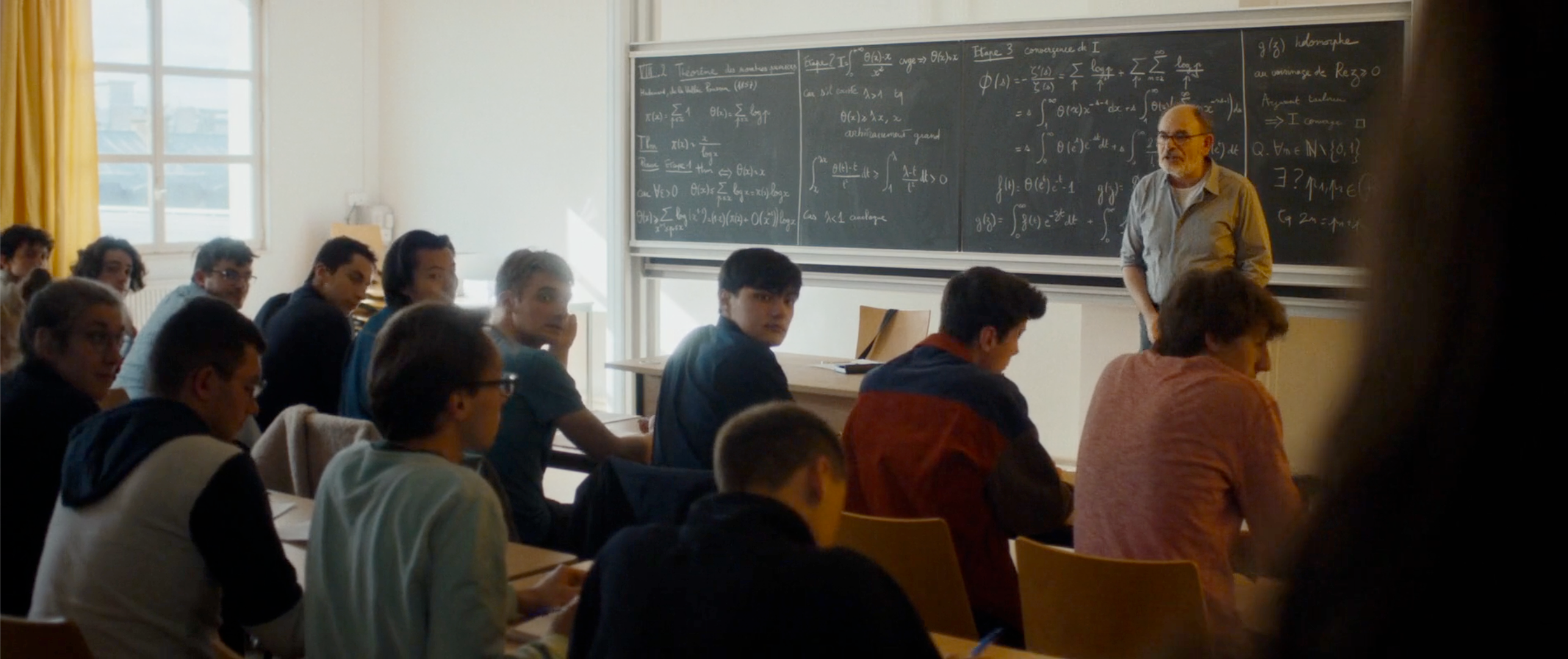
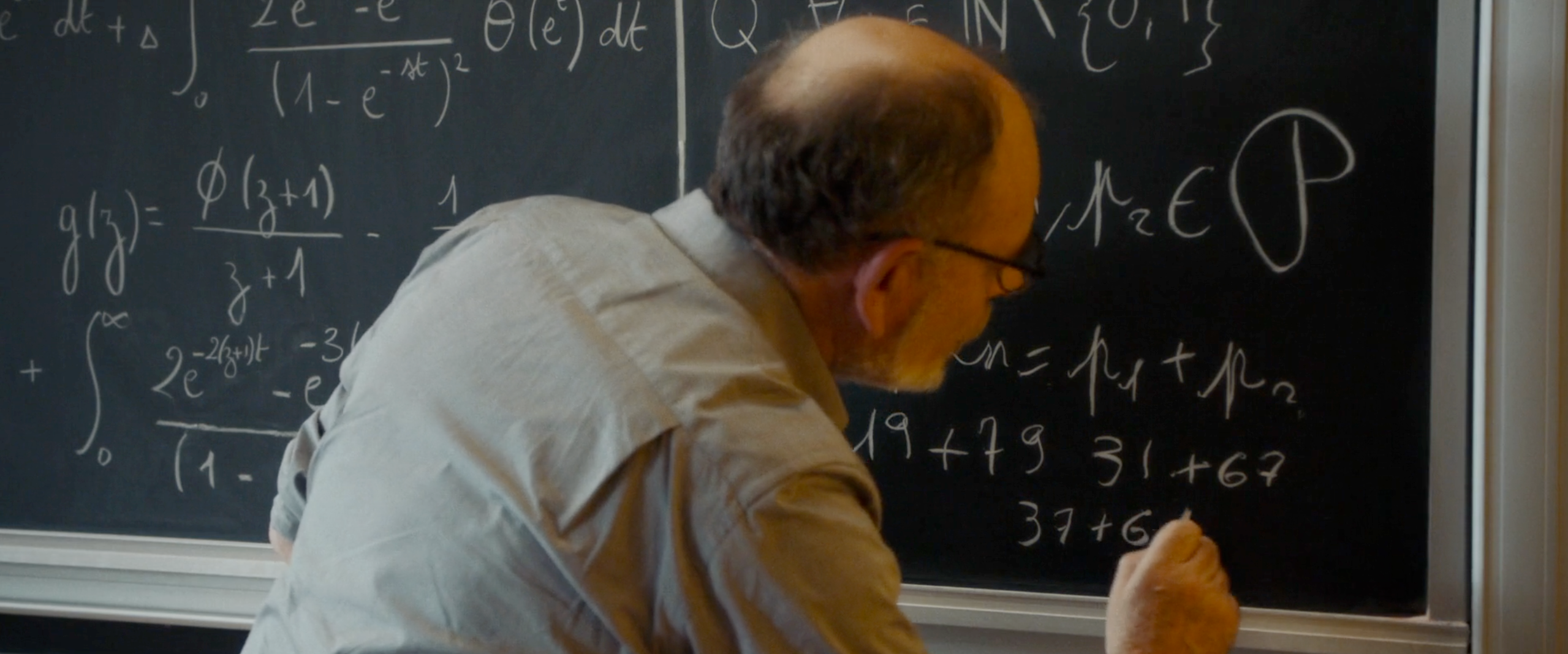
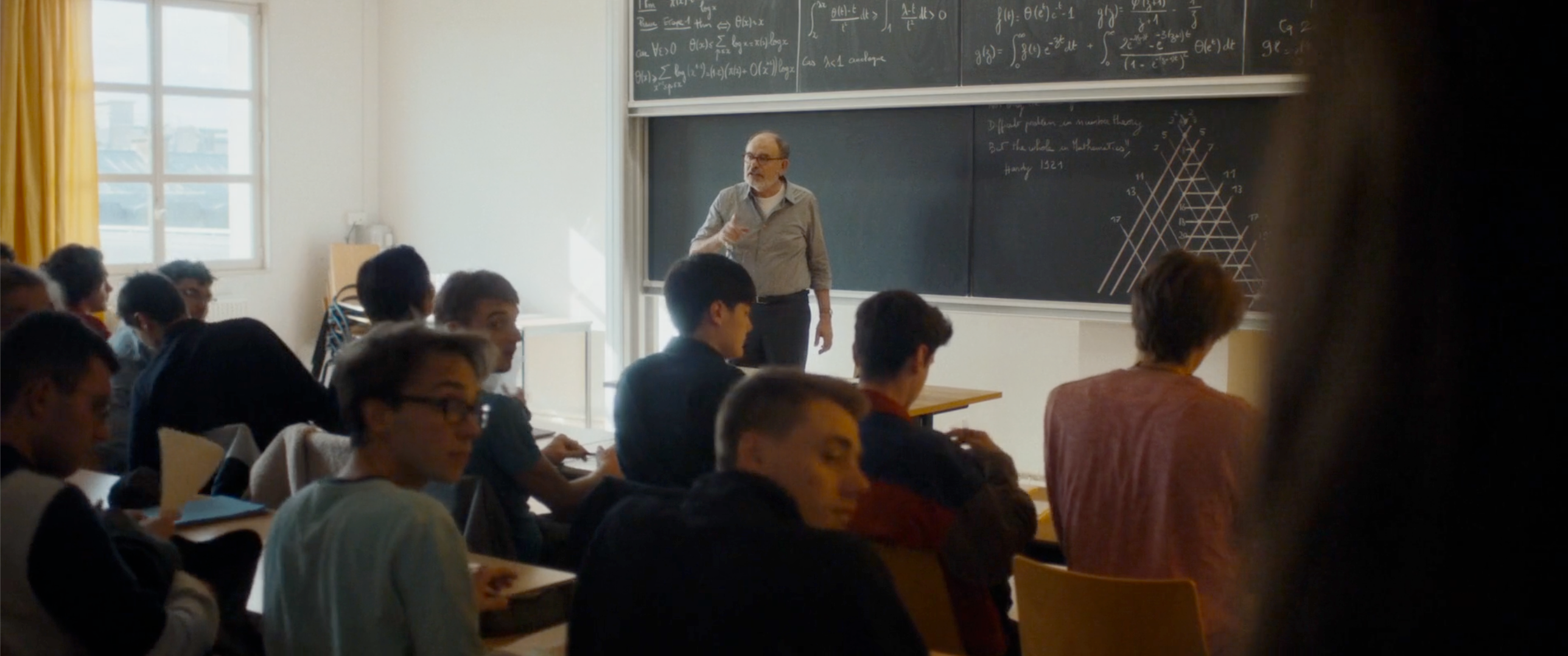
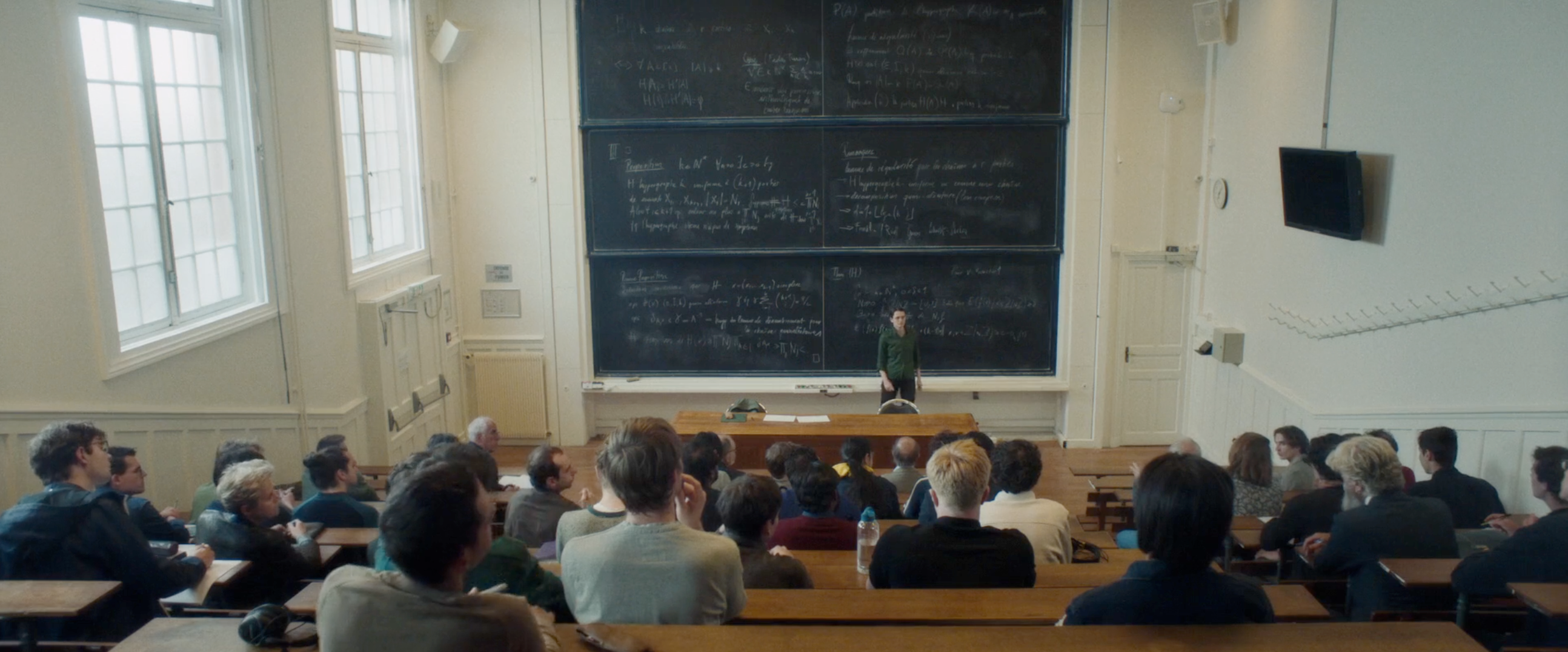
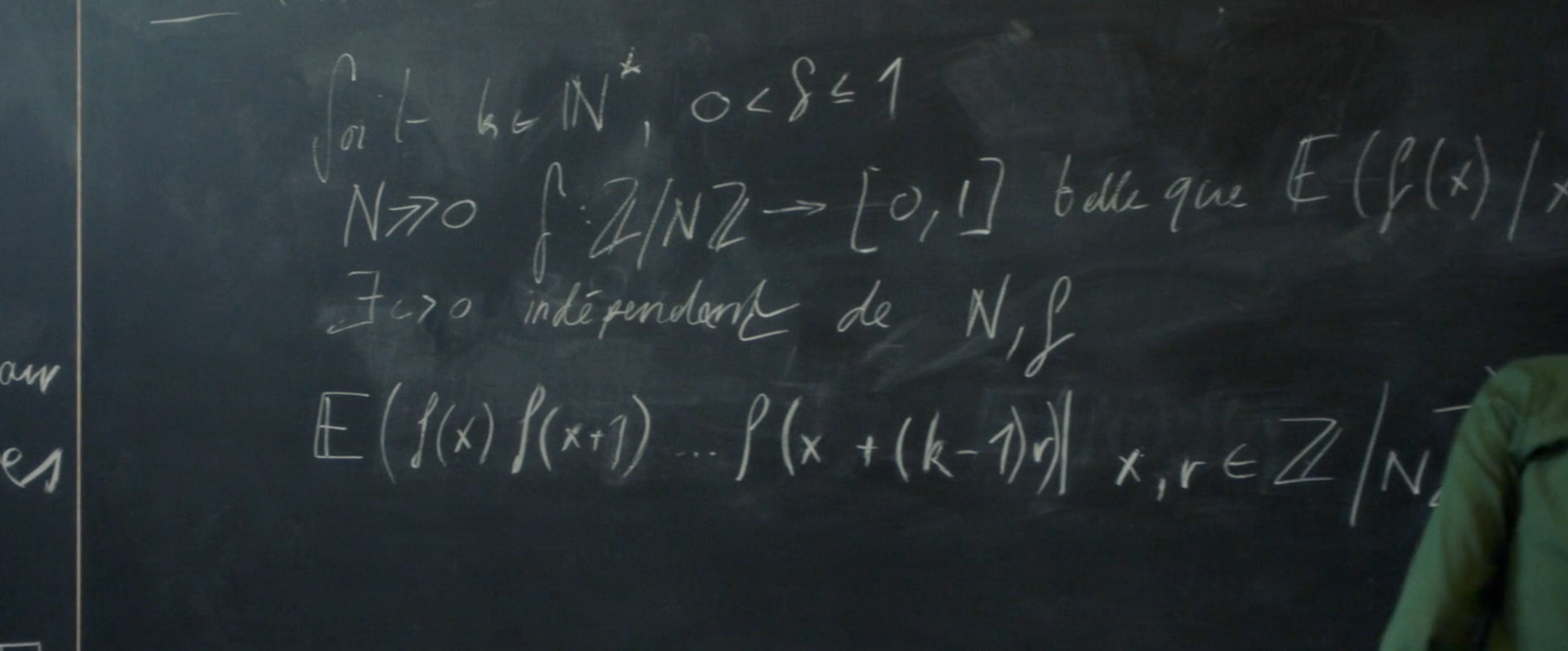
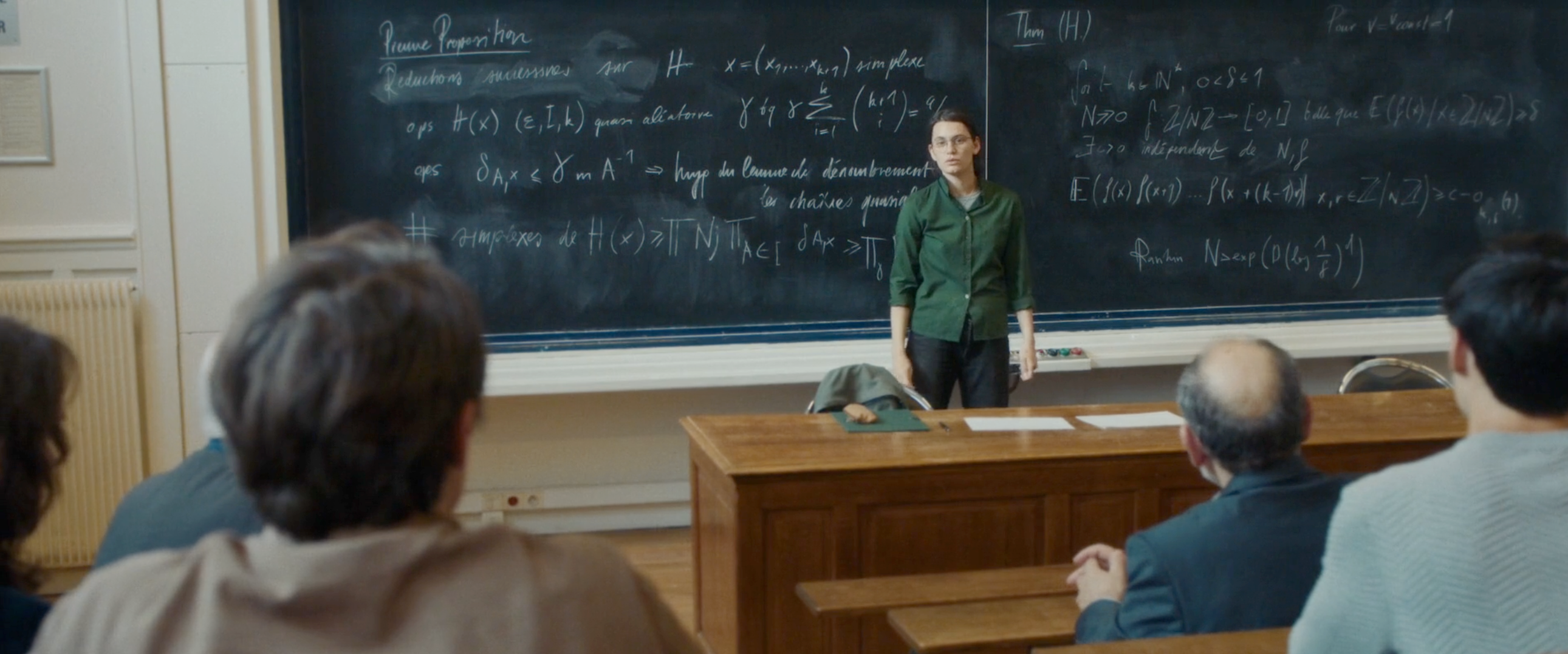
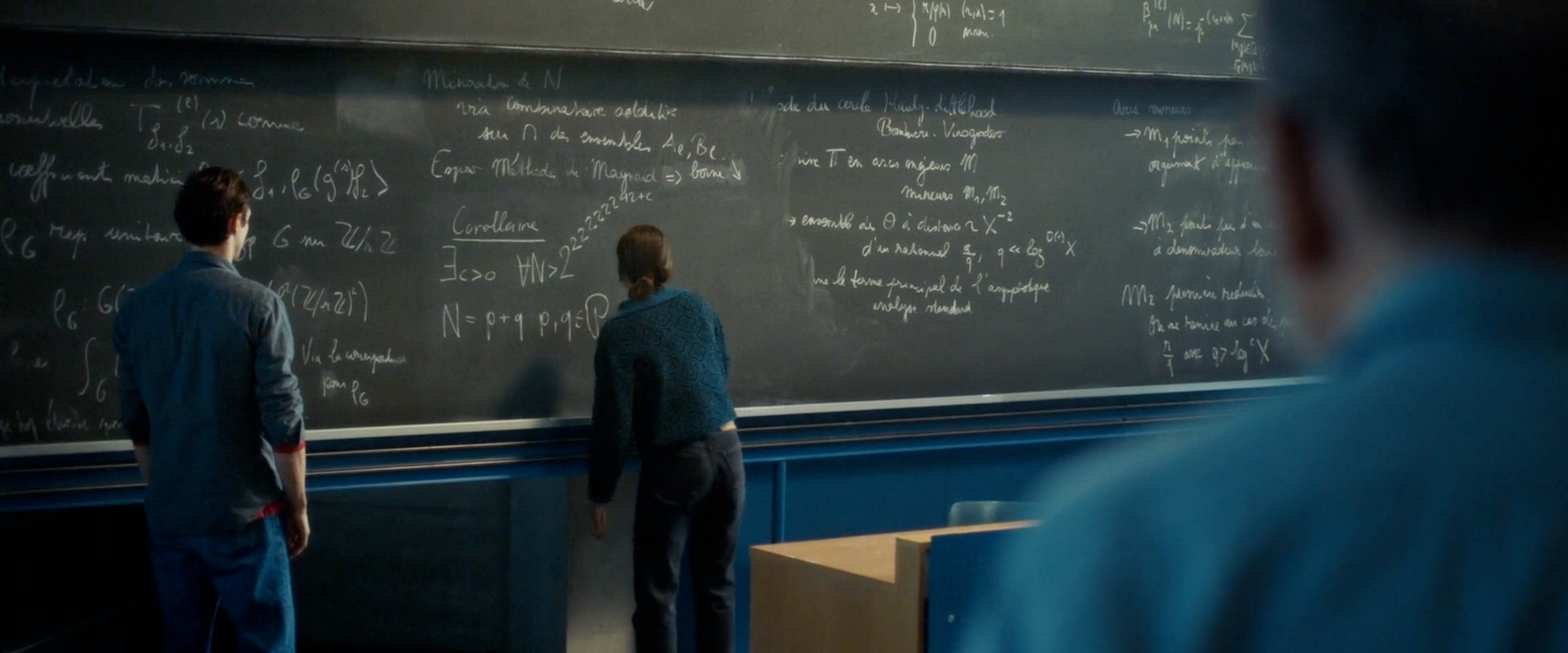
I learned about this movie from a German website "Die Gleichung ihres Lebens" which rightly critiques the use of cliches.
The movie features the Goldbach conjecture as its core.
There is already
calculus of love. An other similar movie of this type is
Proof.
Uncle Pedros and the Goldbach conjecture has not yet made it to a movie.
From a review:
"Marguerite's Theorem" remains an indivisibly odd number, that feels like it's being stolidly faithful to a true story when, like the much more fun "Queen's Gambit," or indeed "Good Will Hunting," it is fiction. "Marguerite's Theorem" remains an indivisibly odd number, that feels like it's being stolidly faithful to a true story when, like the much more fun "Queen's Gambit," or indeed "Good Will Hunting," it is fiction."
This movie is nice for a mathematician but the story hardly
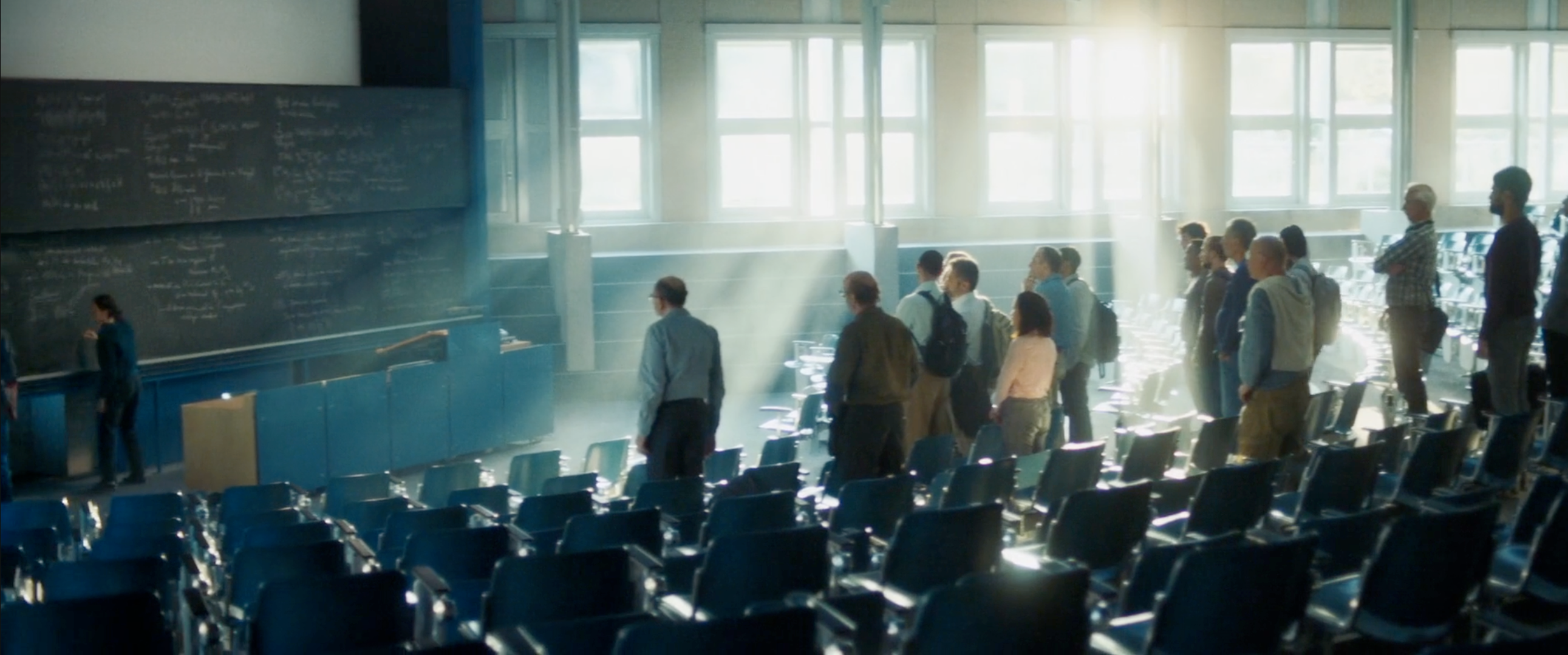
will catch on for a general audience. Chess has it easier. The movie pretends that
math is not a spectator sport, where a large group of mathematicians
can appreciate a new proof immediately. Even if experts claim a proof,
the community is cautious. For example, Louis de Branges (who has proven an important
conjecture, the Bieberbach conjecture in complex analysis)
still has a proof of the Riemann hypothesis on his website (since 2017). But the math world seems have
lost interest in following this.
Verification is hard in a highly technical field of math like analytic
number theory. Just to compare, the ternary Goldbach conjecture has been proven more than 10 years ago (an 80 page paper). It took 2 years to be accepted in a journal
but remains unpublished in the annals.
Helfgott wants to write the proof of the ternary conjecture more nicely
(see his statement.
This indicates what is really the case. No one can just quickly
see whether a major open problem has been solved. What movies about math often do is for dramatic effect pretend
that everybody understands. I would guess that in a typical seminar, 90 percent of an audience of professional
mathematicians understands 10 percent of the content. It requires to have worked on similar problems for years to
understand a substantial part.