Course Content and Goals: Course Content and Goals:
About four hundred years ago, Galileo wrote
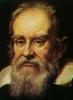 |
"The book of the universe is written in the
language of mathematics." |
Although the language of
mathematics has evolved over time, the statement has as much
validity today as it did when it was written. In Mathematics
S-1b you will become more vell-versed in the language of
modern mathematics and learn about its applications to other
disciplines.
Math S-1b is a second semester calculus course for
students who have previously been introduced to the basic
ideas of differential and integral calculus. Over the semester
we will study three (related) topics, topics that form a
central part of the language of modern science:
- applications and methods of integration,
- infinite series and the representation of functions by
infinite polynomials known as power series,
- differential equations.
The material we take up in this course has applications in
physics, chemistry, biology, environmental science,
astronomy, economics, and statistics. We want you to leave
the course not only with computational ability, but with the
ability to use these notions in their natural scientific
contexts, and with an appreciation of their mathematical
beauty and power.
We begin this course by looking at
various applications of the definite integral. The definite
integral enables us to tackle many problems, including
calculuating the net change
in amount given a varying density, determining
volume and arclength, and computing physical quantities.
In order to compute integrals we will study some
techniques of integration, such as the integration analogues
of both the Product Rule and Chain Rule for differentiation.
We will briefly look at some alternative transformations of
integrals that enable us to tackle them more efficiently.
The goal is not to transform you into an integration
automaton (we live in the computer age), but to have you
acquire familiarity with the techniques and the ability to
apply them to some standard situations.
More important is the ability
to apply the integration as appropriate in problem solving;
we will devote
time to developing your skill in doing this.
In the second unit of the course we will study infinite
sums. You already are aware that a rational number such as
 can be represented by an infinite sum,
(
can be represented by an infinite sum,
(
 ,
for
the case at hand). Actually, irrational numbers such as e and ,
for
the case at hand). Actually, irrational numbers such as e and
 have representations as infinite sums as well. In fact,
we will find that many functions, such as
f(x) = ex and
have representations as infinite sums as well. In fact,
we will find that many functions, such as
f(x) = ex and
 can be represented by infinite
polynomials known as power series. We will learn to
compute, understand, and manipulate these
representations. Polynomial approximations based on these power
series representations are widely used by engineers,
physicists, and many other scientists.
can be represented by infinite
polynomials known as power series. We will learn to
compute, understand, and manipulate these
representations. Polynomial approximations based on these power
series representations are widely used by engineers,
physicists, and many other scientists.
We will end with
differential equations, equations modeling rates of change.
Differential equations permeate quantitative analysis
throughout the sciences (in physics, chemistry, biology,
enviromental science, astronomy) and social sciences. In a
beautiful and succinct way they provide a wealth of
information. By the end of the course you will appreciate the
power and usefulness differential equations and you will see
how the work we have done with both series and integration
comes into play in analyzing their solutions.
|