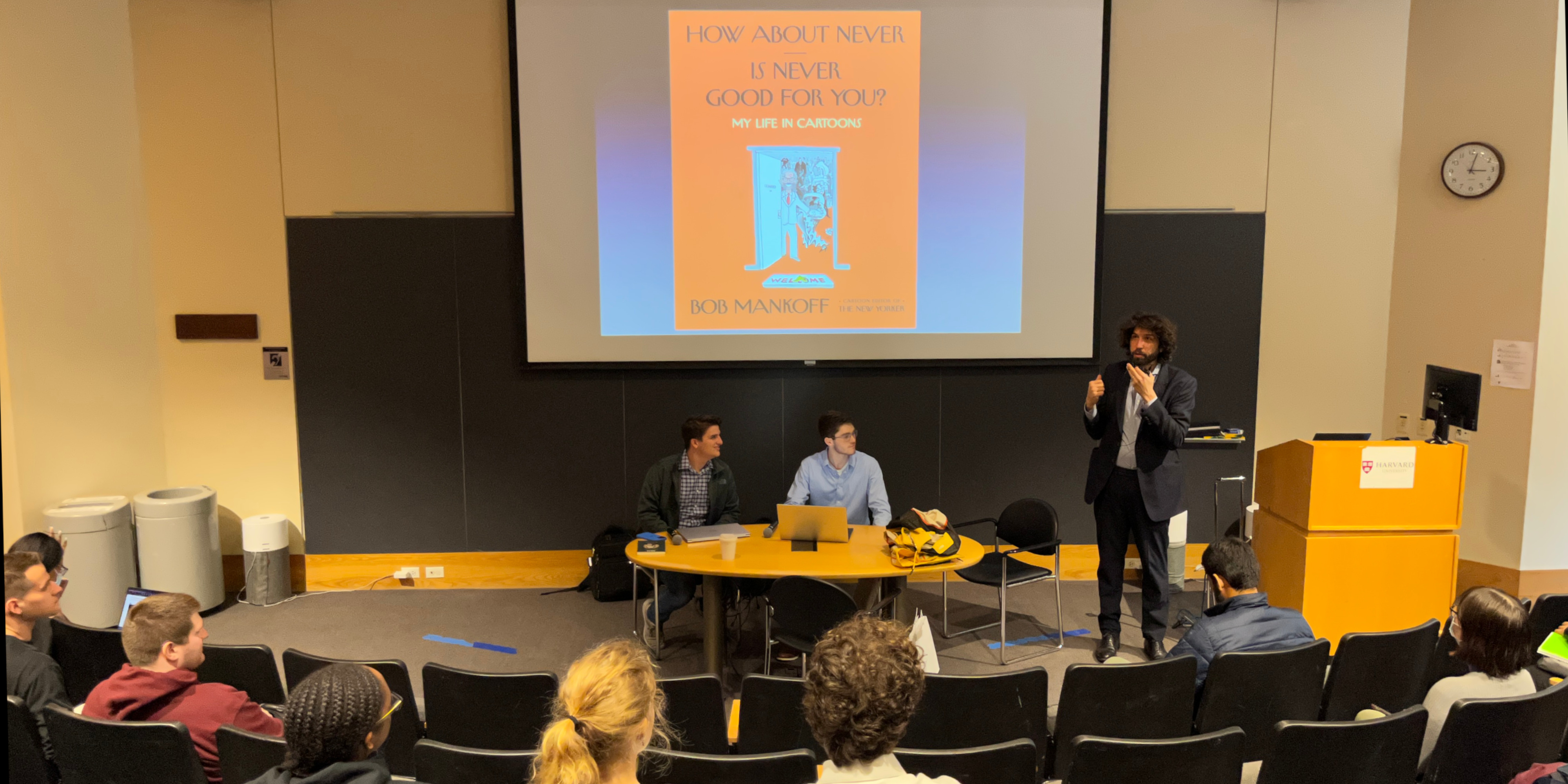
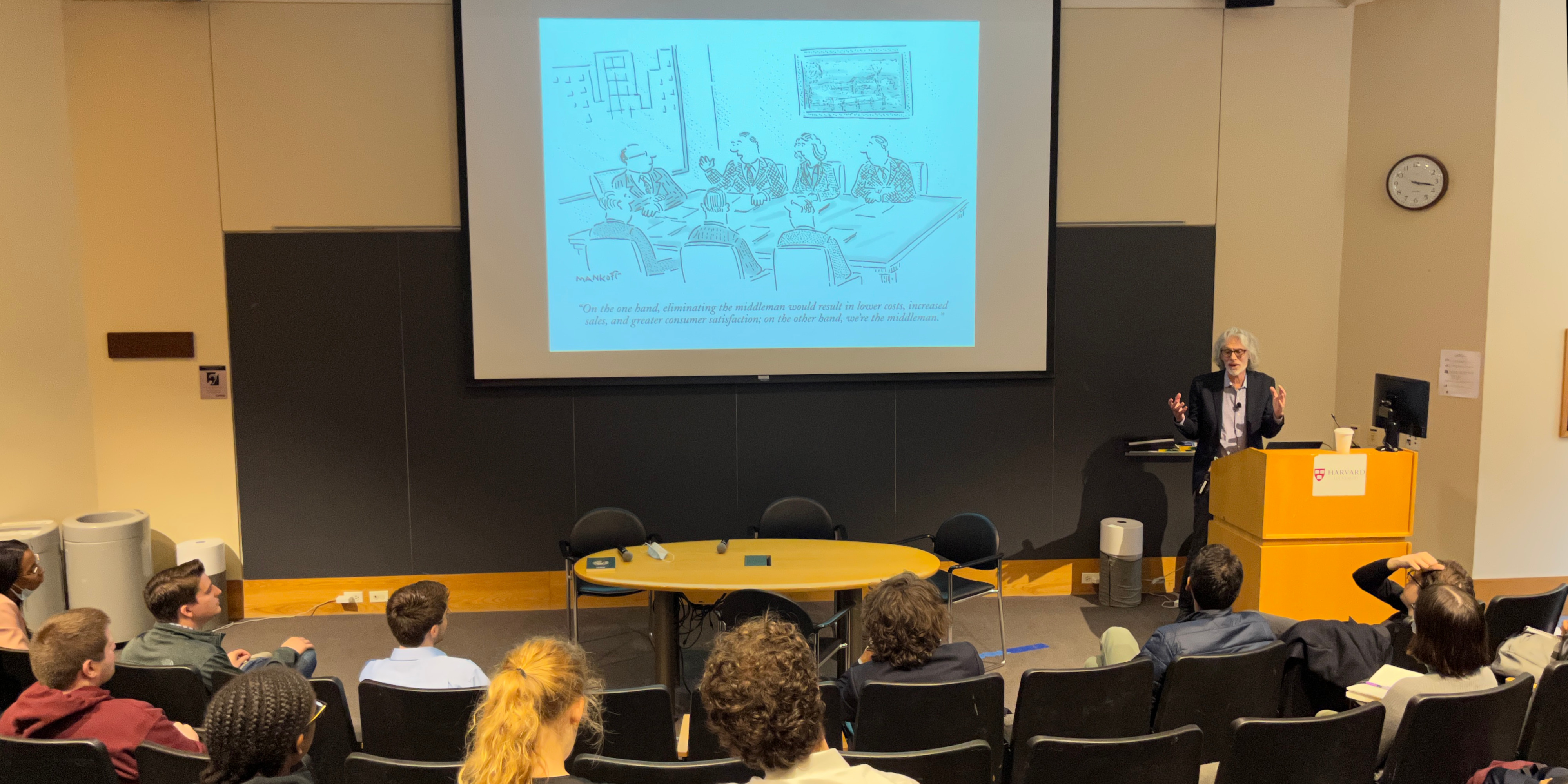
Bob Mankoff visits Harvard
Oliver Knill, April 15, 2022
Here is something written down during a visit of Bob Mankoff who visited the Gened class 1010
of Ambrogio Camozzi Pistoja on April 14, 2022. See also previous reflections on humor:
Satire is under attack these days, and that's not funny. I believe it has made
the world a more dangerous place. We are closer to the abyss than ever.
Wars have recently even started to happen because the
politicians have lost their mind and have no
``court jesters"
who could pass sugar coated messages to the powerful.
Humor and satire is not only art, it has often helped to cope with difficult situations
and enhance diplomacy. Successful societies were kept afloat with the help of satire.
Looking at history to notice that where satire died also democracy died.
The worst menaces which humanity has produced, were almost all dictators without humor.
Without humor they lack self-reflection and balance.
In the last 2 years, even very liberal folks have started
to doubt the wisdom of the general population and decided that
the public is unfit to judge political decisions. Not only the public, even
experts disagreeing with the government line were (and are still) silenced. The
rules of the game needed change, on all sides of the political spectrum,
lost elections on ``misinformation" and introduced control in the form
of censorship or prosecuting harshly protesters.
Maybe it is related to the fact that news outlets like the New York Times have
discontinued political cartoons. The world seems have become too
toxic for cartoons. Maybe the world has become toxic because of the absence of cartoons.
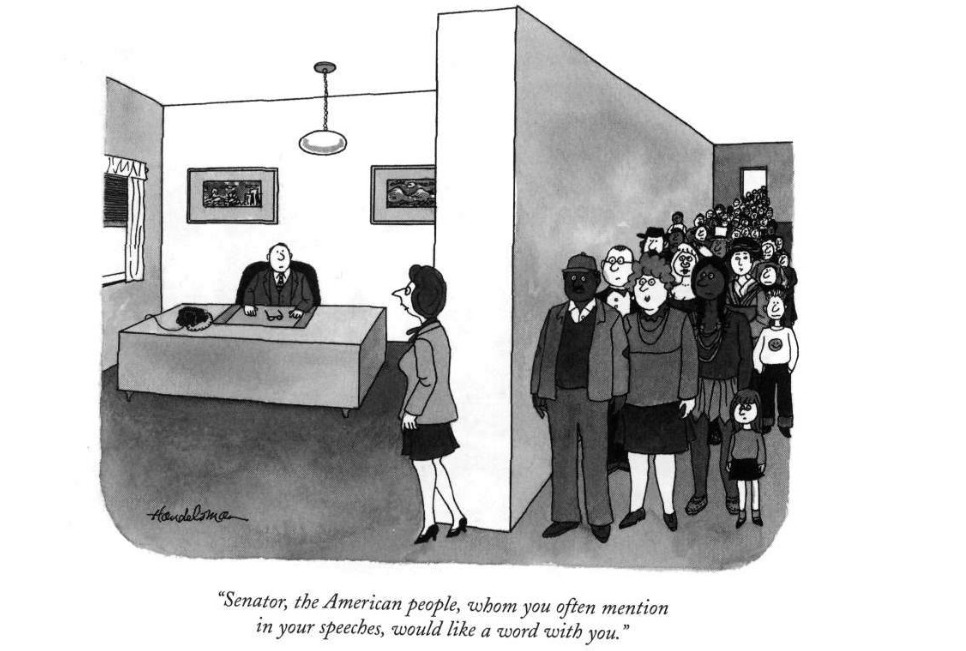
To the right one can see an example of a political cartoon. It is authored by E. Handelsman and
appears on page 5 of the book The New Yorker Book of political cartoons" (Bloomberg Press, 2000)
It addresses a rather deep question: what is democracy? Do we really care about
the opinion of the public or is it just lip-service? Do politicians really listen to their voters?
|
|
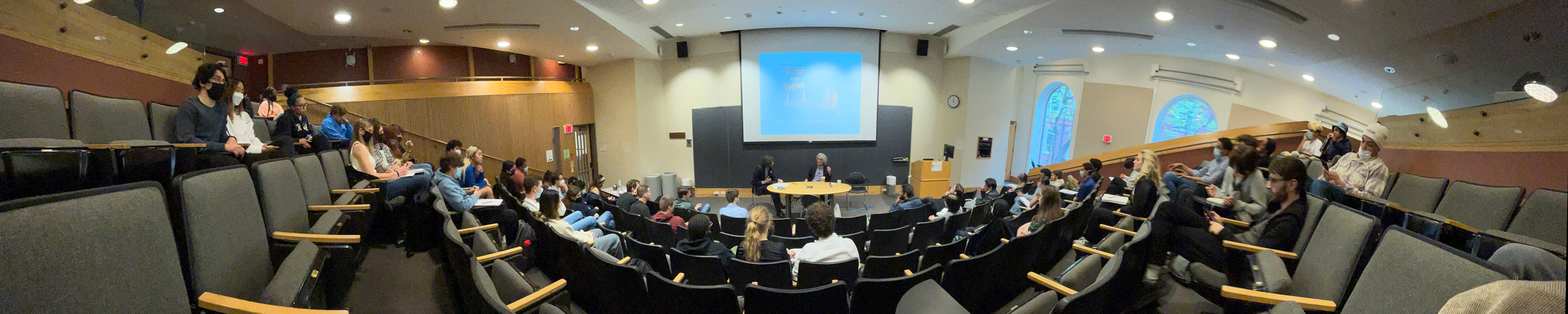
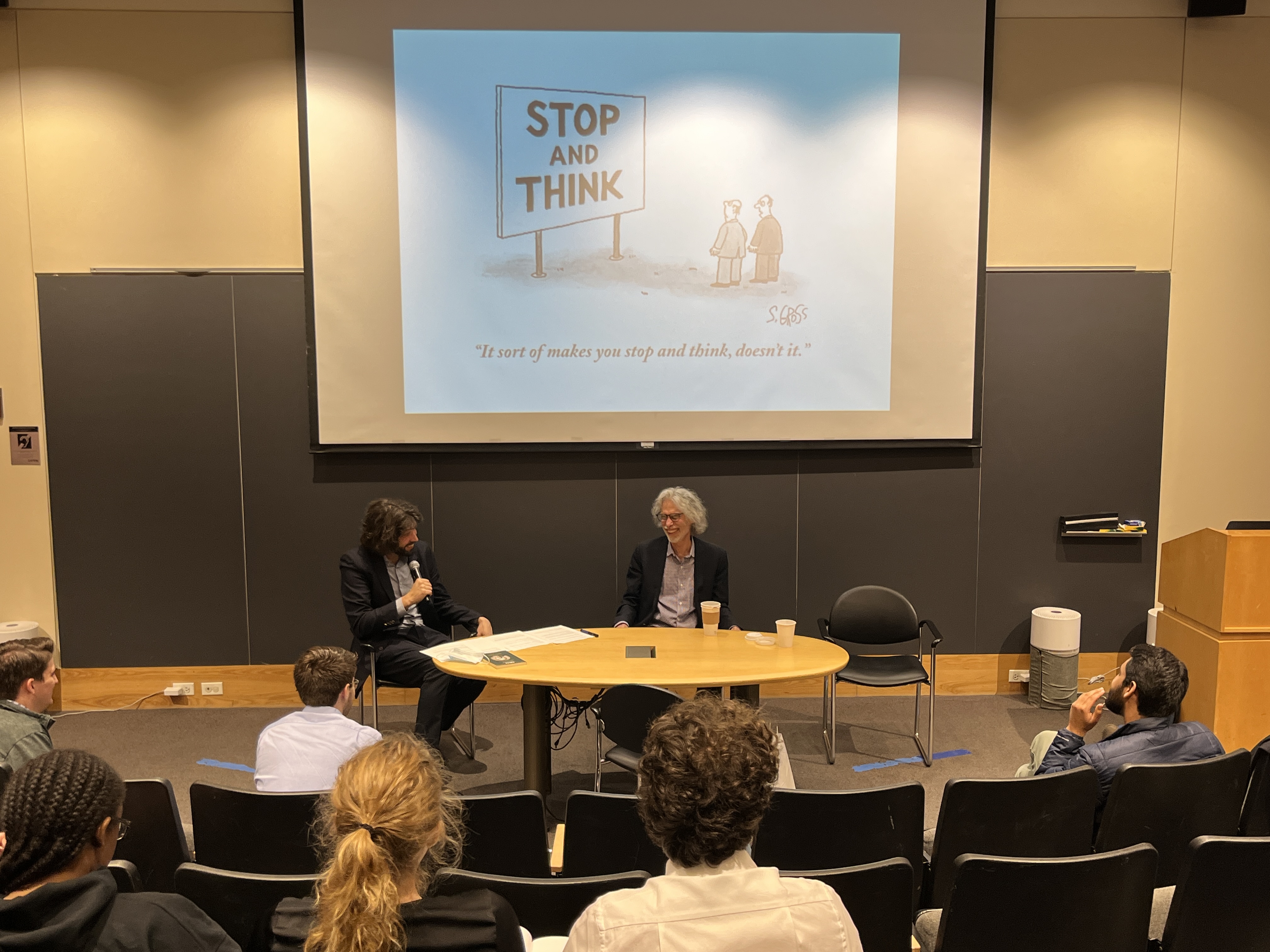
On April 14th, Bob Mankoff, the former Satire editor of the New Yorker
gave a guest presentation in GenEd 1010: Satire.
The visit has been co-sponsored by the Dante and Harvard Initiative.
The Gened course had an assignment in which students had to build captions to
jokes. The instructor, Ambrogio Camozzi Pistoja, explained a bit the reason
for the assignment. The students seem have liked it but it was confirmed
that creative assignments are hard.
Some observations which Mankoff mentioned and which I try here to recall (most of them are not verbatim):
- Laughter has already been observed as a tool for relaxation tool in animals like primates.
- Laughter helps coping with fear: you scream and laugh for example during a rollercoaster ride.
- Understanding humor mechanisms does not make you a humorist. Humor could become theoretical if AI does it.
- Trying to monitor humor can be a hindering. You learn it like a natural language.
- Retrospectively it can help to look at it and maybe help tweaking a joke.
- Creativity is mostly play and amusement.
- In a dream we are both the writer as well as the audience who is surprised.
- There is a protolanguage before you speak. You somehow feel what you say. There are atoms of associations.
- Most people think they have a good sense of humor.
- You judge humor all the time but good humor is pretty hard.
- Humor is a complicated thing. Enjoy the absurdity.
- A paradox: some of the most funny people have no sense of humor.
- Humor is important because it can turn it onto yourself and allow reflection.
- Humor allows to speak truth to power.
- There is no theory of humor. What happens in a joke? First confusion, then noticing mistakes, then correction.
- Humor critics usually don't laugh.
- Cartoons make you stop and think .
|
|
|
|