|
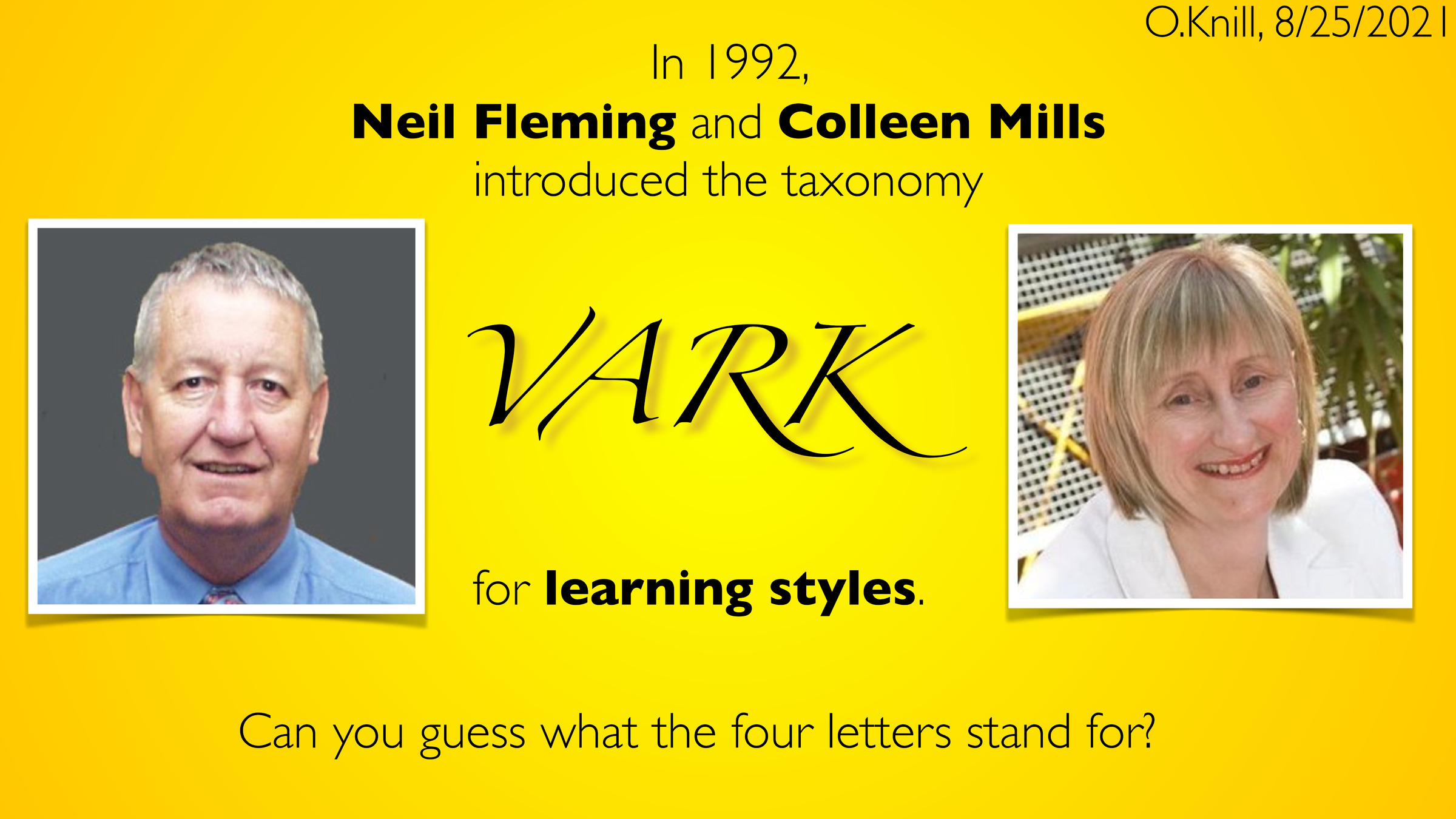
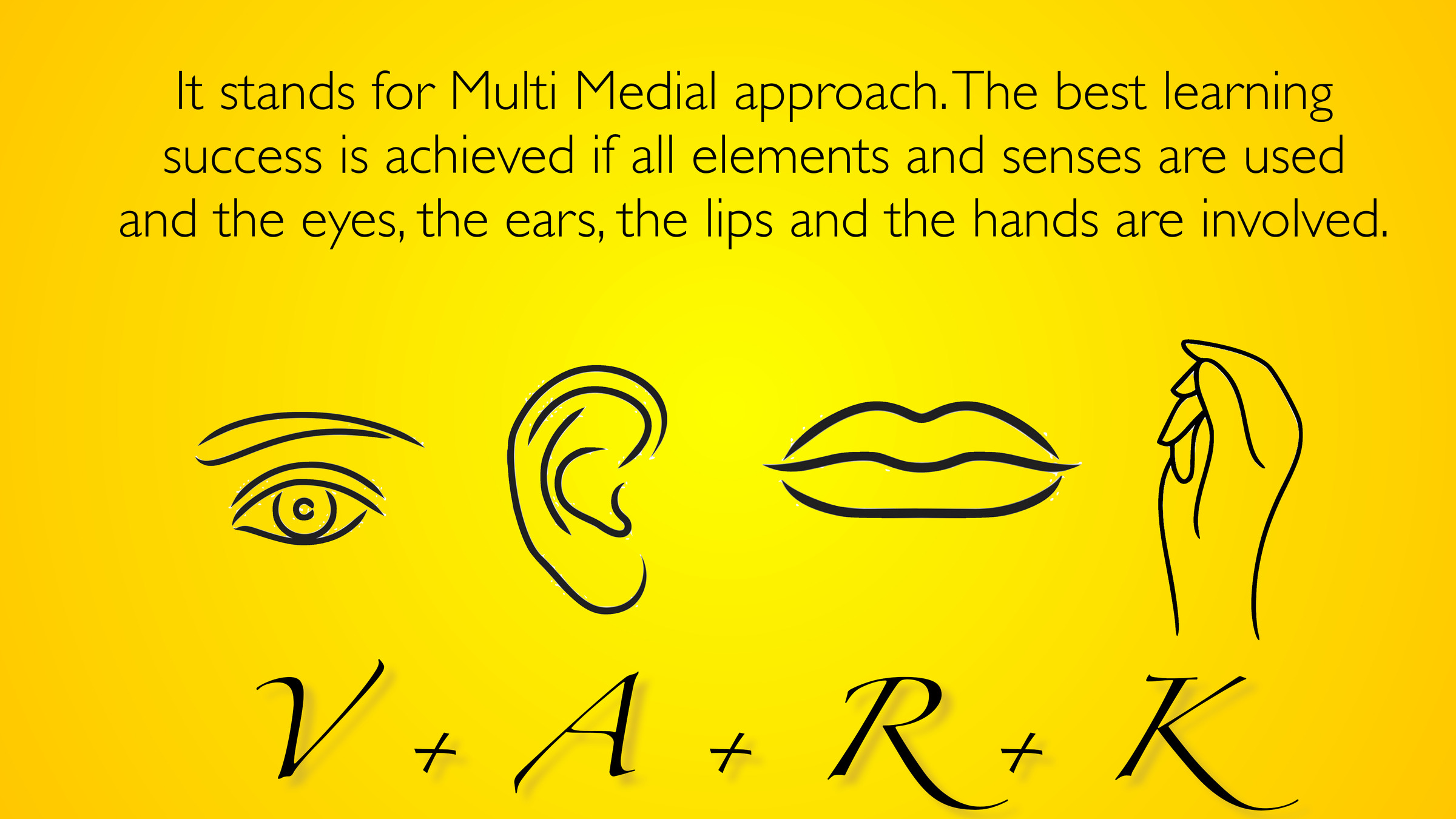
VARK is a simple taxonomy for learning styles. It abbreviates
Visual, Aural/Auditory, Read/Write, and Kinesthetic.
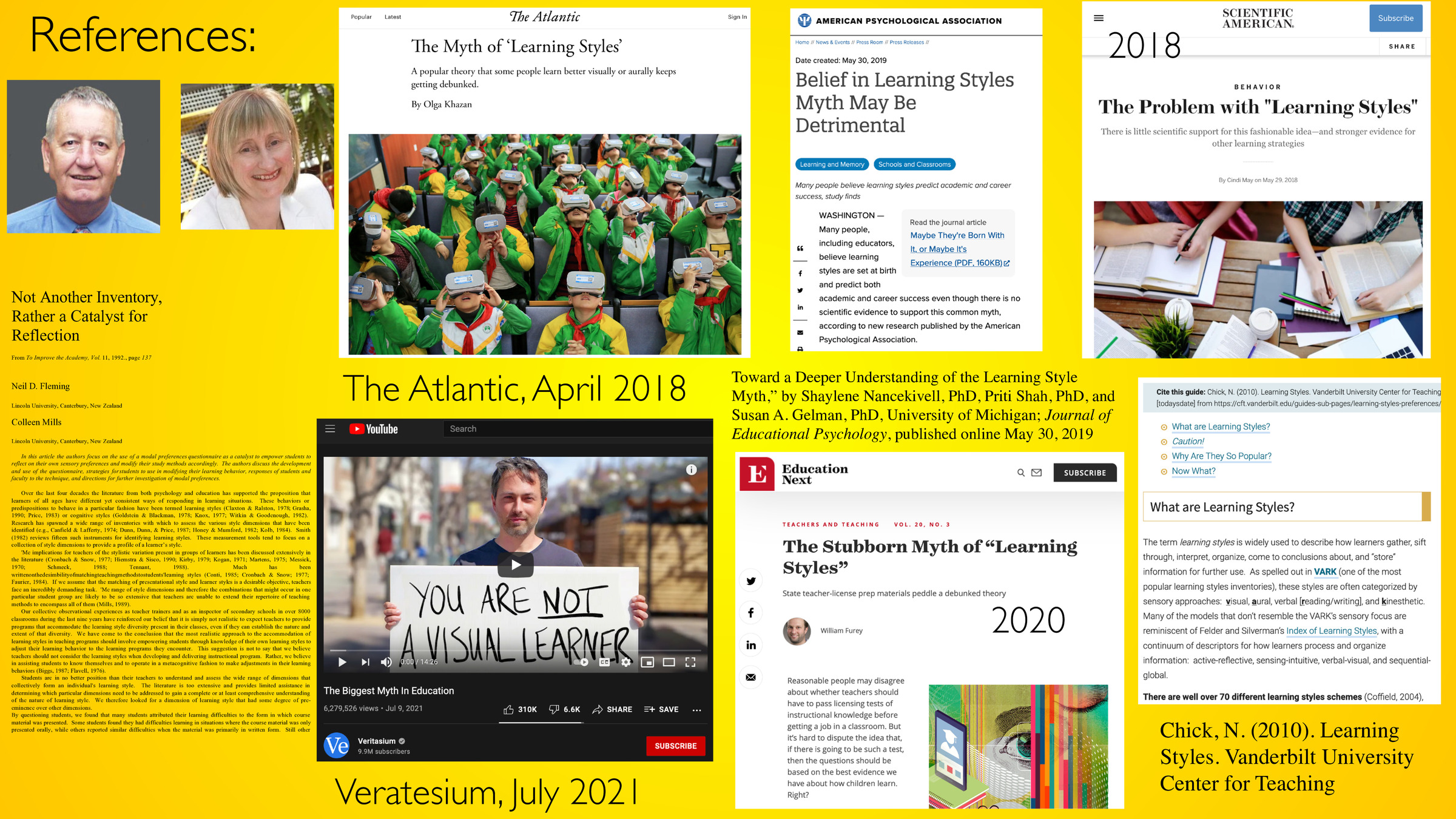
It is attributed to Neil D. Fleming and Colleen Mills from 1992 [PDF].
Sometimes, this is augmented to 7 learning styles, adding Social, Solitary and
Logical components. Up to 70 learning styles have since been introduced!
What learning type are you? V,A,R or K? It can be complicated. I consider myself very much a V type
as I think often in pictures, but I also find R appealing as precise statements more
clear than pictures; we have learned in mathematics that pictures can mislead. I also
like to hear things from an expert, additionally to see a lecture.
In some parts, I'm also very Kinesthetic in that I like to hold in hand an object.
Here is some handout about visual
proofs in mathematics which definitely belongs to V
and here is our
article on illustrating mathematics using 3D printers which is
definitely belongs to K. As this video
illustrates, there is little scientific evidence that a VARK classification
really works. Note, that this does not mean that Fleming and Mills got the taxonomy wrong.
It means that we often draw from additional assumptions which are not justified.
One assumption is that we know our learning style and that this
learning style does not depend on the subject. Both additional statements
were not done by Fleming and Mills but just assumed to be true because it seems to
fit our experiences. The Veratesium video comes with lots of references
and also explanations. One explanation given by a psychologist in the movie is that if
you believe to be a visual learner and a picture convinces you,
then you attribute that to your learning style. If it ``clicks" while
listing, you might not notice because of your predisposition ``I'm a visual learner".
More important appears to be Multi Modality (MM). One can also recall it as
Multi Media effect. To remember it, just imagine the different colors of the M & M
candy. Material presented in various ways sticks better.
Again, the above video gives lots of references which illustrate this.
There is little to add except maybe that learning also very much depends on
subject and abstraction level. Subjects like the theory of schemes or abstract algebra
can be visualized less well than differential geometry or topology. The next time you teach
or present remember: Sharks like M&M.
(Click to make it stick!)
|