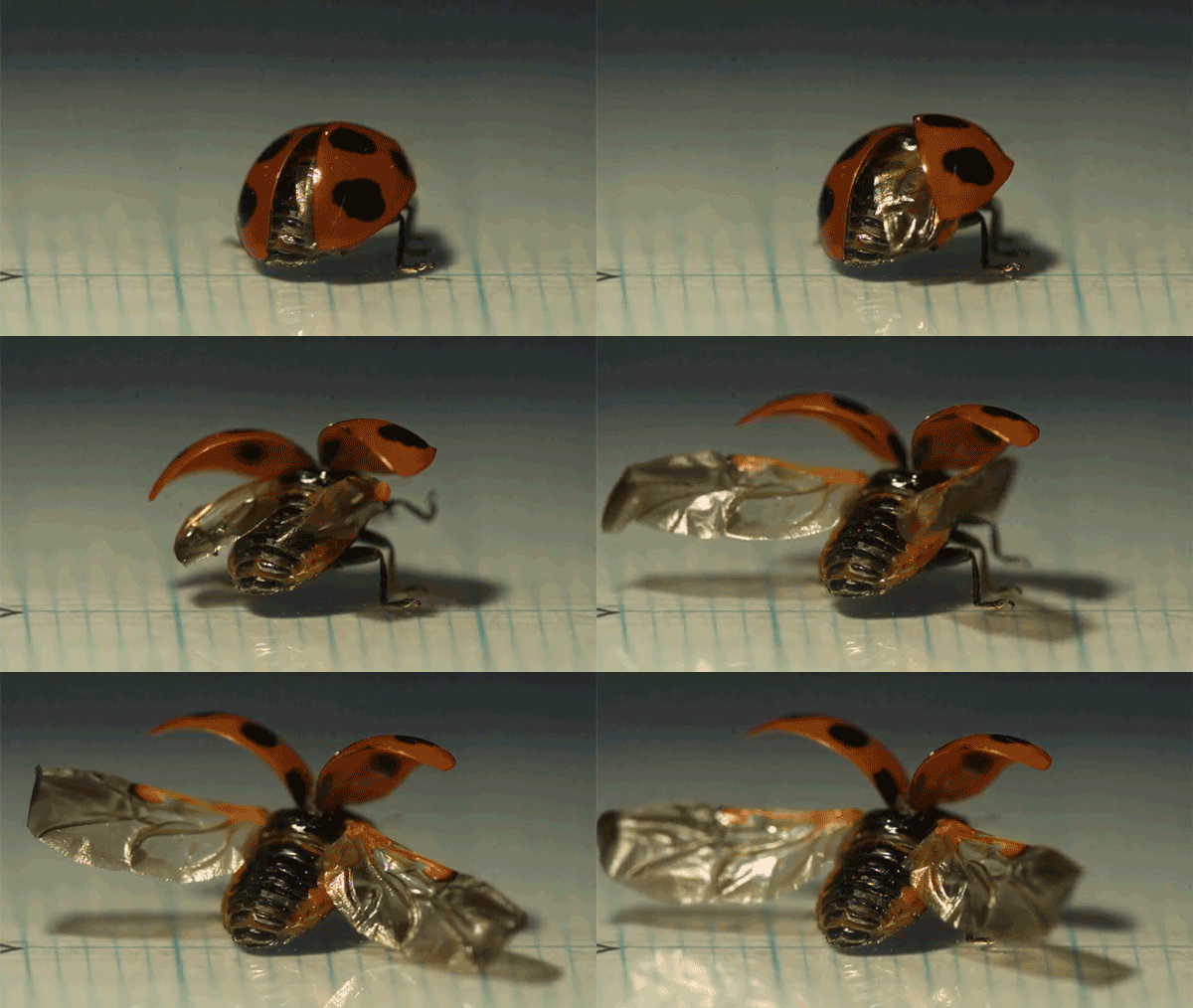
After ladybugs fly, they tuck their wings into a sliver of space between
their abdomen and the colorful outer wings for which they are best
known. Credit Jean-Michel Labat/Science Source The ladybug is a tiny
insect with hind wings four times its size. Like an origami master, it
folds them up into a neat package, tucking them away within a slender
sliver of space between its abdomen and the usually polka-dotted, harder
wings that protect it.
When it is time to take off, it deploys its flying apparatus from
beneath its colorful shell-like top wings, called the elytra, in only
a tenth of a second. And when it lands, it folds it back in just two.
Switching between flying and crawling many times in a day, the ladybug
travels vast distances.
(...)
This ladybug origami may not help with your hypothetical tent-wings,
but the principles behind it are increasingly solving other engineering
problems. The Japanese art has inspired self-assembling robots, a
foldable lens on a Manhattan-size telescope, an inflatable heart stent,
and other space and medical devices, buildings and everyday objects.
Maybe one day, humans will develop our own specialized folding techniques.