|
4. Week: 10/16-10/20
|
| Regular+Biochem | Physics |
|---|
pgs 115-118 number 4,12
pg 124-127 number 4 (no technology),
14,18,20,22
pgs 134-136 number 2,8,12,16
|
pgs 263-264 number 2,6,8
pgs 124-127 number 2,4,14,18
Also do:
|
1) Let F=(2 x y 2 + 3 x2, 2 y x2). Compute
the line integral of F along from (0,0) to (1,1) along the following curves:
a) The diagonal x=y
b) Along the x axis from x=0 to x=1, then from (1,0) to (1,1) along the line x=1
c) Along the y axis from y=0 to y=1, then from (0,1) to (1,1) along the line y=1
d) Exhibit a potential function for F and use the fundamental theorem for line integrals.
|
2) For each of the following, find values for the constants a,b which make the given vector
field conservative:
a) F=(a x3 y + b y 2,x4+y x)
b) F=(sin(y) + b y cos(x),a x cos(y) + sin(x))
c) F=(a y e(xy) + y 2,-x e(xy) + 2 y xb)
d) F=(3 xa yb,4 x3 y3)
|
|
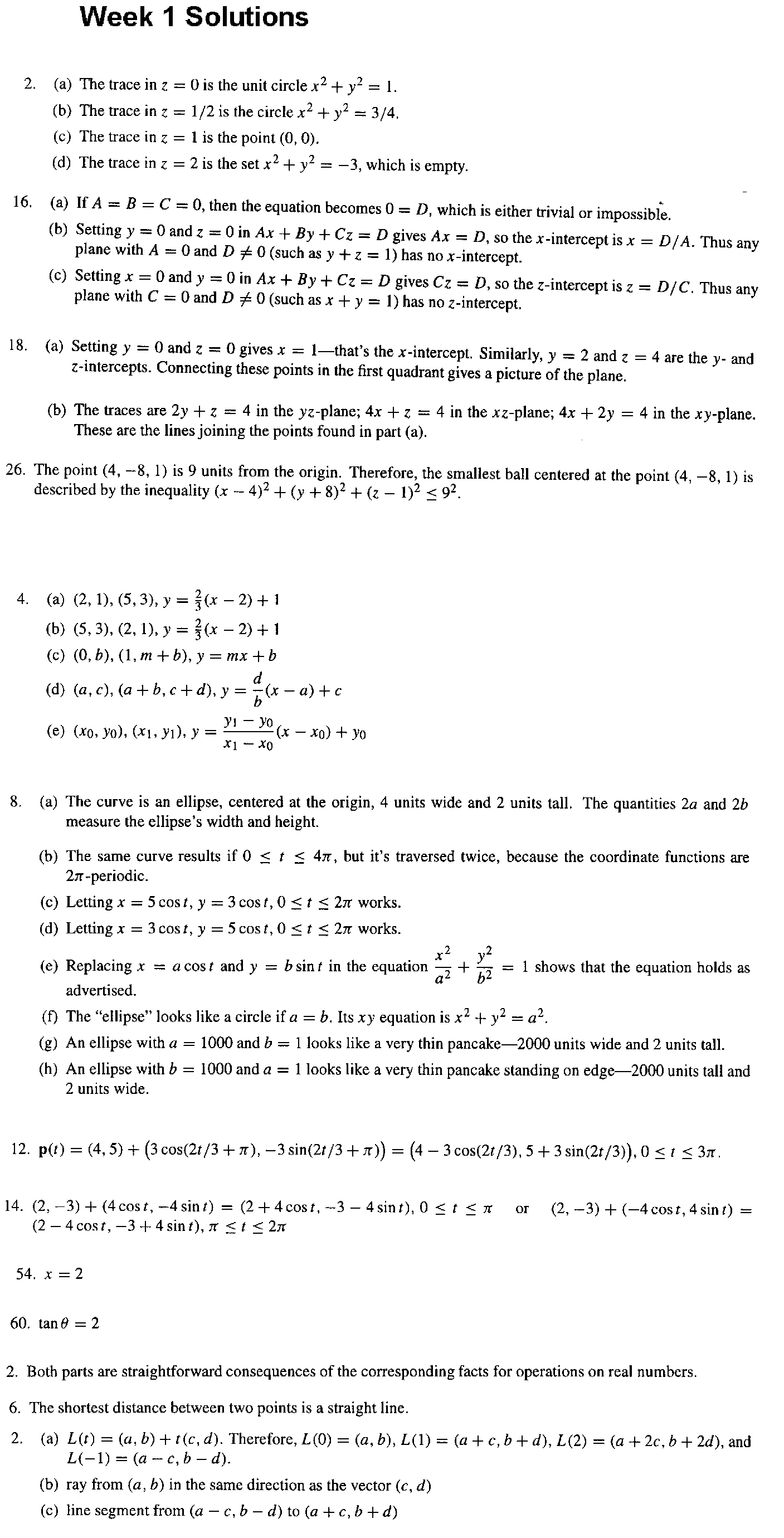
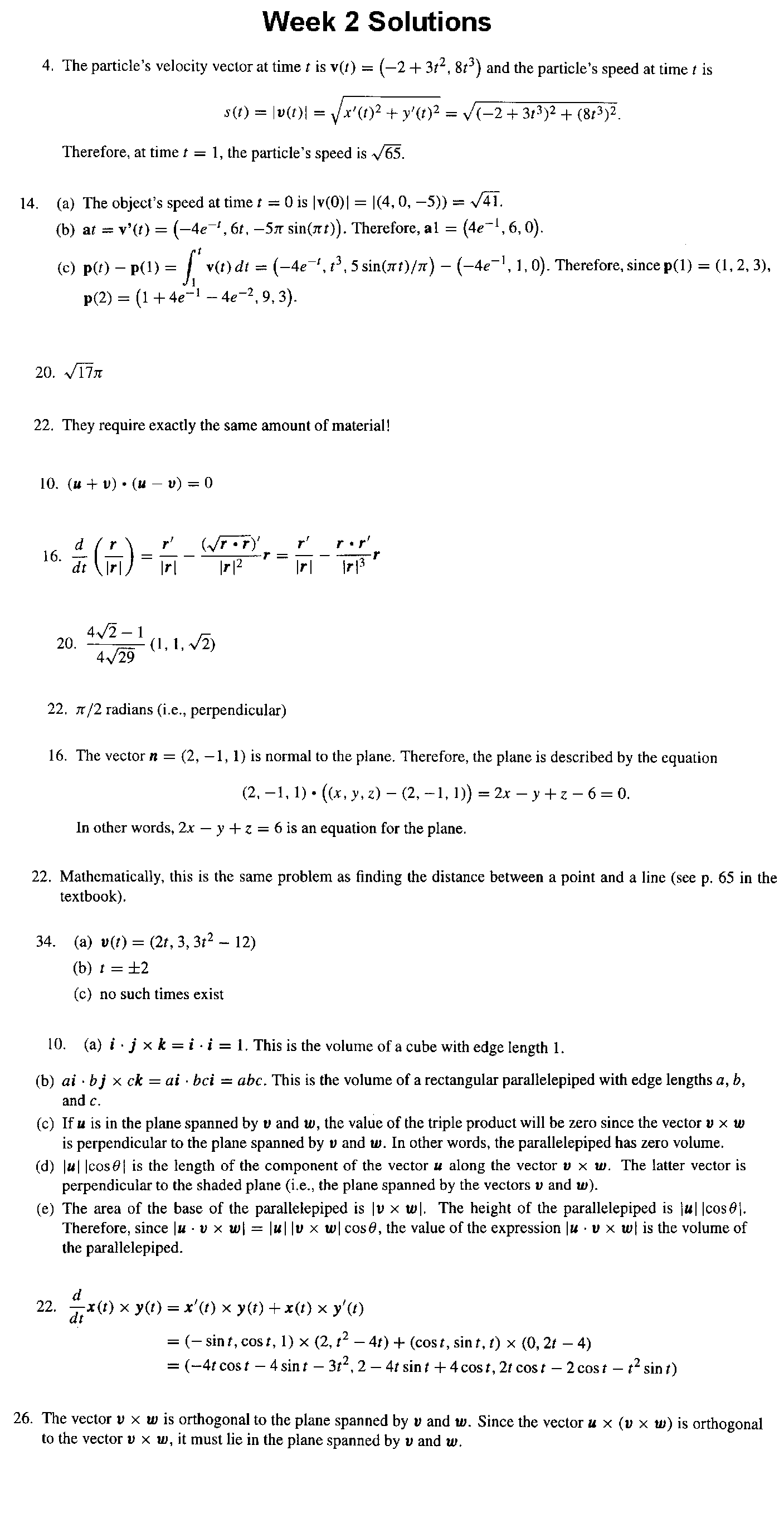
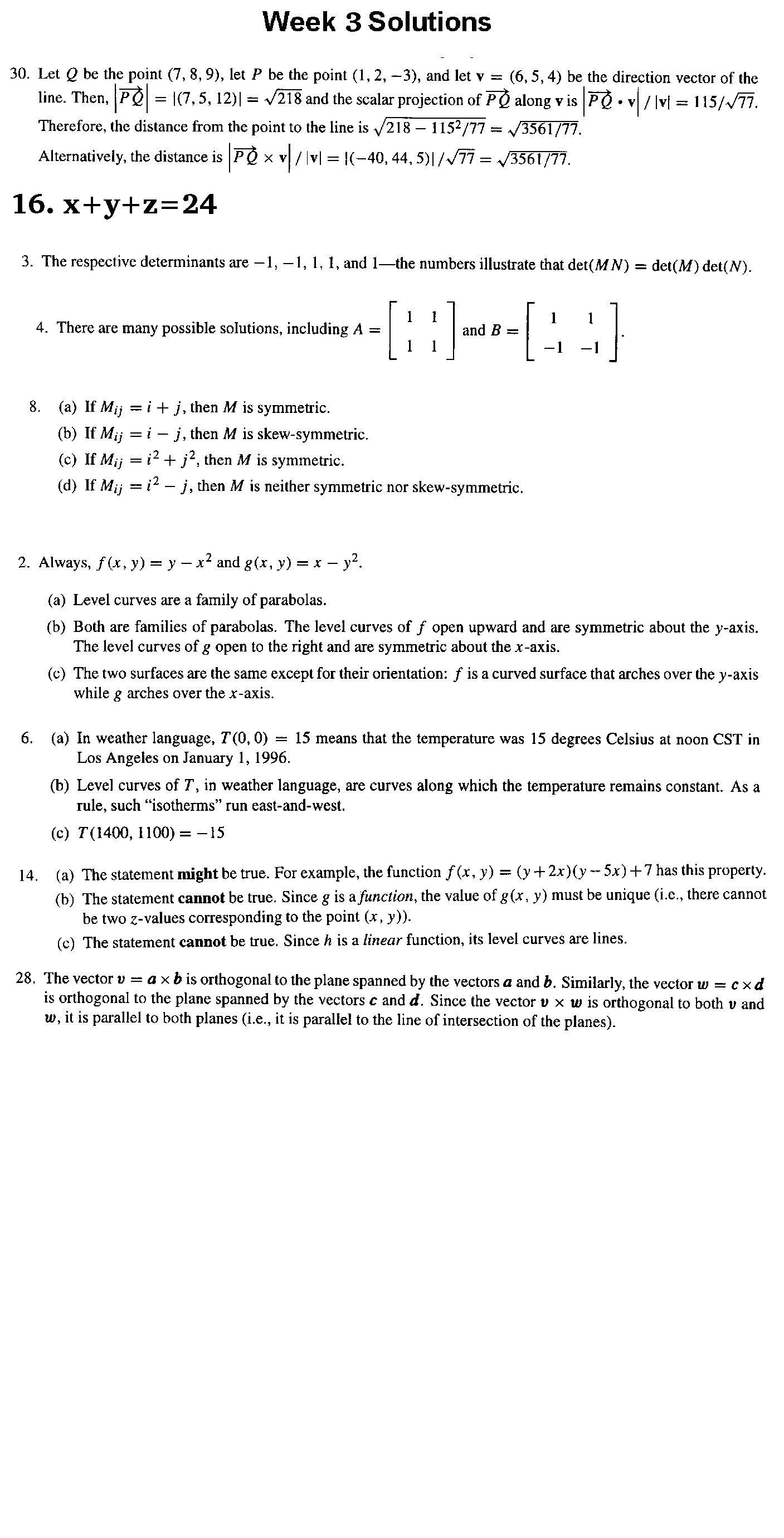
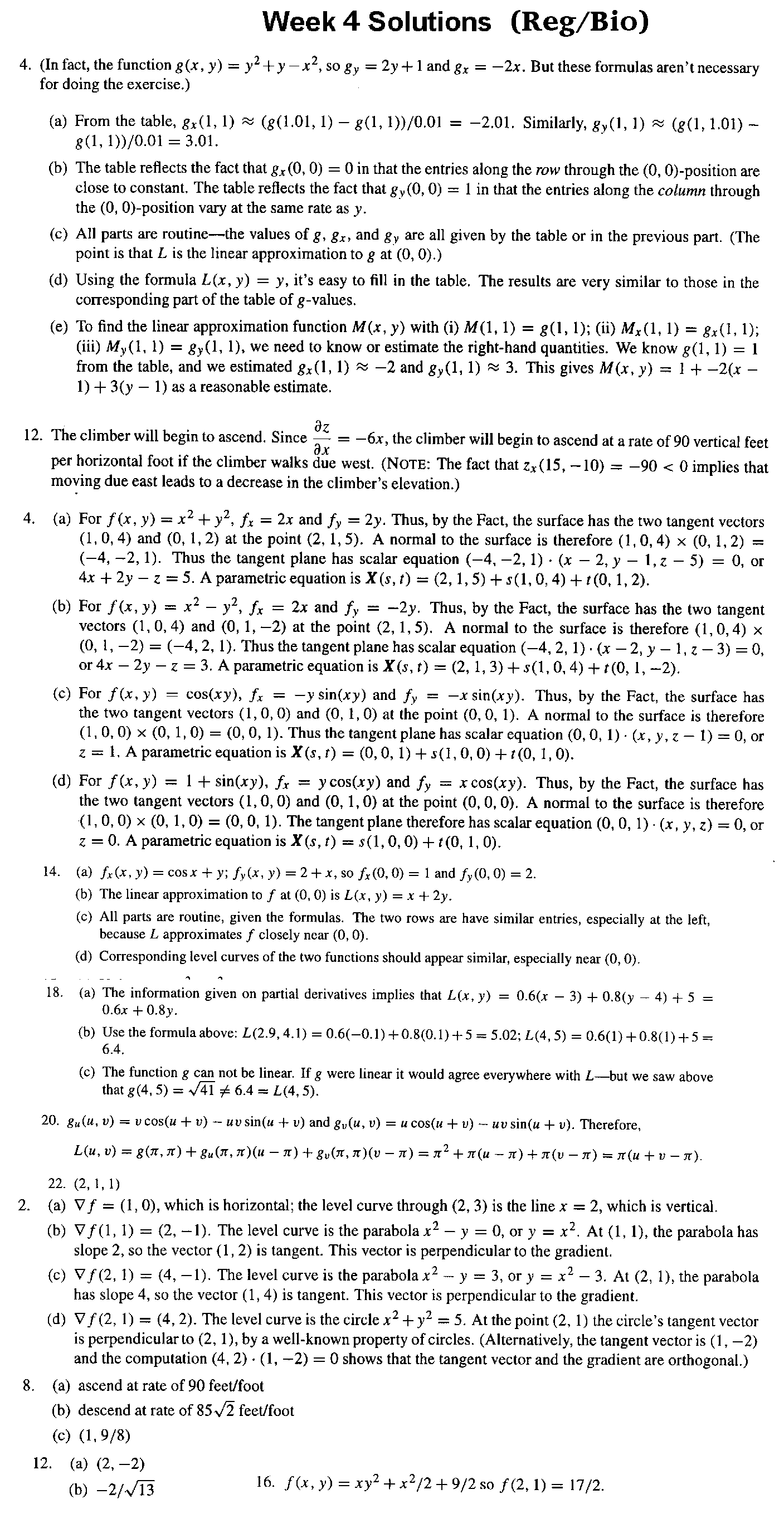
Solutions Regular/Bio ,
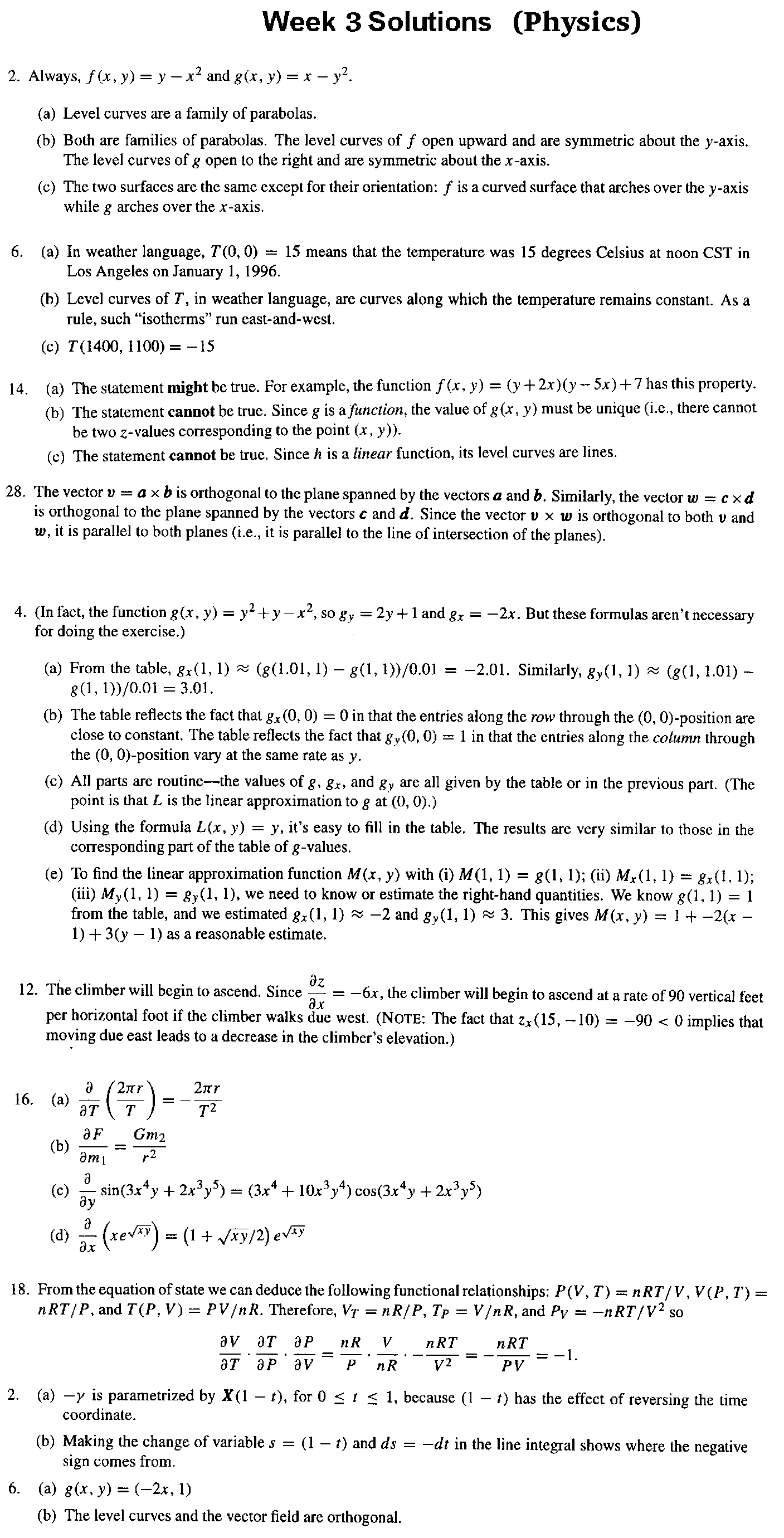
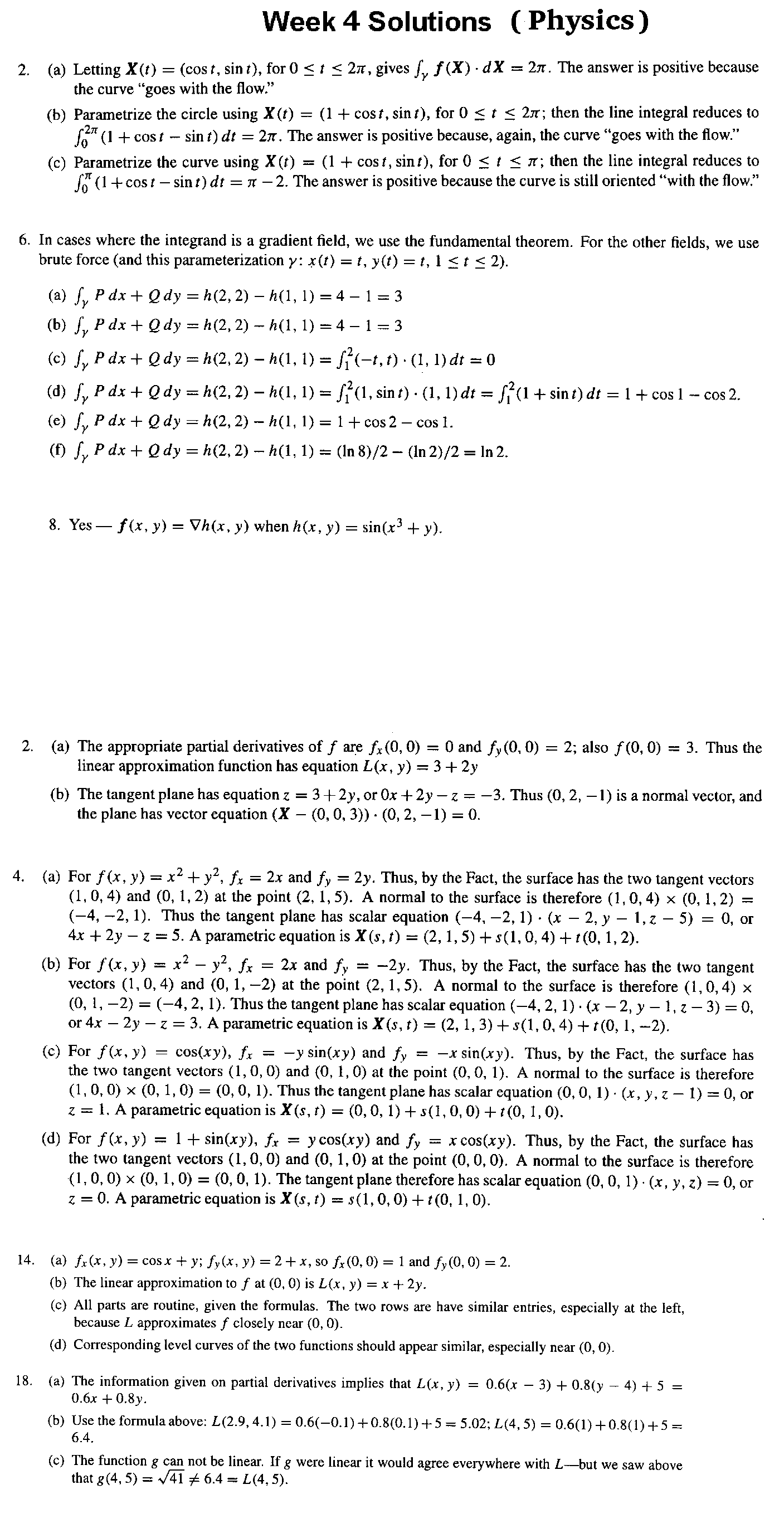
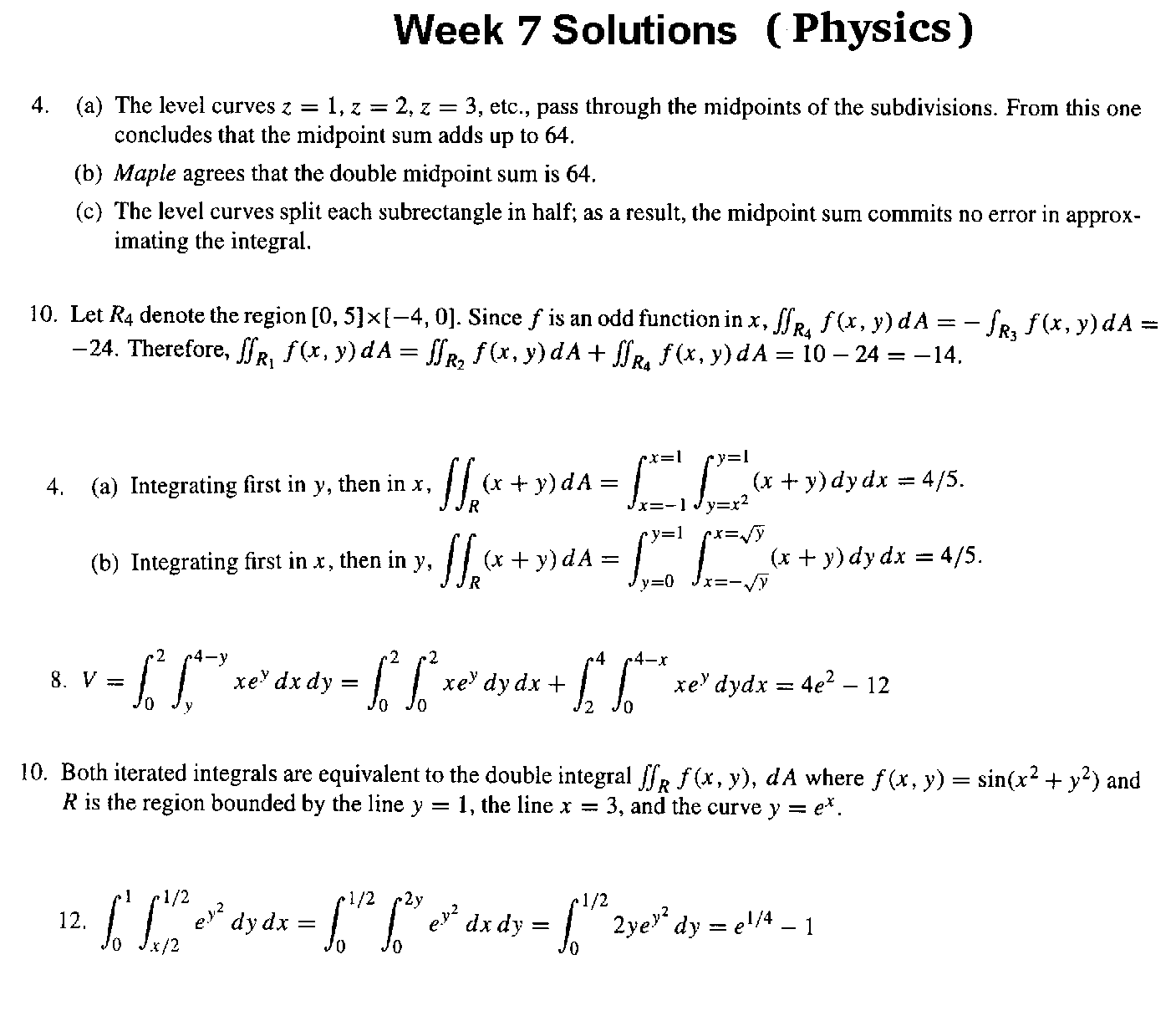
Solutions Phys ,
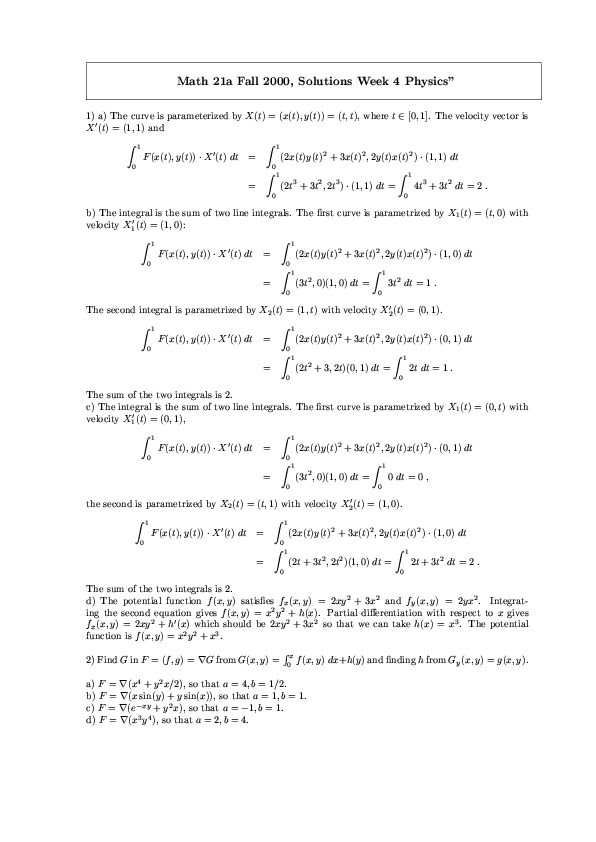
Solutions: Physics additional problems |
|
5. Week: 10/23-10/27
|
| Regular/Biochem | Physics |
|---|
|
pgs. 136 number 14
pgs. 140 number 2
pgs. 146 number 6
pgs. 156-159 number 2,8,10,16,20,26a,c
pgs. 245-248 number 2,4,6
|
pg 127 number 20,22
pgs 134-136 number 2,8,10,12,14,16
pg 140 number 2
pg 146 number 6
pg 395 number 2,4,8
pg 93 number 28
|
|
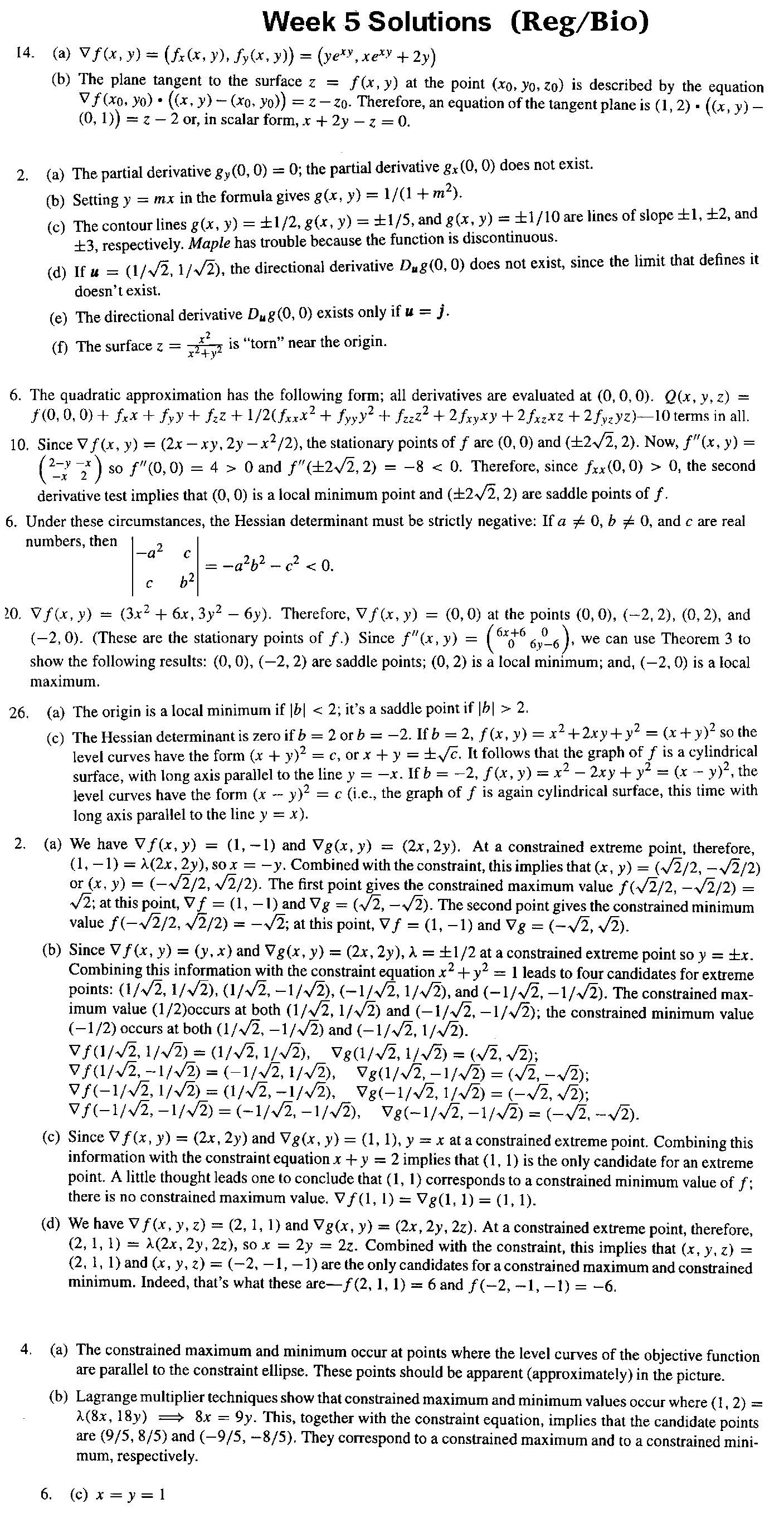
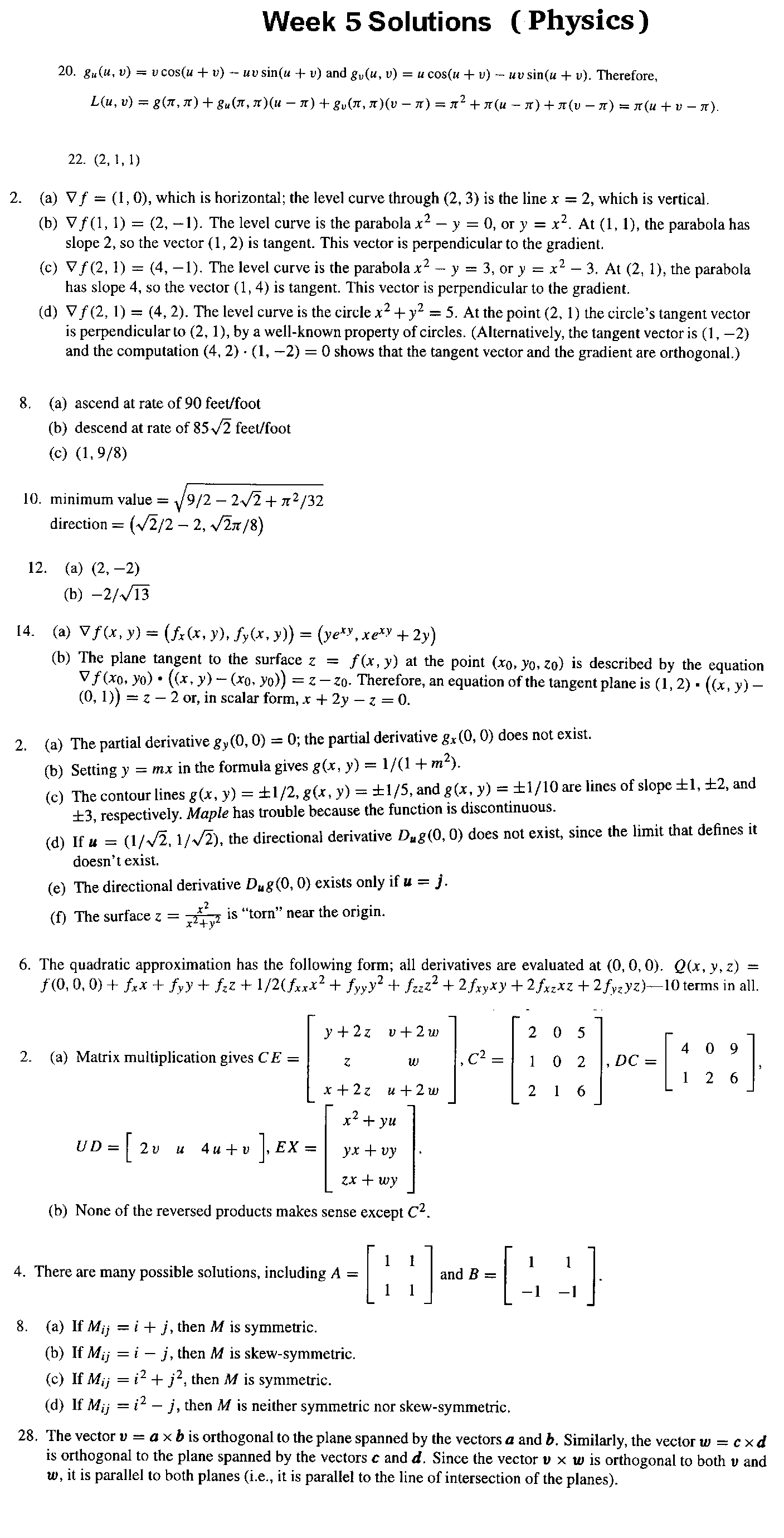
Solutions Reg/Bio ,
Solutions Phys
|
|
6. Week: 10/30-11/3
|
| Regular/Biochem | Physics |
|---|
pgs 247-248 #8
pgs 168-169 $4,8,12,14
pgs 179-182 #4a,c,10
pgs 191-193 #4
Also do:
1) Find the minimum distance from the surface x2+y2-z2=1 to the origin.
2) Find the maximum and minimum values of x+y-2z on the sphere x2+y2+z2=1.
3) Find the local extreme points of f(x,y,z)=xyz on the surface x+y+4 z=1.
4) Model the earth as the sphere x2+y2+z2=1. Suppose that the temperature
at a point (x,y,z) on the surface is T(x,y,z)=x2-y2+z+1
in appropriate units. Find the points with the highest and lowest temperatures.
5) Suppose that the profit from Scooter sales is a function N of variables (x,y,z) that is given
by N(x,y,z) = -4 x2+2xy-z2.
Suppose as well that the values of (x,y,z) are
not independent, but constrained by x+y+2z=1. What values of (x,y,z) should be used to maximize the profit?
|
pgs 179-182 #4a,c,10
pags 191-193 #4,8,10,12
|
|
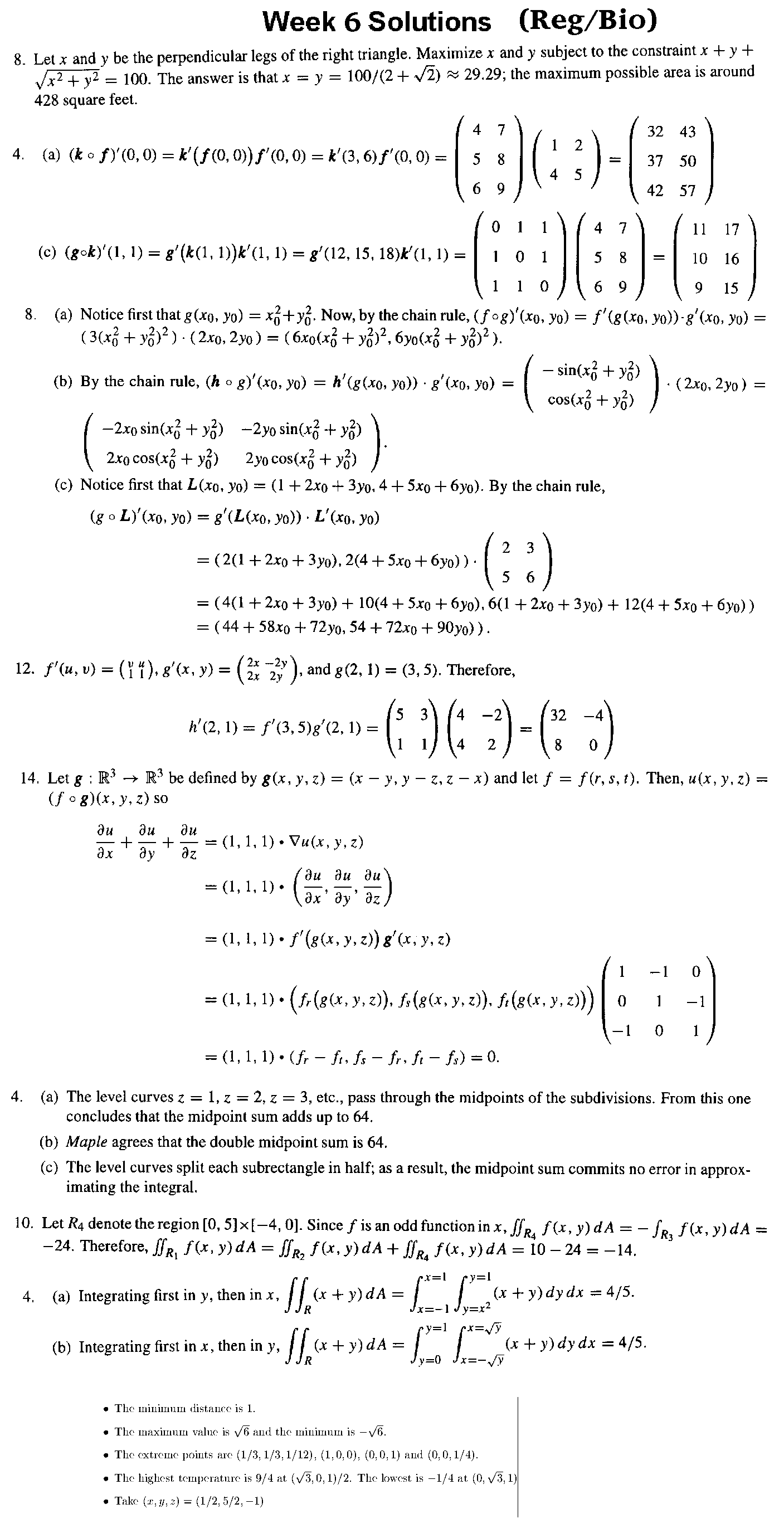
Solutions Reg/Bio
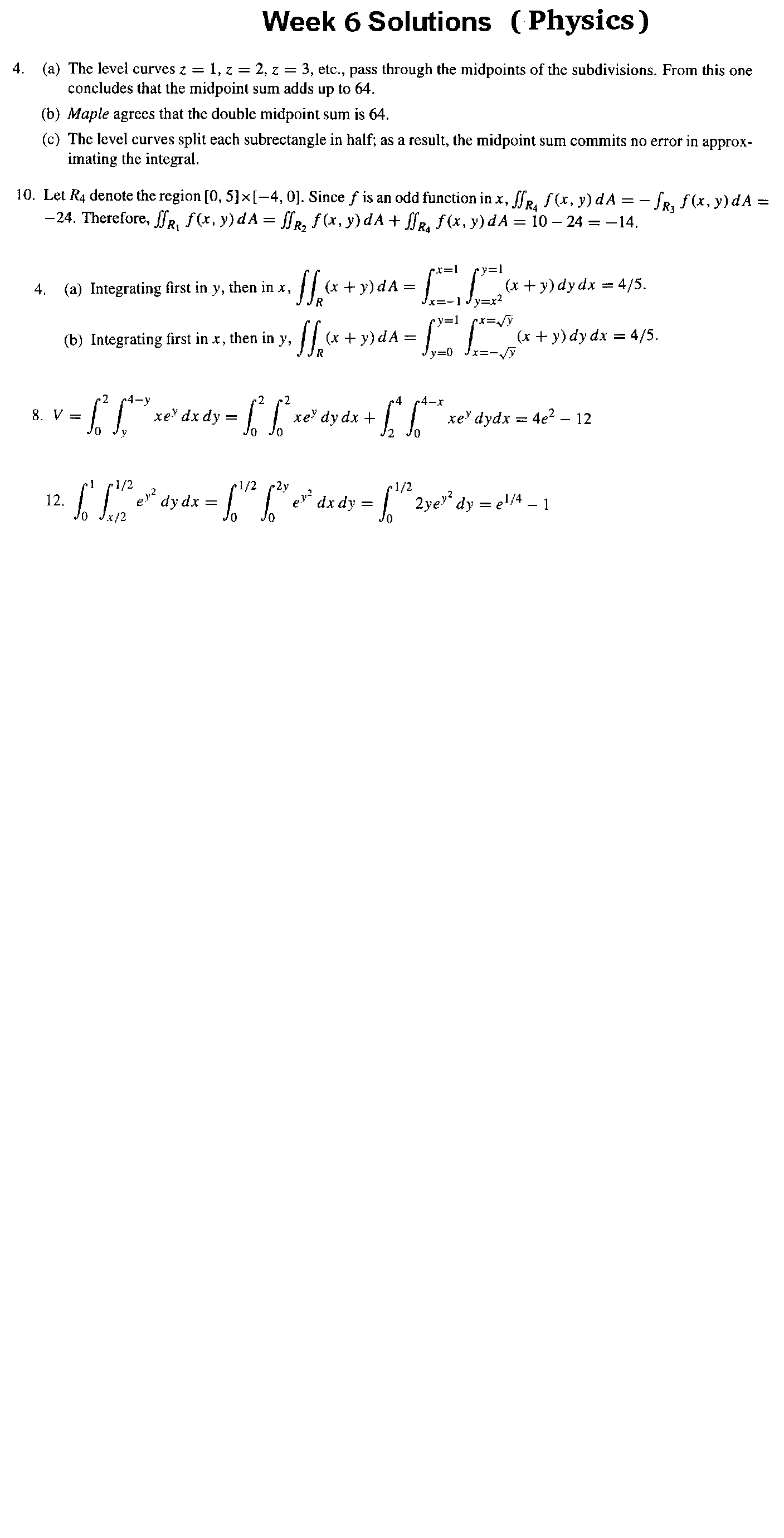
Solutions Phys
|
7. Week: 11/5-11/10
(Due Thursday 11/16, rsp. Friday 11/17)
|
| Regular/Biochem | Physics |
|---|
|
pgs. 192-193, number 8,10,12
pgs. 199-200, number 2,6
page 385, number 10,14
|
pgs. 179-182, number 4a,c 10
pgs. 191-193, number 4,8,10,12
|
|
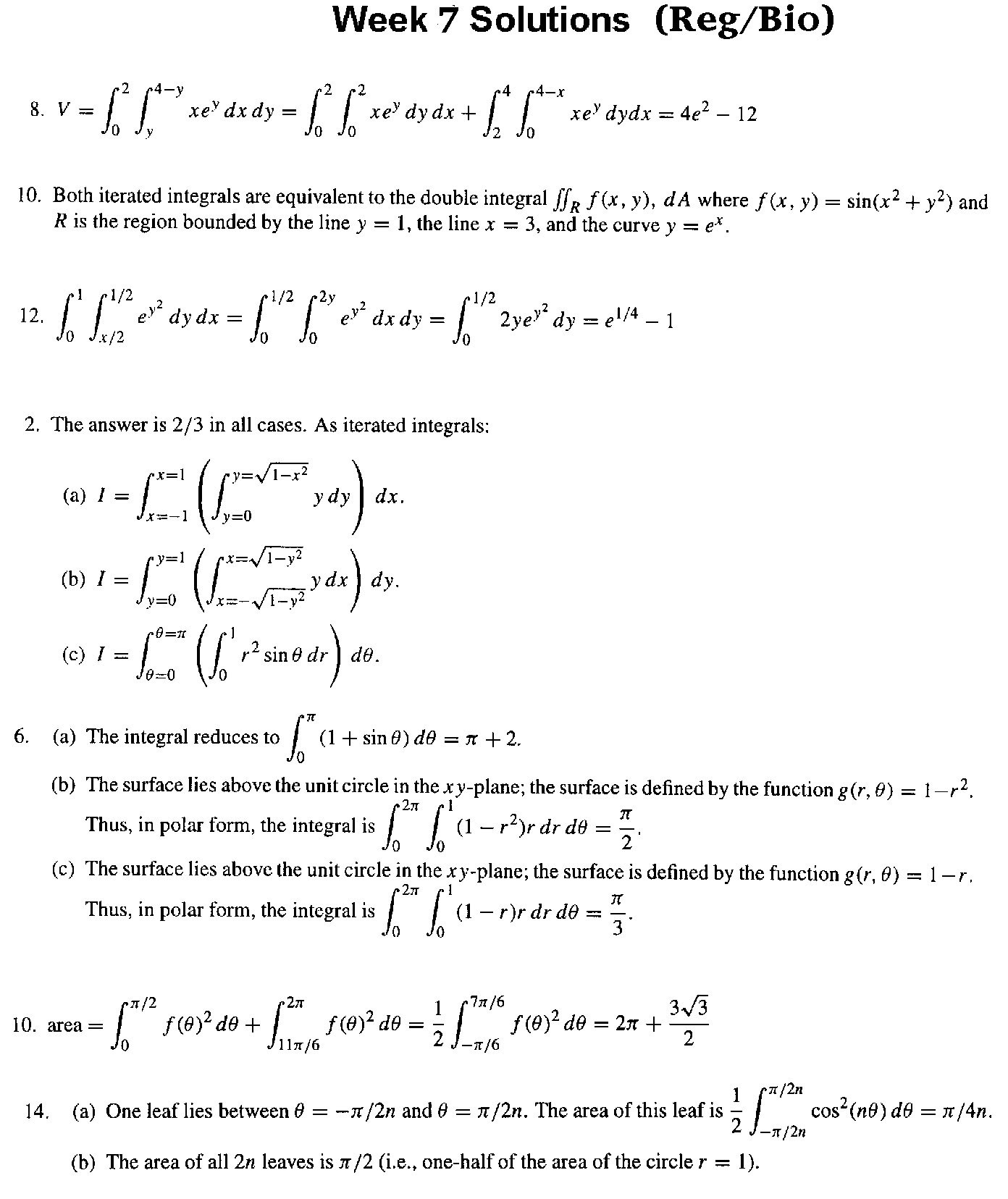
Solutions Reg/Bio
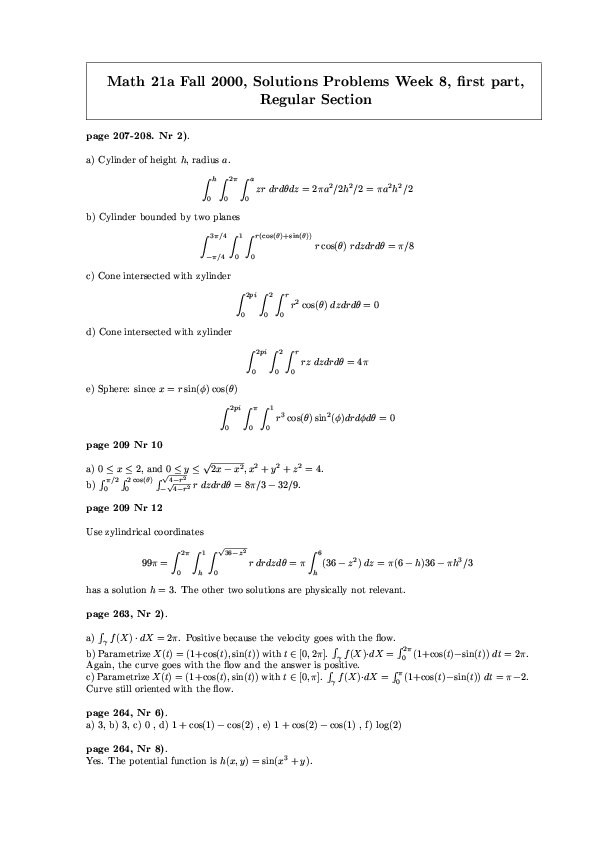
Solutions Phys
|
8. Week: 11/13-11/17
(Due Tue 11/28 rsp. Wed 11/29 after Thanksgiving)
|
| Regular |
Physics |
Biochem |
|---|
pgs 207-208 number 2 (no tech), 10, 12
pgs 254-255 number 2, pages 263-364 number 2 (no tech), 6, 8
Also do:
1) Let F=(2 x y 2 + 3 x2, 2 y x2). Compute
the line integral of F along from (0,0) to (1,1) along the following curves:
a) The diagonal x=y
b) Along the x axis from x=0 to x=1, then from (1,0) to (1,1) along the line x=1
c) Along the y axis from y=0 to y=1, then from (0,1) to (1,1) along the line y=1
d) Exhibit a potential function for F and use the fundamental theorem for line integrals.
2) For each of the following, find values for the constants a,b which make the given vector
field obey the necessary condition stated as the fact on page 262 of the text to be
a gradient:
a) F=(a x3 y + b y 2,x4+y x)
b) F=(sin(y) + b y cos(x),a x cos(y) + sin(x))
c) F=(a y e(xy) + y 2,-x e(xy) + 2 y xb)
|
pgs 199-200, number 2,6, pg 385 number 10,14, pgs 207-208 number 2 (no tech) 10,12
|
pgs 207-208 number 2 (no tech),10,12
Rosner, p.40-44 number 2.1,2.2,2.8,2.9,2.10,2.18
|
|
Solutions Solutions book problems (Reg) , and
additional problems (Reg) = Week 4 (Phys)
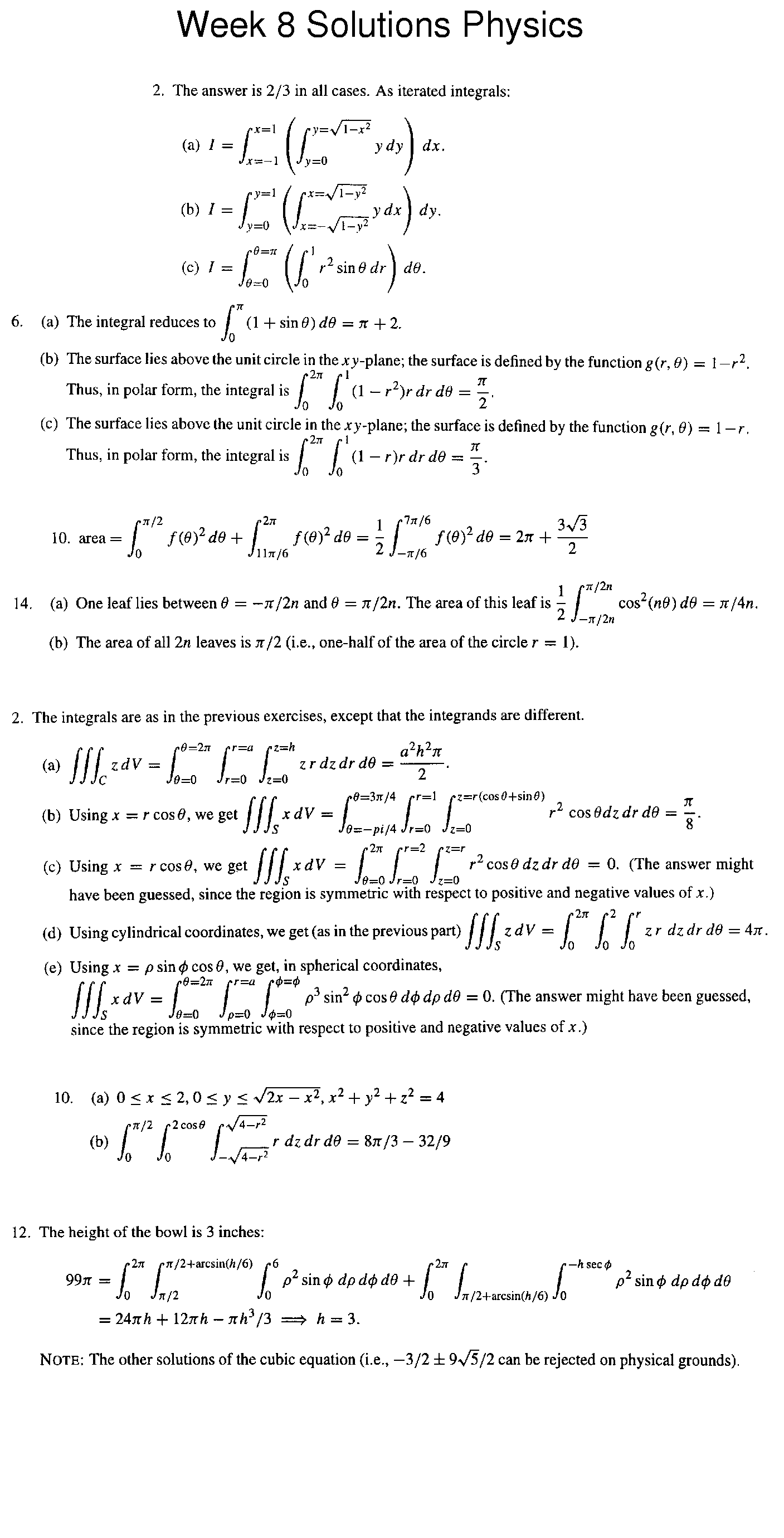
Solutions Phys .
Solutions Bio:
2.1) 215/25 = 8.6 days, median 8 days
2.2) variance 32.67, stand. dev 5.72, Range 27 Days
2.8) variance 0.39 diopters
2.9) variance 0.395, stand. dev 0.63 diopters
2.18) arithmetic mean: 8.8 mmHg rsp. 0.9 mmHg
median: 8 mmHg rsp. 1 mmHg
|
|
10. Week: 11/27-12/1
|
| Regular/Physics |
Biochem |
|---|
pgs. 273-275 # 2,8,10, pgs 279-280, # 2 4
pgs 286-287 #2 (skip plotting task), 4,6, pgs 292-293 #2,4
Also do:
1) Take a parameterized curve C: (f(u),g(u)), where g(u)>0 in the x-y plane and
revolve it about the x-axis in space to create a surface (called a 'surface of
revolution').
a) Show that X(u,v) = (f(u), g(u) cos(v), g(u) sin(v)) parameterizes the
surface where v is in the interval [0,2 pi).
b) Sketch the surface of revolution in the case, where f(u)=u and g(u)=1
and also in the case, where f(u)=cos(u) and g(u)=sin(u)+2.
2) Find a parameterization for the surface obtained by revolving the curve
y=exp(x) about the x-axis.
3) Find a parameterization for the surface, where x-y2+z4 y4=0.
4) Find a parameterization for the y>0 part of the surface, where
y2-((x4+z4)8+1)=0.
5) Find the area of the part of the plane x+y+z=1, where x,y,z are all
between 0 and 1.
6) Integrate the function f(x,y,z)=x-y over the part of the plane
x+2y+3z=6, where x,y, and z all lie between 0 and 1.
|
Rosner: pgs 67-73, # 3.12, 3.15, 3.16, 3.17, 3 24, 3.25, 3.28, 3.76, 3.77, 3.78, 3.83, 3.89
pgs 108-110, #4.10, 4.14, 4.15, 4.20
|
|
Solutions Reg/Phys
Solutions Bio
|
|
11. Week: 12/4-12/8
|
| Regular |
Physics |
Biochem |
|---|
|
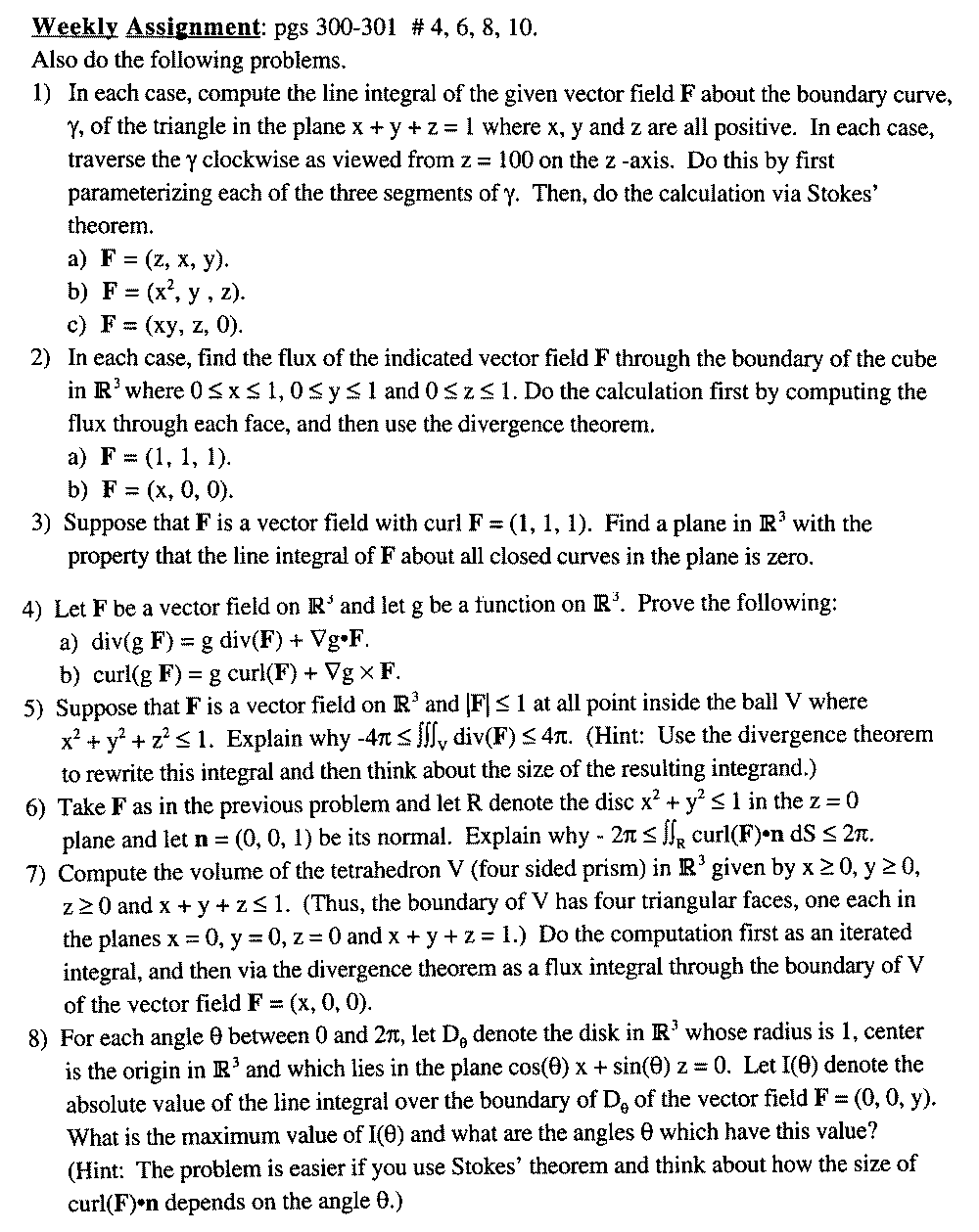
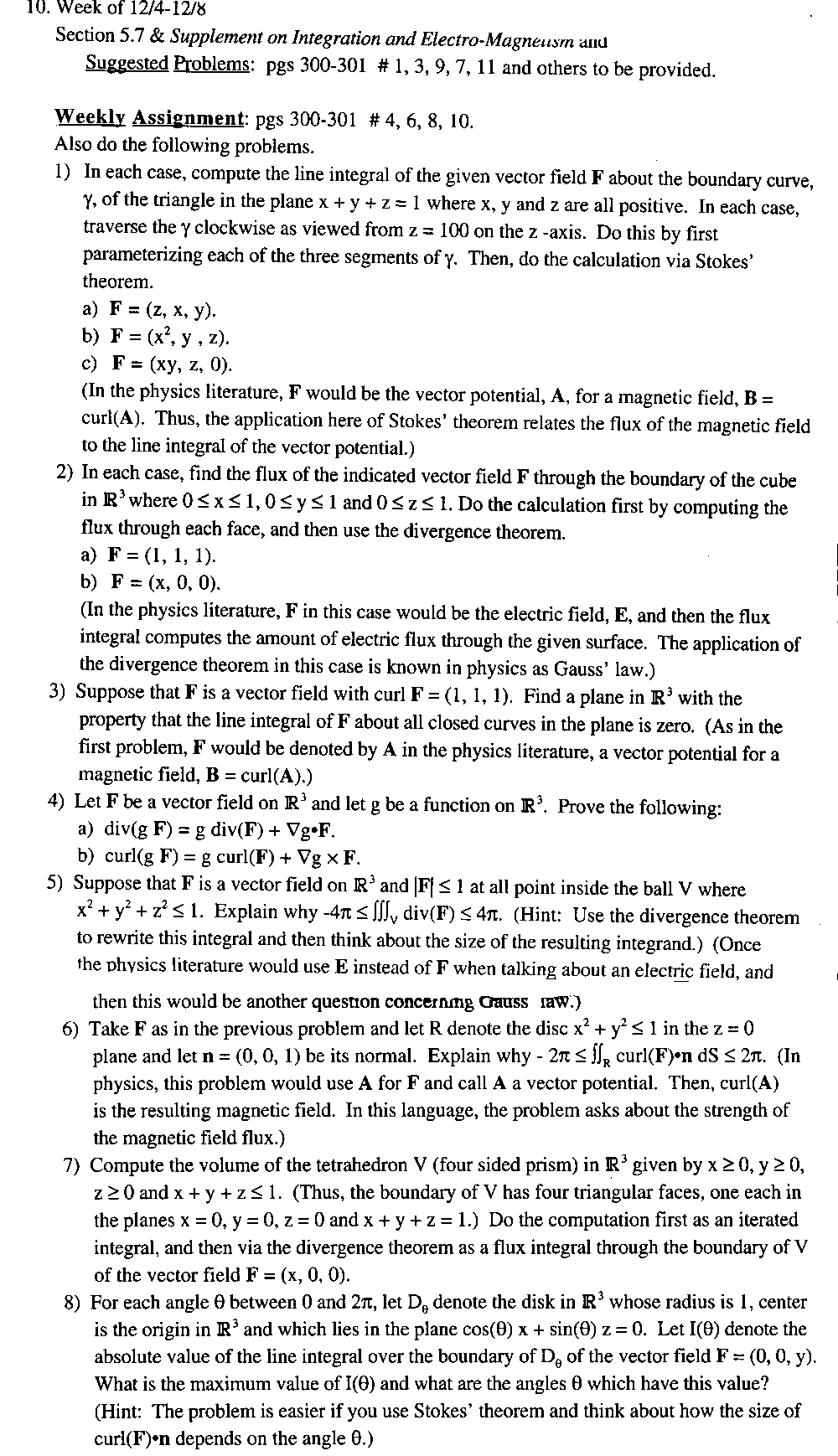
Week 11 (GIF)
|
Week 11 (GIF)
|
Rosner: pgs 109-110, #4.73-4.74, 4.81-4.83,
pgs 147-149, #5.6, 5.7, 5.41, 5.42, 5.44, 5.53, 5.61, 5.70
|
|
Solutions
|
|
12. Week: 12/11-12/15
|
The problems are on the
Differential equations handout.
|
Solutions
|

 Suggested extra problems for regular sessions