
Fall 2003
|
Home Course Information Syllabus Calendar Sections Homework Exams Supplements Links |
Mathematics 1a
Introduction to Calculus
Course Head: Robin Gottlieb
Office: Science Center 430
Email: gottlieb@math.harvard.edu
Head CA: Andrei Boros
Email: boros@fas.harvard.edu
Exams
|
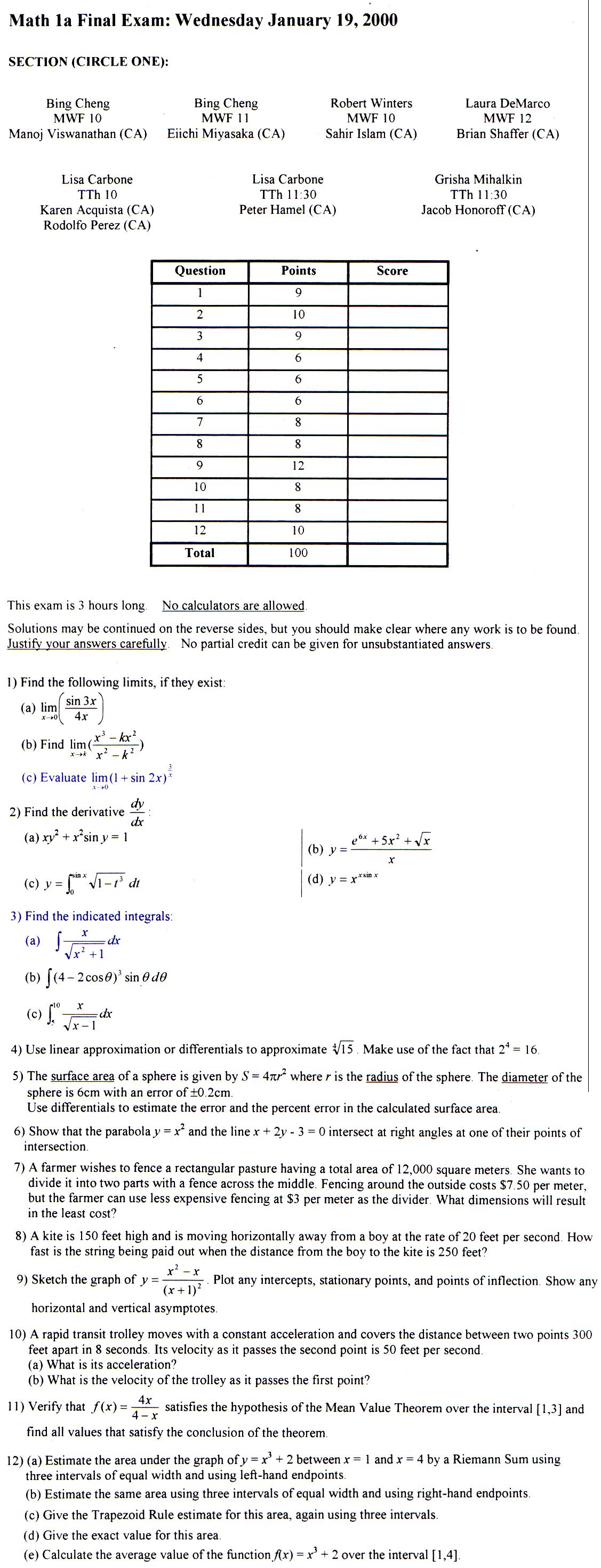
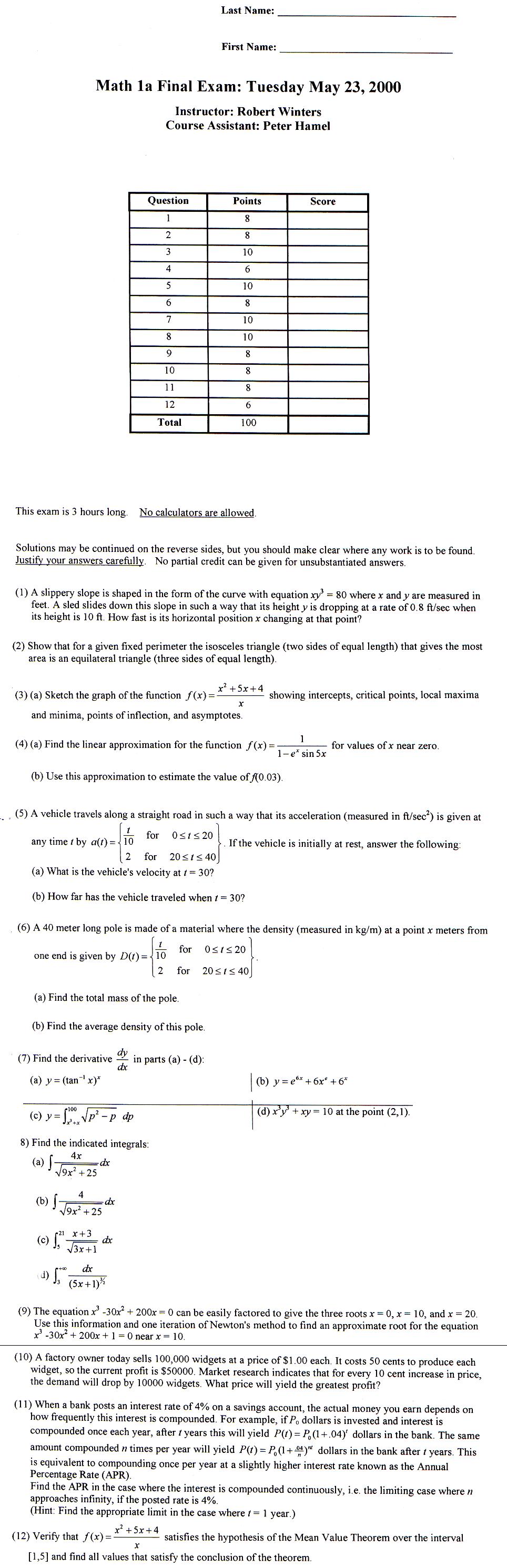
The following problems can be omitted (since we didn't emphasize the material this year)
Review problems # 8bc and 37
Jan. 19, 2000 exam (Winters) # 12ce
Jan. 23, 2000 exam (Siu): long and challenging . . .
May 23, 2000 exam: #6.
Note: Solutions for the May 2000 exam have been fixed and are back up.
Additional corrections to Fall 2002:
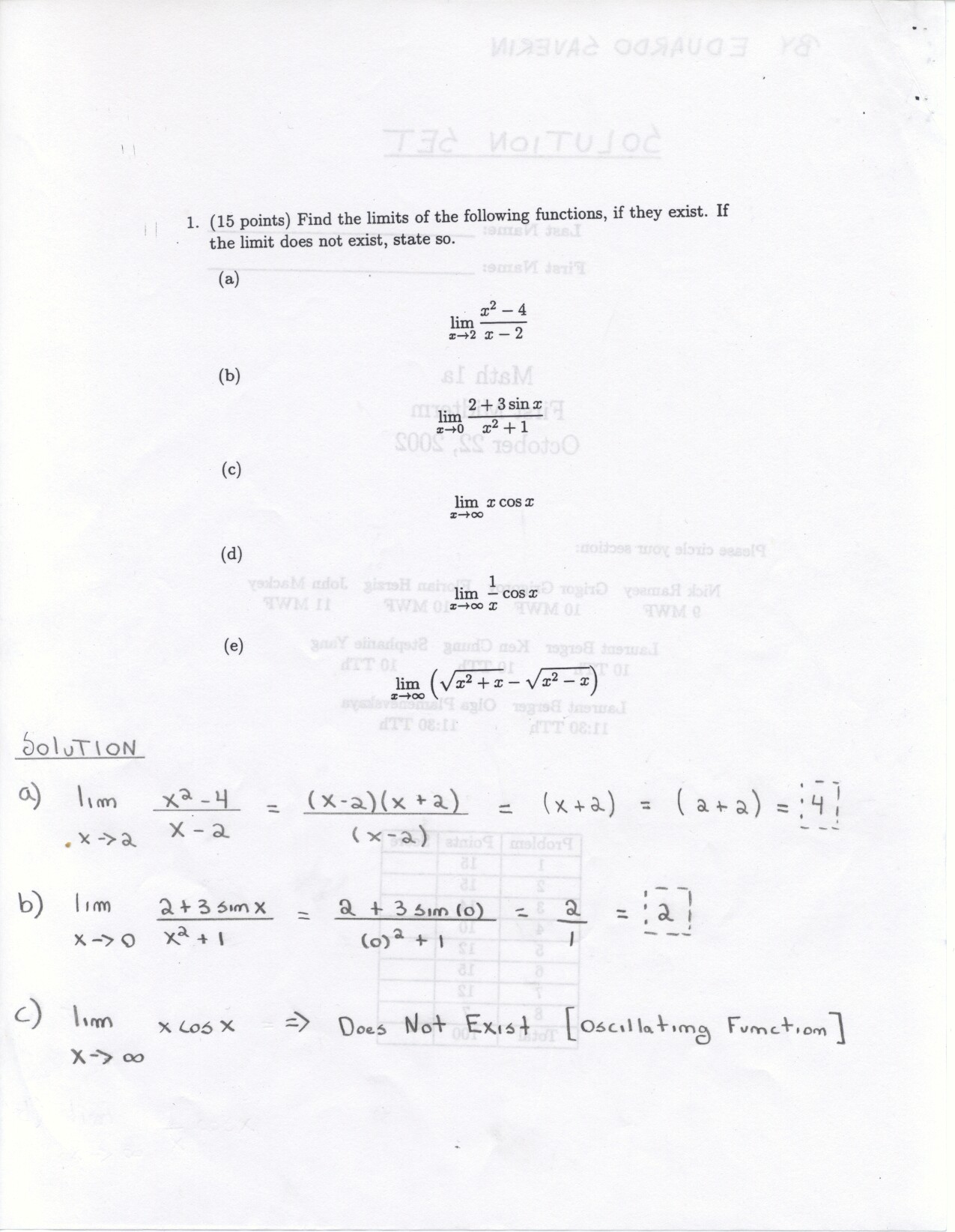
#1(a) lim x to 2 should be written two more times.
#1(c) Unlike the damped oscillations in part (d), these are getting wilder as x increases.
#2: if the explanation given in the corrections is not adequate, please see Ex 6 p. 137 in your text.
#3c arctan x would have two horizontal asymptotes.
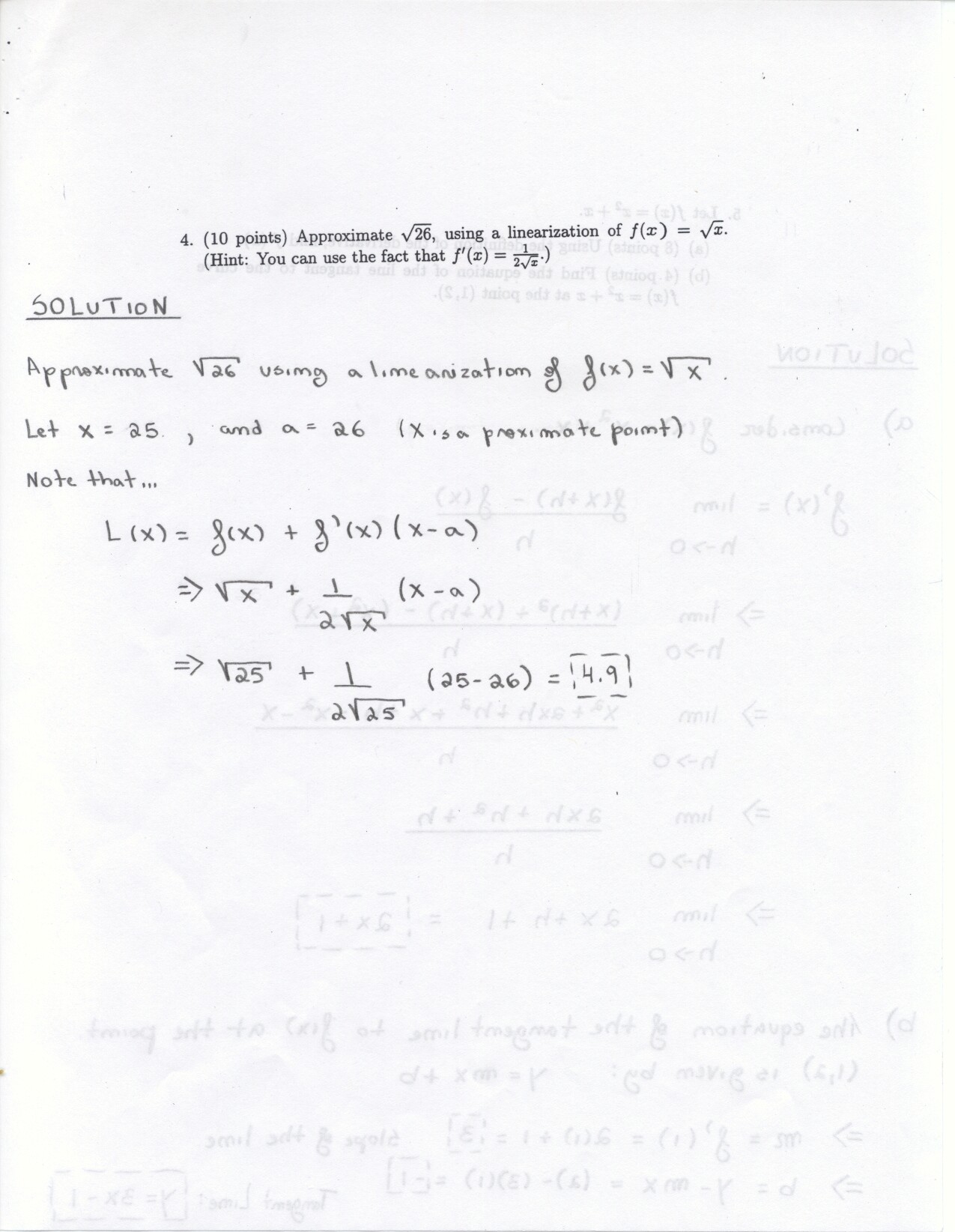
#4. When you give a linearization, make sure that what you have is the equation of a line! L (x) = f(a) + f'(a) (x-a) or in this case
L(x) = f(25) + f'(25) (x-25). It is not necessary to use this "formula" in order to get the linear approximation. The correct answer is 5.1 as stated in the corrections.
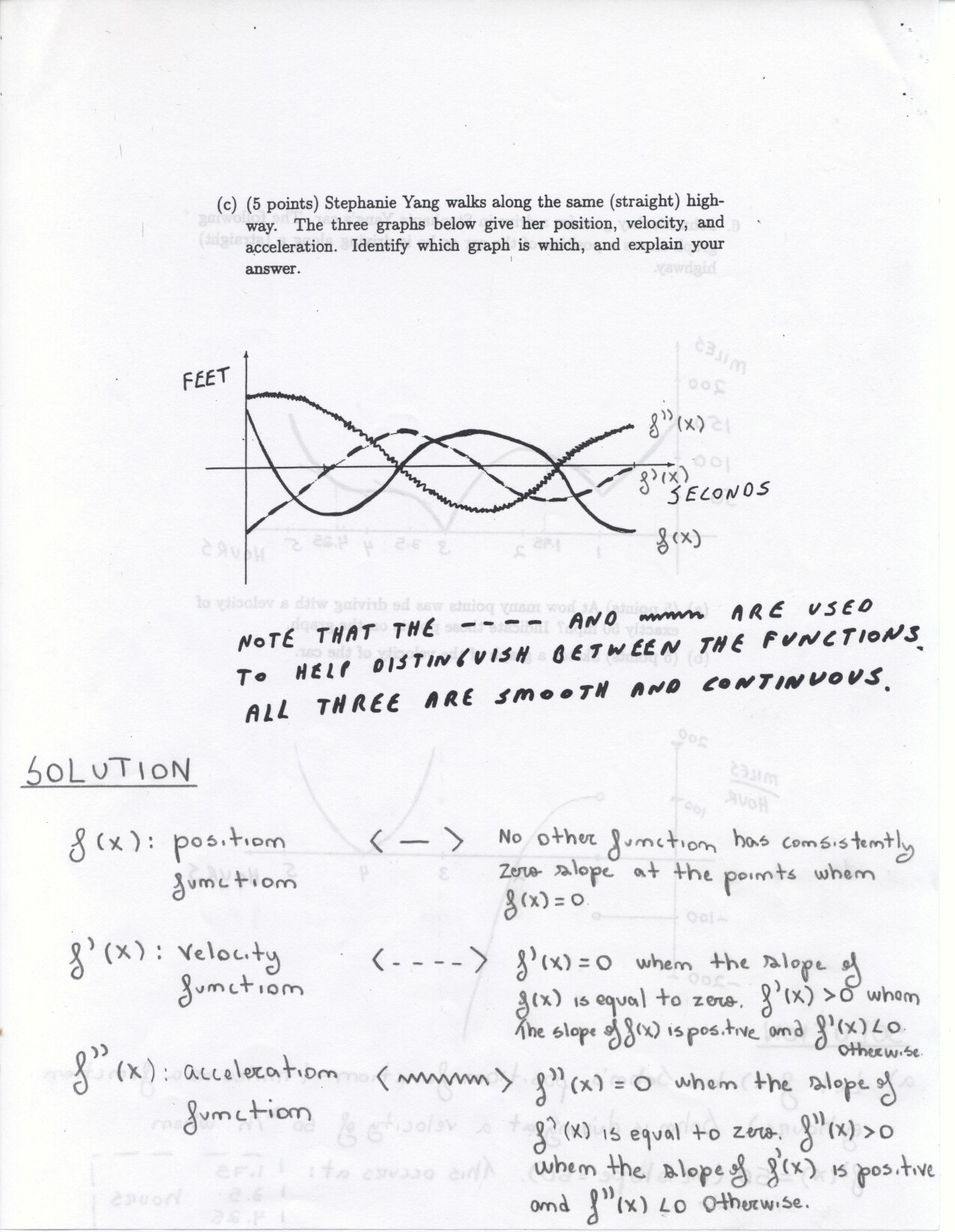
#6: I would say that the velocity graph does NOT have a vertical asymptote at x=3, but rather a jump discontinuity.
Corrections to spring 1998:
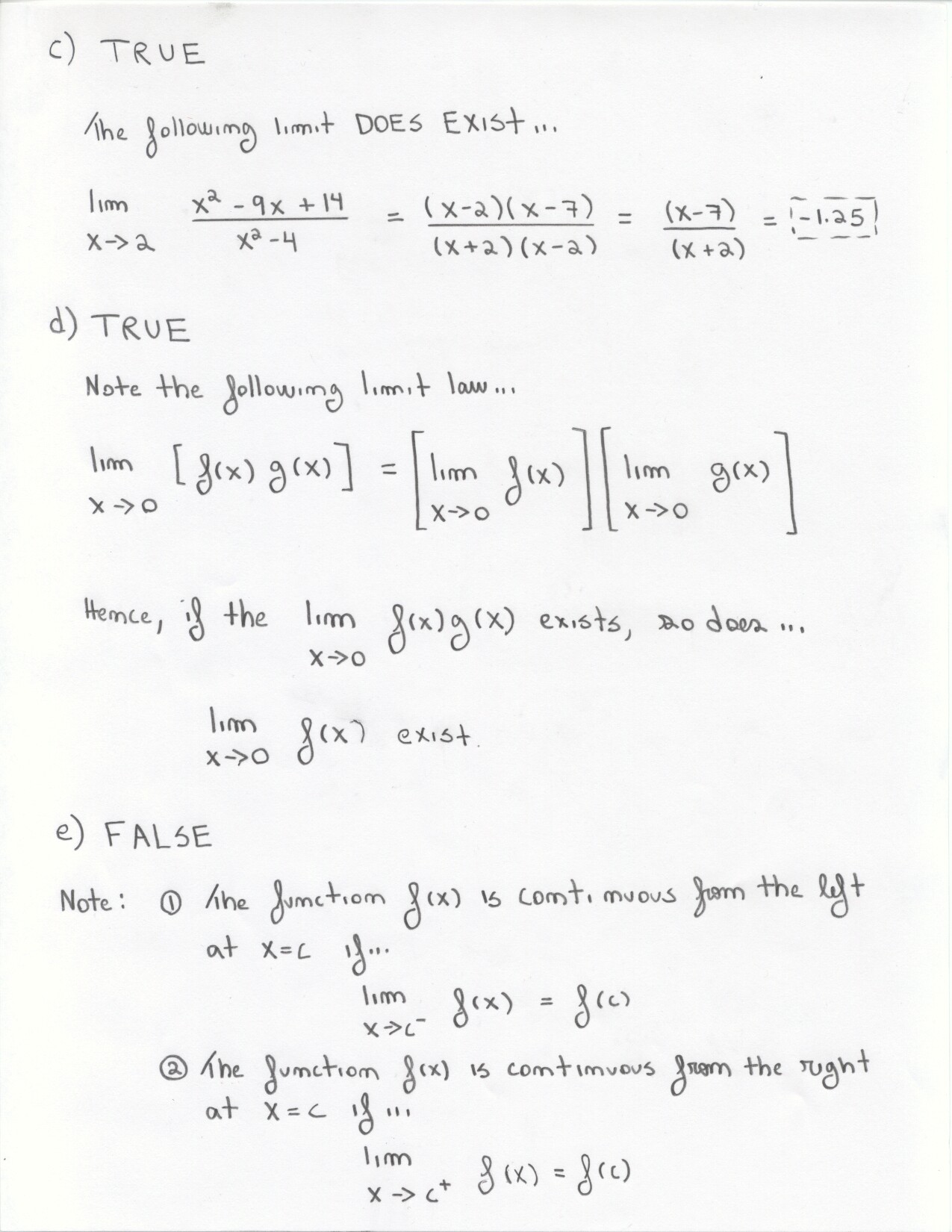
# 1(d) False: let f(x) = 1/x and g(x) = 5/x.
The limit rule quoted is only true if both limits independently exist.
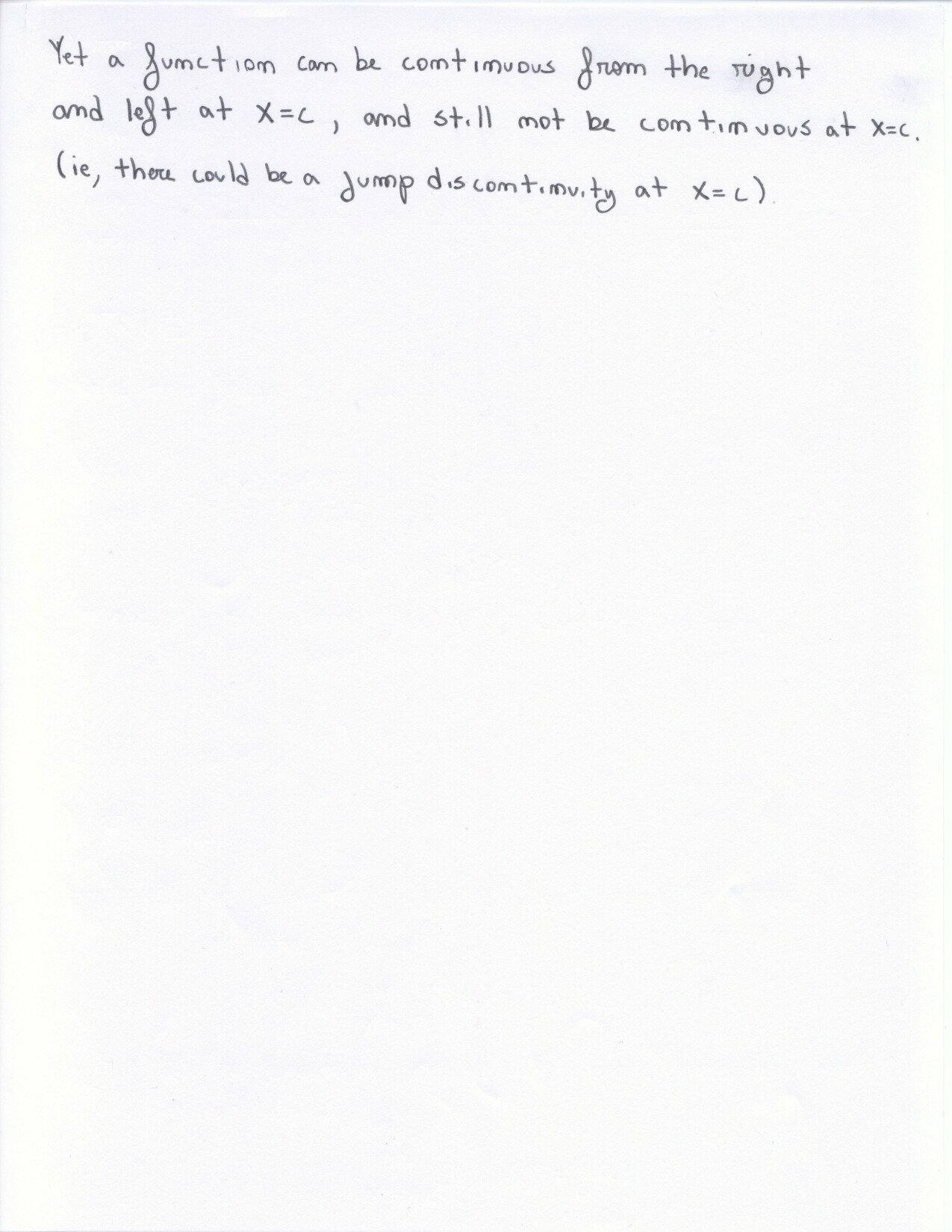
1(e) The statement is false but the reason given doesn't make sense. If the function is continuous from the left and right with the definitions stated then the function must be continous. However, the left and right hand limits could be different, or we could have the left and right hand limits equal but the function defined at c to be something entirely different.
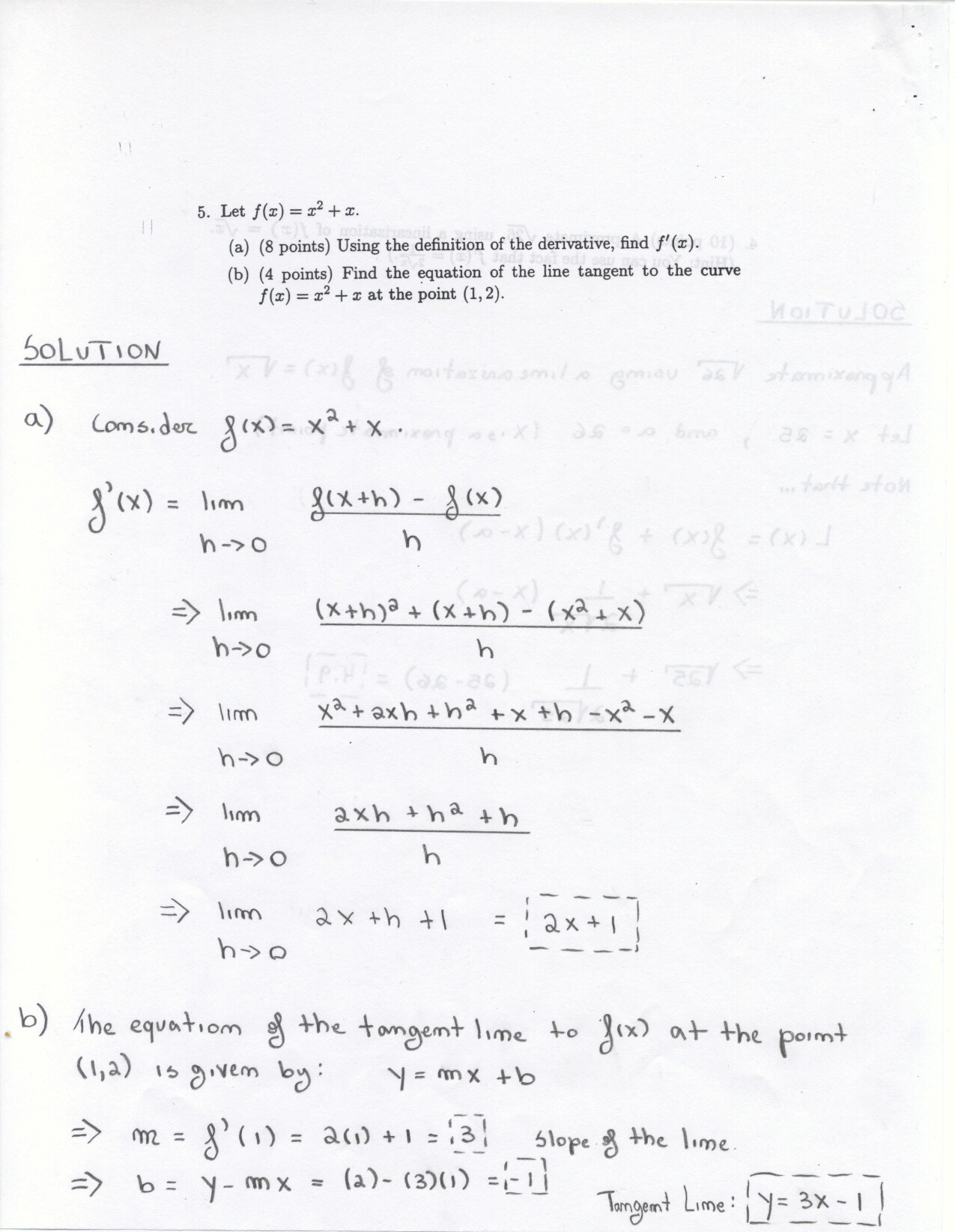
#5: f'(2) is not 1. This says that as h approaches 0 the difference between f at 2+h and at 2 approaches -1. Try f(x) = 4 for x <2 and f(x) = 3 for x>2 for example.
| Exam | Solution |
| Fall
2002 page1 page2 page3 page4 page5 page6 page7 page8 page9 page10 |
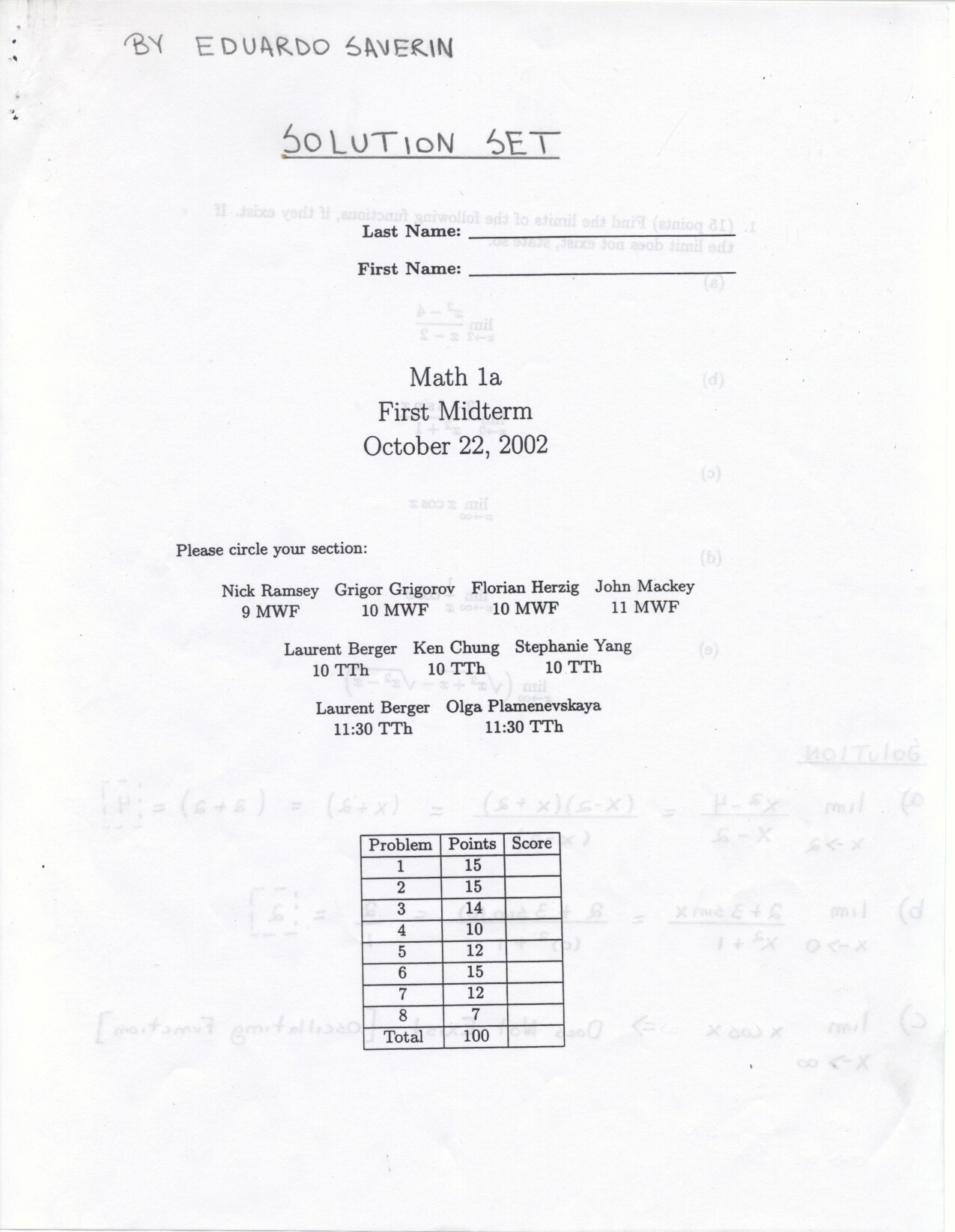
Solution (additional corrections above the box)
<Solution Correction> page1 page2 page3 page4 page5 page6 page7 page8 page9 page9 page10 page11 page12 page13 |
| Fall
2000 Note: Omit #4, 5, 7 and 8 |
Solution |
| Fall
1999 Note: Omit #5, 6 and 7 AND On Question 3b use the limit definition of a derivative |
Solution |
| Spring
1998 page1 page2 page3 page4 page5 Note: Omit #1b and 4 |
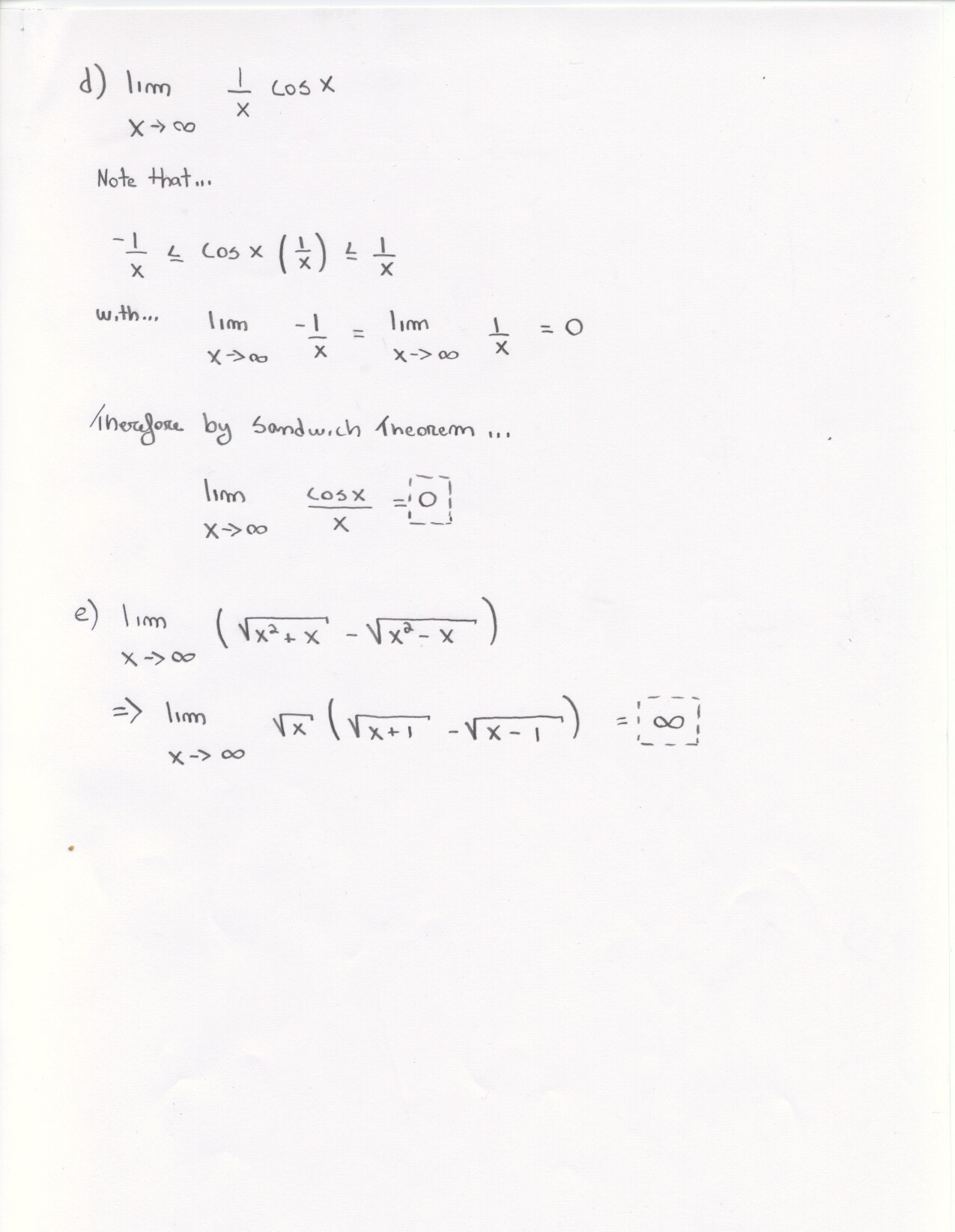
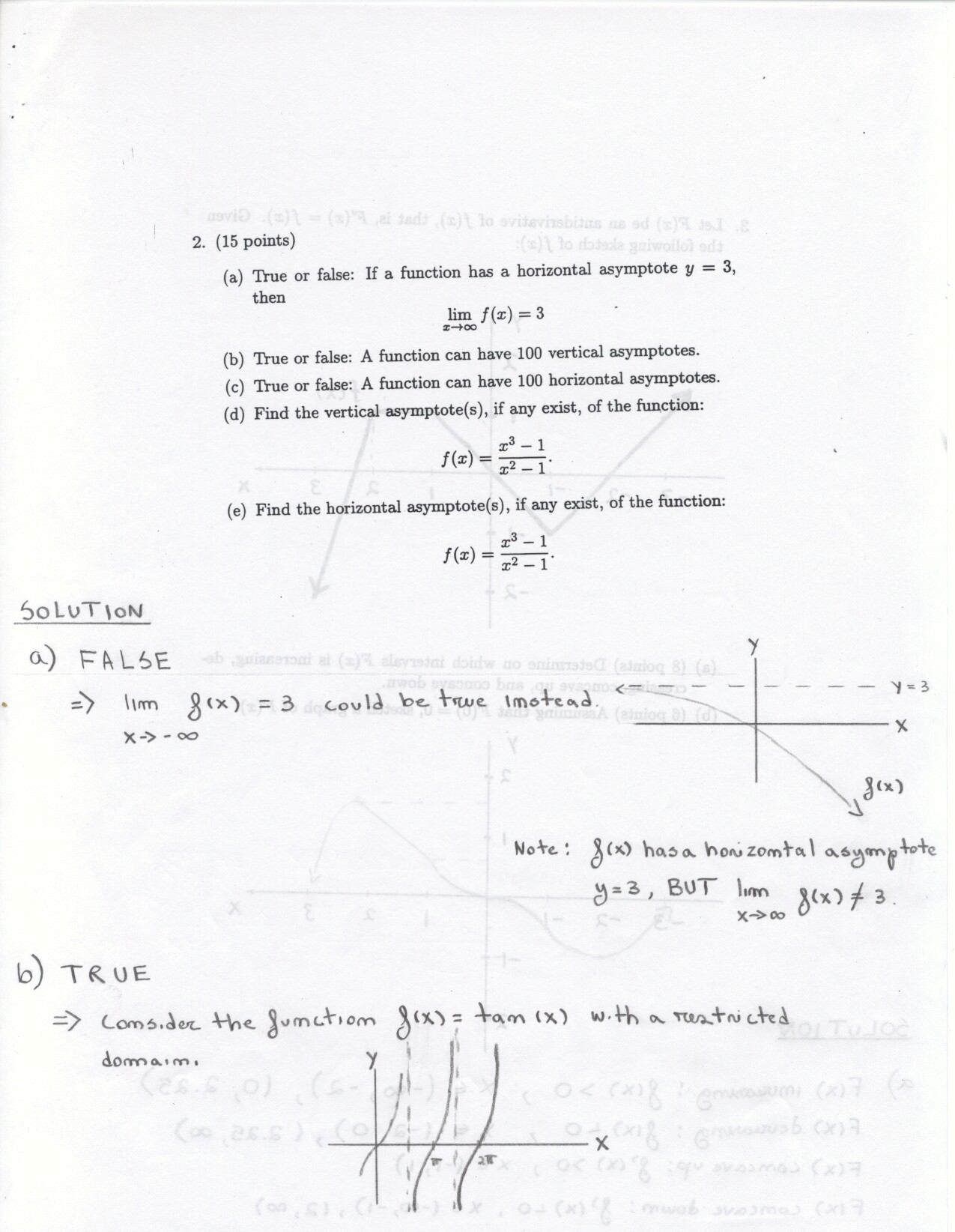
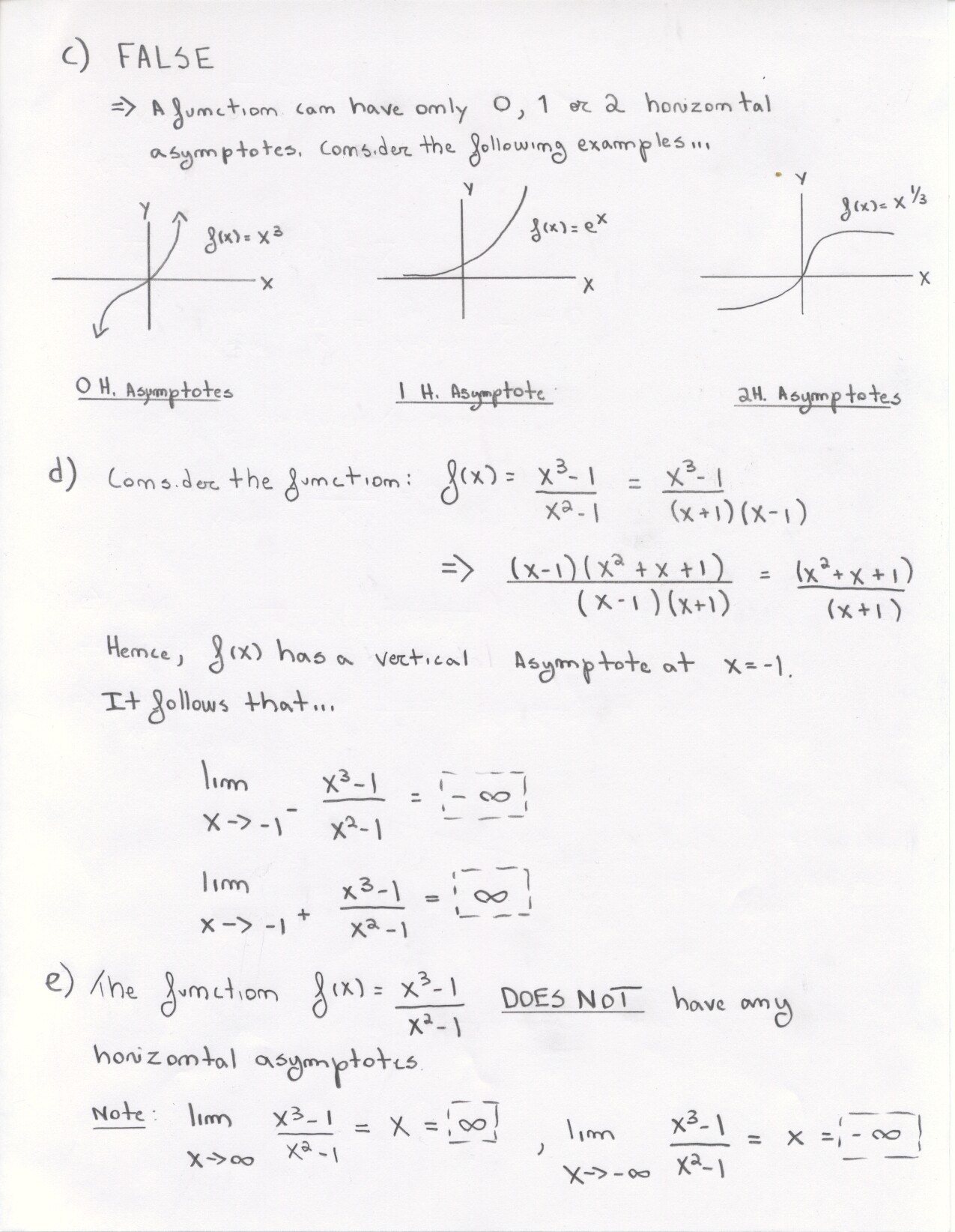
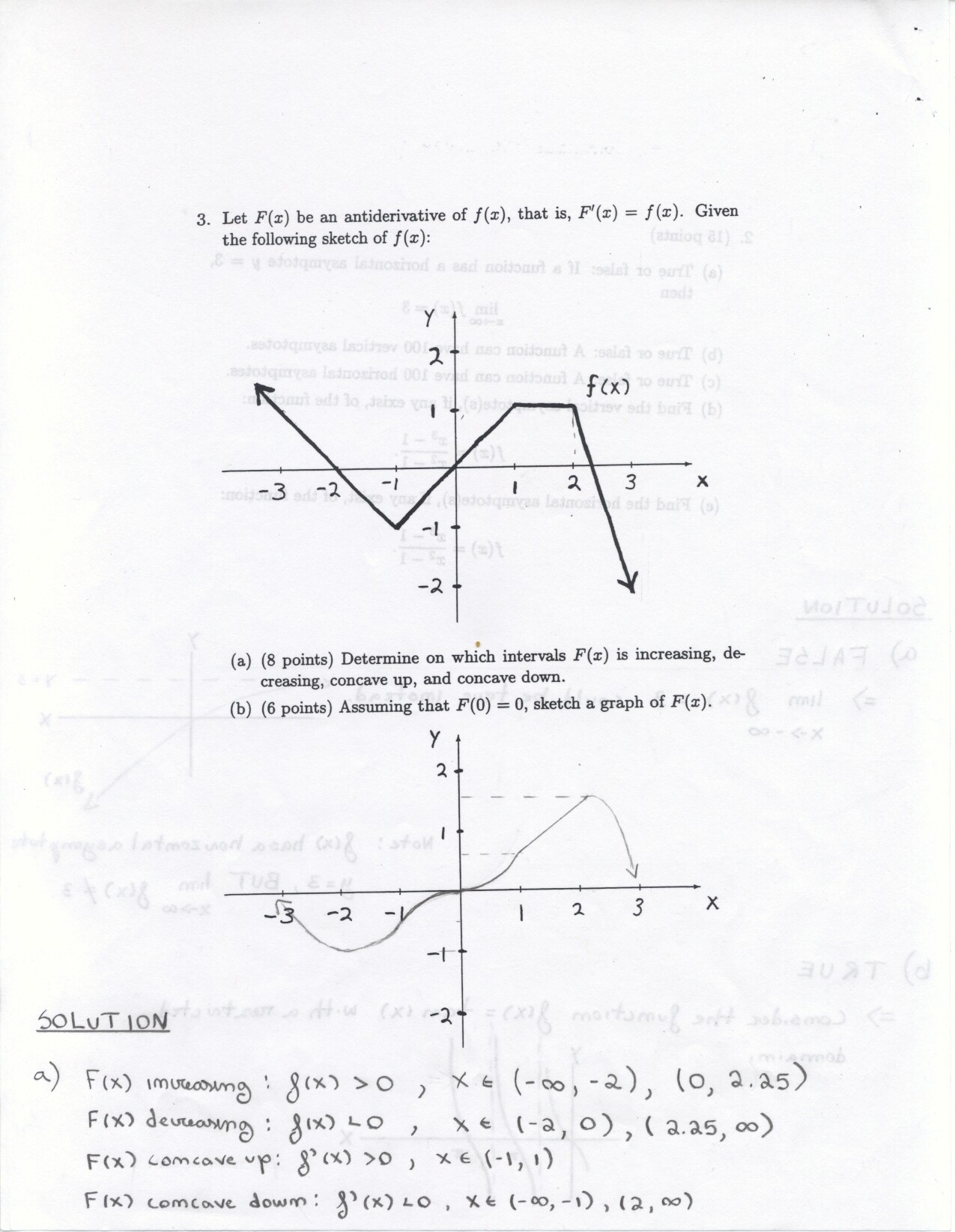
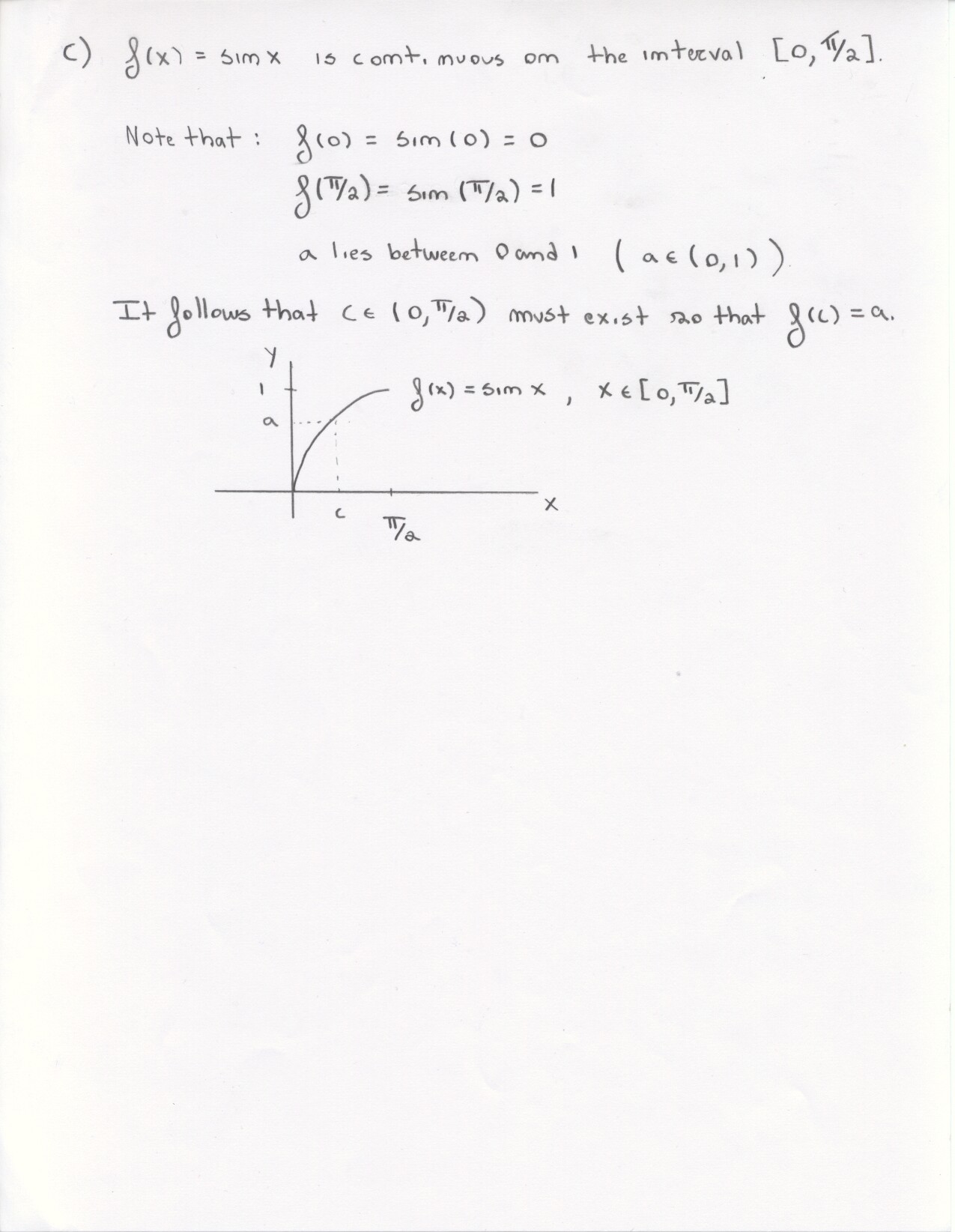
Solution (see corrections above the box). page1 page2 page3 page4 page5 page6 page7 page8 |



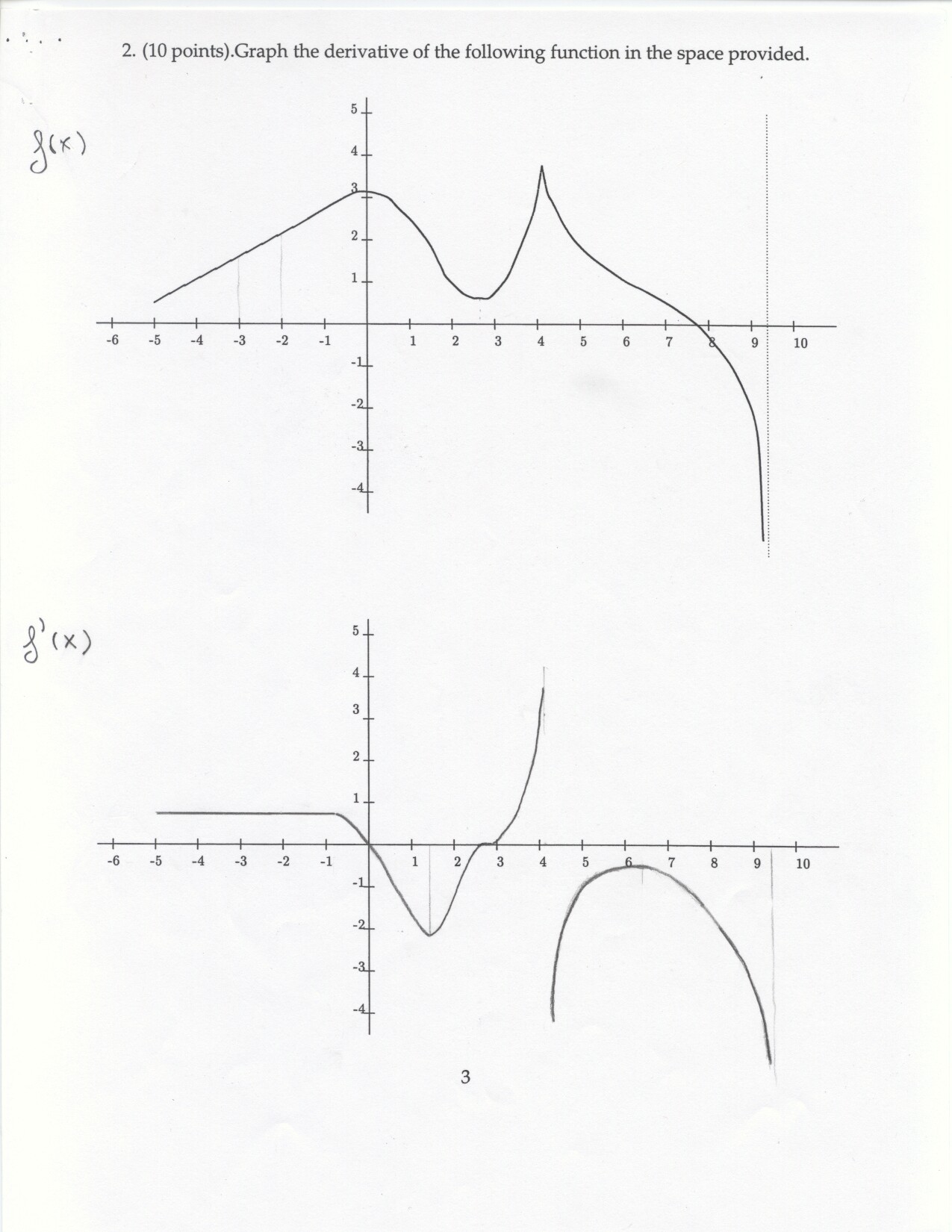
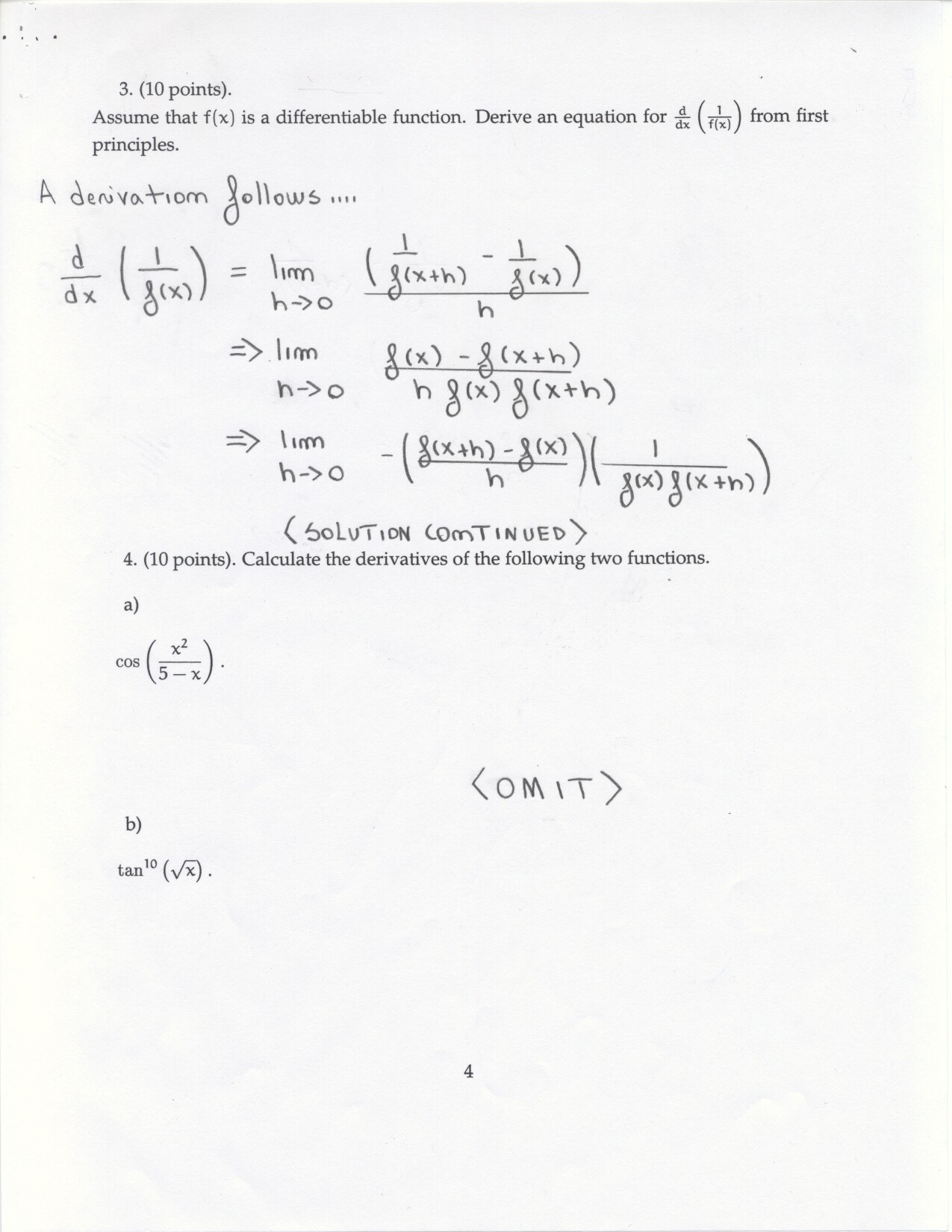
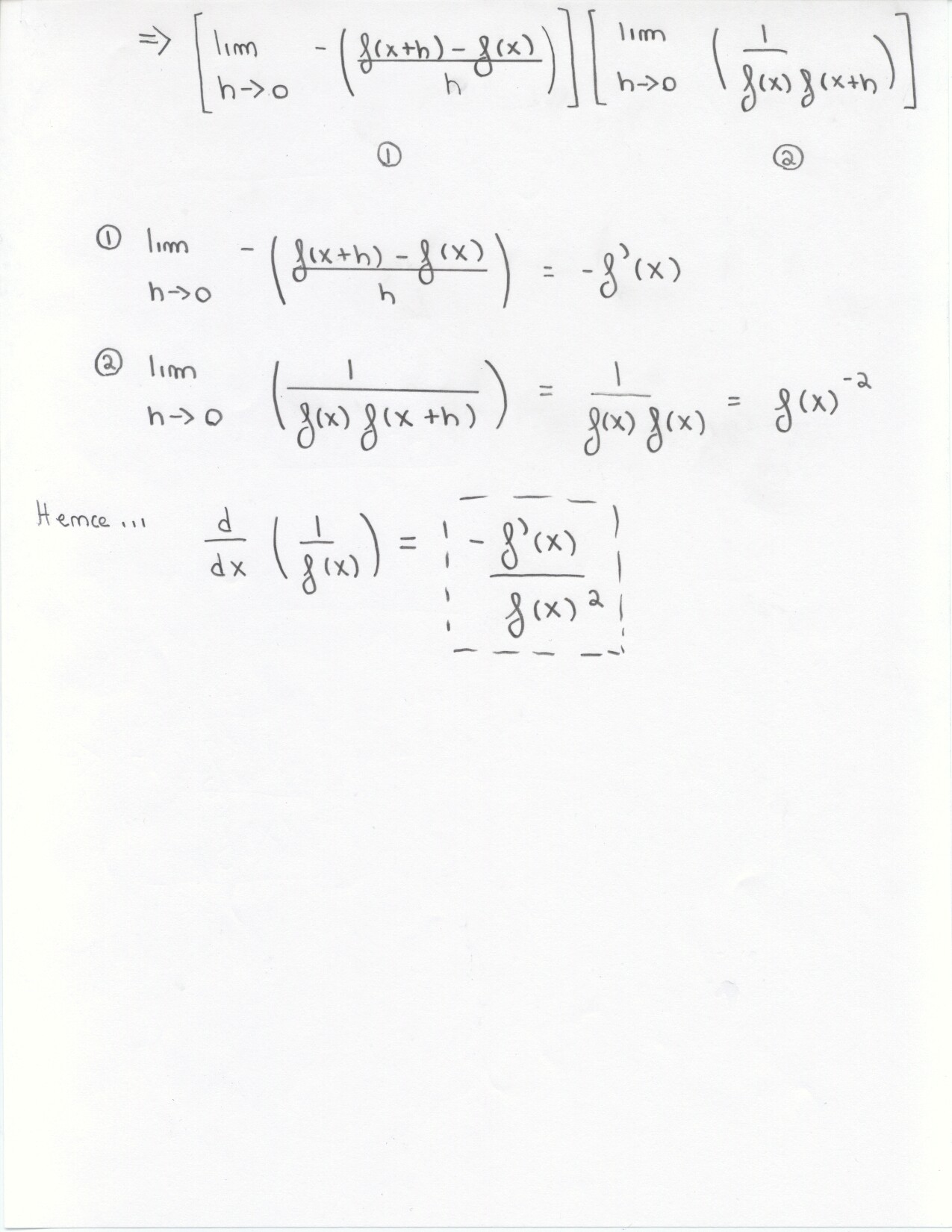

Midterm 2

Please send comments about this web site to gottlieb@fas.harvard.edu.